
Review · ASWAN
Budget 4-Day Nile Cruise from Aswan to Luxor
The best part of this four-day trip is the way it links Egypt’s greatest Nile Valley sights without making you arrange a new hotel, driver, and guide every morning. You sail south to north, watching village life pass from the deck, then step ashore at temples that span thousands of years. I especially like the full-board boat stay and the strong guiding, with guides such as Walid, Hassan Elhawary, Ahmed, Mustafa, and Sam praised for clear explanations and patient help.
The trade-off is that this is a value cruise, not a luxury sailing. Some cabins and ships are dated, Wi-Fi may be limited to reception, and the food can be uneven. The schedule is also busy, with early starts and several hot outdoor visits, so pack for heat and keep your expectations sensible.
Key things to know before you book
- Aswan’s best sights come first: The High Dam, Philae Temple, and a felucca ride fill your opening afternoon.
- Four ancient sites anchor the middle of the trip: Kom Ombo and Edfu are visited while the boat works its way toward Luxor.
- Luxor gets two focused days: You see Karnak and Luxor Temple on the East Bank, then the Valley of the Kings and Hatshepsut’s temple on the West Bank.
- Three nights and most meals are included: Breakfast, lunch, dinner, entrance fees, and transfers are built into the $550 price.
- The guide can make or break the experience: Walid, Hassan Elhawary, Ahmed Eid, Ahmed Moatty, Mustafa, Sameer, Emad, and others have led recent departures.
- Confirm the practical details: A passport photo is needed to confirm the booking, and the exact ship, pickup point, and guide should be checked before departure.
Why this Nile route works so well
A Nile cruise is a smart way to see ancient Egypt because the river does much of the moving for you. Instead of changing hotels between Aswan, Kom Ombo, Edfu, and Luxor, you unpack once and return to the same cabin after each outing.
This route also has a natural rhythm. Aswan supplies the grand engineering project and the graceful island temple. Kom Ombo and Edfu offer shorter, more focused temple visits. Luxor then delivers the biggest concentration of pharaonic sites, including Karnak, the Valley of the Kings, and Queen Hatshepsut’s temple.
At $550 per person, the price is attractive for a private tour with three nights of accommodation, meals, entry tickets, an Egyptologist guide, and transfers. The value depends heavily on the boat assigned to your departure. You are paying for convenience and access rather than polished luxury, so ask which ship is operating before you commit.
The cruise is listed as a private activity for your group, while group discounts are also offered. That means you should clarify the arrangement if you are booking with friends or family. The experience is often booked well ahead, with an average booking time of about 118 days in advance, so last-minute availability may be limited.
More Nile Cruises in Aswan:
- 4-Days Nile Cruise From Aswan To Luxor including Abu Simbel and Hot Air Balloon
★ 5.0 · 3,142 reviews - 4-Day 3-Night Nile Cruise from Aswan to Luxor&Abu Simbel+Balloon
★ 5.0 · 2,023 reviews - 4-Day 3-Night Nile Cruise from Aswan to Luxor including Abu Simbel, Air Balloon
★ 4.5 · 612 reviews
Day 1: The High Dam, Philae, and a felucca in Aswan
Your first day begins with assistance at Aswan airport, railway station, or hotel, followed by transfer to the cruise boat. Check-in is scheduled for 11:00 a.m., with lunch served on board before the sightseeing begins.
The Aswan High Dam is a practical first stop. Built in the 1960s, it changed Egypt’s relationship with the Nile by controlling the annual floods and creating Lake Nasser. The visit is brief, about an hour, but it gives you useful context for understanding modern Egypt. This is not an ornate monument. It is a huge piece of infrastructure, and the point is to see its scale and importance.
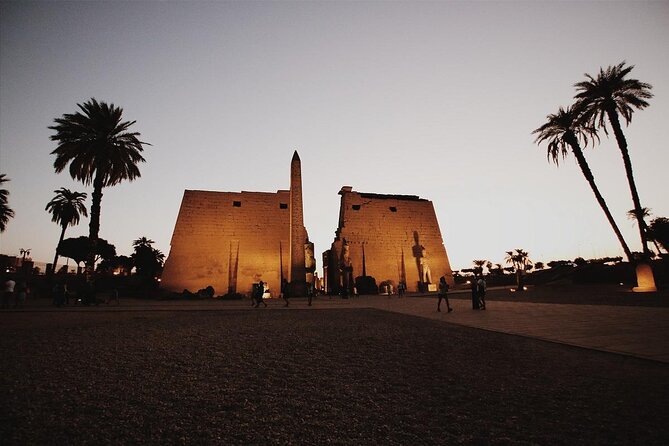
Next comes Philae Temple, one of the most atmospheric places on the route. Dedicated mainly to Isis, the temple originally stood on Philae Island before being moved to Agilkia Island during the dam project. The setting on the water adds something special, and the carved columns and courtyards are easier to appreciate with an Egyptologist explaining the stories of Isis, Osiris, and Horus.
Allow about an hour at the temple according to the planned schedule, though the wider transfer and boat arrangements take additional time. Your entry fee is included, but the information provided does not spell out every local transport detail, so confirm how the island transfer is handled when you receive your final arrangements.
The day ends with a felucca ride on the Nile. These small traditional sailing boats offer a quieter contrast to the motorized cruise ship. Wind conditions affect the ride, so treat it as a pleasant river outing rather than a guaranteed long sailing session. Dinner and your first night are on board in Aswan.
This opening day is busy but well judged. The High Dam explains modern water control, Philae connects you with ancient religion, and the felucca gives you a close look at the river itself.
Day 2: Kom Ombo, Edfu, and the Esna lock
After breakfast, the boat sails toward Kom Ombo. The temple sits on raised ground beside the Nile, and its unusual design makes it one of the easiest sites to understand quickly. It has a double layout, with one side dedicated to Sobek, the crocodile-headed god, and the other to Haroeris, an ancient form of Horus with a falcon’s head.
Kom Ombo is not the largest temple in Egypt, but its two-part design gives the guide plenty to explain. You can see how two cults shared one religious complex, and the connection with Sobek adds a memorable twist. The scheduled visit lasts about three hours, which should give you time to examine the reliefs and enjoy the river setting without rushing through every corner.
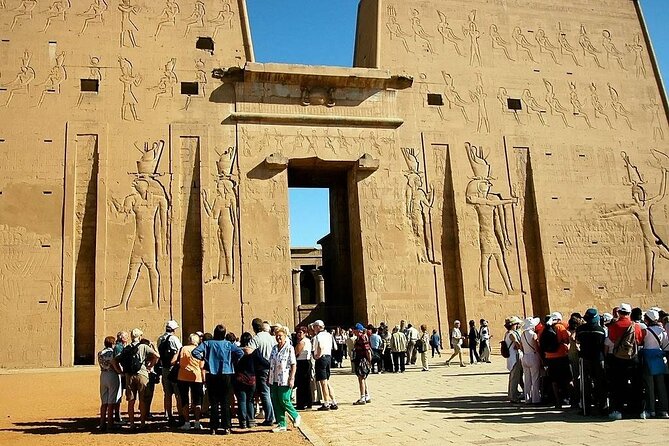
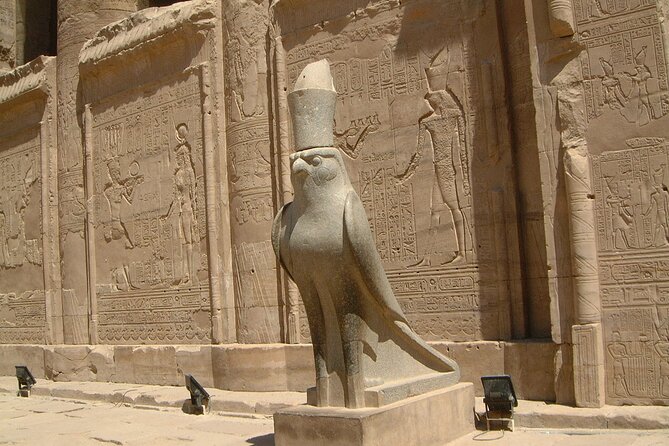
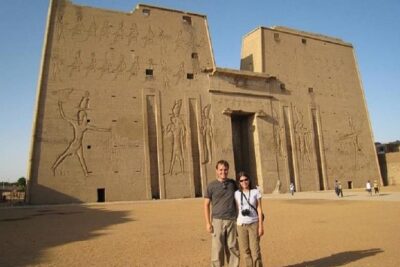
The day then continues to Edfu, where you visit the Temple of Horus. This is widely regarded as one of Egypt’s best-preserved cult temples. Its walls, pylons, and reliefs give you a strong sense of how a functioning temple once looked before centuries of neglect and burial under silt.
The schedule says you are transferred by road to Edfu, then sail onward to Luxor through Esna. That is worth confirming before departure, since the exact ship and local transport arrangement can affect the timing. Edfu is another substantial stop, and the combination of two temples in one day makes this the most structured sightseeing day of the cruise.
Back on board, you get free time, afternoon tea on the sun deck, and the passage through the Esna lock. The lock is a piece of working river infrastructure, and watching the boat adjust to the water level can be more interesting than it sounds. A galabiya party is scheduled in the evening, followed by dinner.
This is also the day when the cruise feels most like a cruise. You spend meaningful time sailing between sites, with the river changing slowly outside your window. Bring a hat and water for the temple visits, then save some energy for the deck.
Day 3: Karnak and Luxor Temple in the evening light
Day three begins with breakfast and free time on board before lunch. The main sightseeing takes place on Luxor’s East Bank, where you visit Karnak Temple and Luxor Temple.
Karnak is not a single building. It is a huge religious complex that grew over many centuries, with major areas connected to Amun, Mut, and Khonsu. The scale can be hard to grasp from a short walk, so a good guide matters here. You want help understanding the procession routes, columns, obelisks, and changing rulers rather than simply being pointed toward the largest stones.
The Great Hypostyle Hall is the visual high point for many visitors, with its forest of massive columns. Give yourself time to look up and around. The carvings are not decoration alone. They record religious scenes, royal claims, and offerings to the gods.
Luxor Temple feels different. It is more compact and urban, with a strong central avenue and monumental statues. It was built under Amenhotep III and expanded by Ramesses II. The temple’s location near modern Luxor makes the ancient and present-day city feel unusually close together.
The planned visit to both temples lasts around three hours, with roughly an hour listed for each major site. That is enough for an overview, but not enough to study every wall. If you are especially interested in architecture or inscriptions, ask your guide where to spend your limited time.
Dinner is followed by music and a disco on board. You can join in or use the evening to rest. The ship remains in Luxor overnight, which makes the next morning’s West Bank visit easier.
More Four-Day Trips in Aswan:
- From Aswan: 4-Day Nile Cruise from Aswan to Luxor with Guide
★ 4.1 · 593 reviews - 4-Day 3-Night Nile Cruise from Aswan to Luxor – Private Tour
★ 5.0 · 369 reviews - 4 Days Nile Cruise from Aswan to Luxor including Abu Simbel and Hot Air Balloon
★ 4.5 · 356 reviews - 4-Day 3-Night Nile Cruise from Aswan to Luxor With Balloon and Abu Simbel
★ 5.0 · 327 reviews
Day 4: The Valley of the Kings and Hatshepsut’s temple
Disembarkation is scheduled after breakfast at 8:00 a.m. The final morning packs three major West Bank stops into one outing before your transfer to a Luxor hotel, airport, or railway station.
The Valley of the Kings is the headline visit. Instead of grand pyramids, Egypt’s New Kingdom rulers were buried in rock-cut tombs hidden in the desert hills. Your ticket includes entry to the mentioned sights, but the number of tombs included in the standard entry can vary by site rules. Special tombs, including King Tutankhamun’s, may require an extra ticket, so ask your guide before entering.
Inside the tombs, you will find painted corridors and burial chambers rather than large exterior monuments. Some passages are narrow and can feel warm, so comfortable shoes and water matter. The scheduled visit lasts about two hours, although the precise time depends on transfers and how many tombs you enter.
Next comes Queen Hatshepsut’s temple at Deir el Bahari. Built into the cliffs, it uses terraces, ramps, and broad lines to create a setting unlike the enclosed temples on the river. Hatshepsut ruled for about 20 years and remains one of ancient Egypt’s most notable female pharaohs. Your guide can help explain both her political story and the temple’s design.
The final stop is the Colossi of Memnon, two huge seated statues that once guarded the entrance to Amenhotep III’s mortuary temple. The temple itself is largely gone, so this is a quick stop rather than a long exploration. Still, the statues give you a sense of the scale once used for royal memorials.
After the West Bank, you are transferred to your Luxor hotel, airport, or railway station. Since the activity information also gives Luxor as the general meeting and ending location, confirm your pickup and drop-off in writing if you are arriving in Aswan and leaving from Luxor. The detailed day-by-day plan clearly provides Aswan pickup and Luxor drop-off, but the general meeting information is less precise.
Life aboard the boat
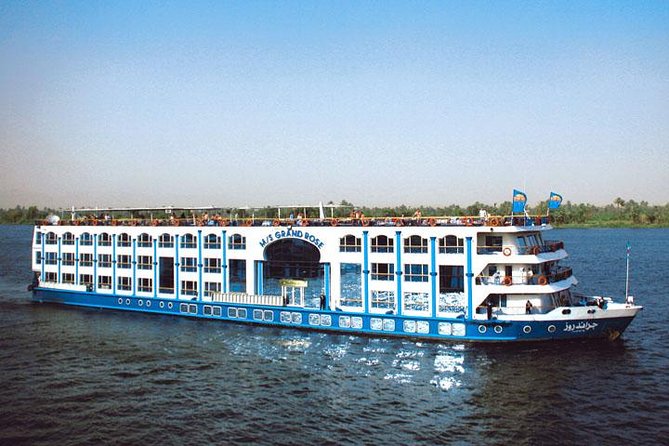
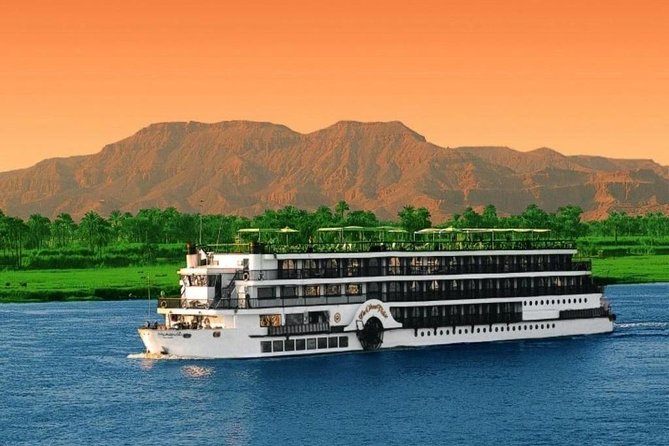
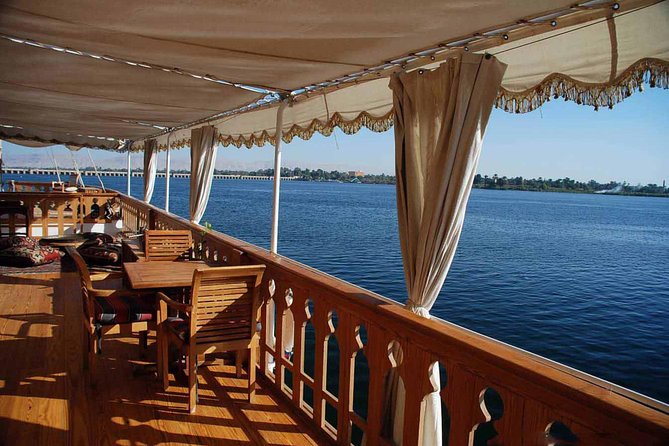
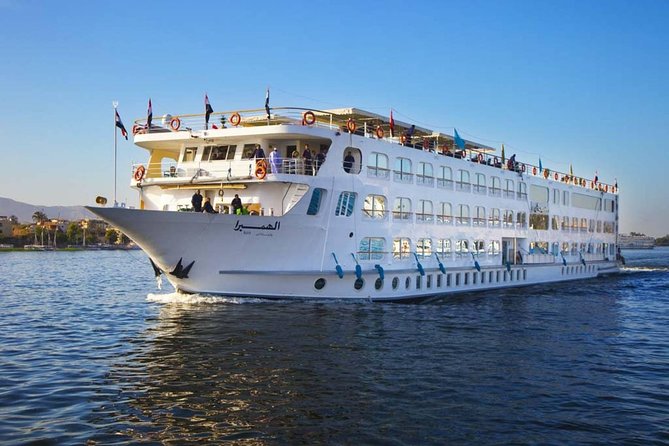
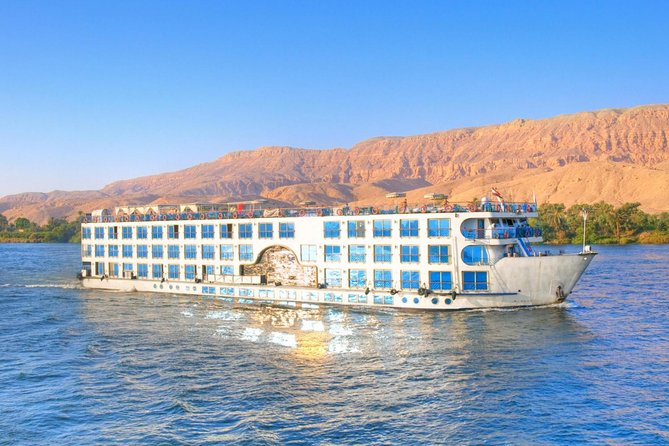
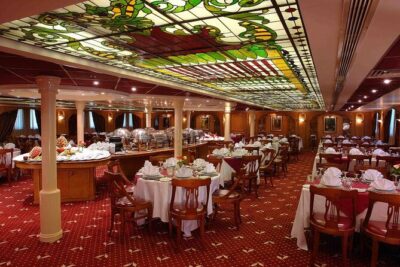
The ship is best viewed as a practical floating hotel. The cabins are described as sufficient and spacious for two people, though a triple room can feel cramped. Some departures use older boats with character, while others may be in better condition, so do not assume the same ship standard for every date.
Food is included throughout the cruise. Breakfast is provided for all three mornings, dinner for three nights, and lunch during the four-day program. Several accounts describe plenty of choice and tasty meals, including good vegetarian options, while another singles out food as the weakest part of the trip. I would plan for ordinary cruise catering rather than restaurant-level dining.
Crew service has generally been described as courteous and helpful. Wi-Fi may be available only around reception, and internet access should not be treated as a central feature. Use the cruise as a chance to watch the river, not as a dependable work base.
The sun deck is one of the most valuable spaces on board. The scenery is often simple: water, farmland, villages, palms, and desert edges. That simplicity is the point. You get to see how much of life along the Nile still follows the river.
The guide matters more than the boat
The strongest part of this experience is the guiding. Named guides associated with the cruise include Walid, Hassan Elhawary, Ahmed Eid, Ahmed Moatty, Mustafa, Sameer, Emad, Ashraf, Sam, and Choukry Abdallah. You should not assume a particular person will lead your departure, but you can ask for the assigned guide before the trip.
Walid is praised for combining humor, history, and careful organization. Hassan Elhawary is noted for detailed temple explanations and close attention to group comfort. Ahmed Eid has been described as able to guide in both English and Italian, while Ahmed Moatty is praised for patience and careful handling of changing plans.
That matters because the sites can blur together without good explanation. At Karnak, Kom Ombo, and the Valley of the Kings, a clear guide helps you see the difference between a temple, a tomb, a mortuary complex, and a working religious center.
The tour is described as private for your group, which should make it easier to ask questions and set a comfortable pace within the planned schedule. Children must be accompanied by an adult, and most people can participate. Expect regular walking, outdoor heat, uneven surfaces, and early starts.
Price, timing, and who gets the best value
The $550 price includes three nights on the boat, meals, entrance fees, guided sightseeing, and transfers at the beginning and end. Add up those elements separately and the package makes practical sense, especially if you want one company handling the movement between Aswan and Luxor.
The price is less compelling if you expect a high-end cabin, reliable Wi-Fi, or refined meals. In that case, ask about the exact ship and cabin category before paying. You should also budget separately for tipping, which is not included.
Because passport-photo details are required to confirm the booking, have a clear copy ready. Confirmation is normally provided within 48 hours, subject to availability. Cancellation terms are strict close to departure: a full refund requires cancellation at least six full days before the start, a 50 percent refund applies two to six days before, and cancellations less than two days ahead are nonrefundable.
Should you book this Nile cruise?
Book it if you want the main Aswan to Luxor sights in one organized trip, value a private guide, and can accept a basic to midrange boat. It is especially useful for a first visit, a family that wants transfers handled, or anyone who would rather spend four days seeing temples than arranging transport between them.
Think twice if your priority is ship comfort, excellent food, or a slow and spacious schedule. Ask three questions before booking: Which boat is assigned, who is the guide, and exactly where will pickup and drop-off occur? If the answers suit you, this is a well-priced way to put the Nile’s greatest ancient sites into one manageable journey.
FAQ
How long is the Nile cruise?
The experience lasts approximately four days and includes three nights aboard the cruise boat.
Does the cruise travel from Aswan to Luxor?
Yes. The route begins in Aswan and continues through Kom Ombo, Edfu, and Esna before ending in Luxor.
What is included in the price?
The price includes three nights of accommodation on board, breakfast three times, lunch four times, dinner three times, entrance fees to the listed sights, guided tours, and airport, hotel, or railway-station transfers at the start and end.
Is a guide included?
Yes. Sightseeing is provided with an Egyptologist guide. Guides associated with departures include Walid, Hassan Elhawary, Ahmed Eid, Ahmed Moatty, Mustafa, Sameer, Emad, Ashraf, Sam, and Choukry Abdallah, but the assigned guide can vary.
Is the tour private?
The activity is described as a private tour in which only your group participates. Group discounts are also available.
Which sights are visited in Aswan?
The Aswan portion includes the High Dam, Philae Temple, and a felucca ride on the Nile.
Which temples are visited between Aswan and Luxor?
You visit Kom Ombo Temple and the Temple of Horus at Edfu, then sail toward Luxor via Esna and pass through the Esna lock.
Are tips included?
No. Tipping is not included in the price.
Do I need to provide passport information?
Yes. A copy or photo of your passport is required to confirm the booking.
Newly reviewed in Aswan
- 4-Days Nile Cruise From Aswan To Luxor Abu Simbel and Air Balloon★ 4.5 · 2 reviews
- Sailing Nile Cruise from Aswan to Luxor for 2 Nights★ 4.5 · 139 reviews
- Sailing Nile cruise from Aswan to Luxor includes tours for 3 nights★ 5.0 · 16 reviews
- 4-Day Nile Cruise: Aswan to Luxor & Abu Simbel + Hot Air Balloon★ 4.5 · 35 reviews
- 4-Days Aswan sails Nile Cruise Luxor &Abu Simbel.Hot air Balloon★ 4.5 · 77 reviews
- Luxor: 4-Night Nile cruise , Hot Air balloon , west bank , abu simbel★ 5.0 · 3 reviews
- 4 Days Nile Cruise &Hot Air Balloon on M/S Movenpick Royal Lilly★ 5.0 · 4 reviews
- Sailing Nile cruise from Aswan for 2 nights★ 4.0 · 11 reviews
Nile Cruises, compared side by side.
4-Days Nile Cruise From Aswan To Luxor including Abu Simbel and Hot Air Balloon
Read our review →
Dinner Cruise on the Nile River with Entertainment
Read our review →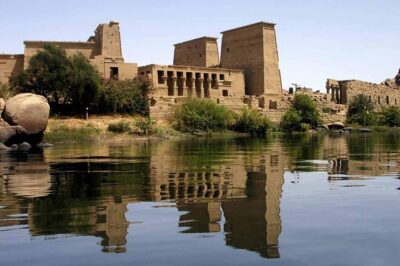
4-Day 3-Night Nile Cruise from Aswan to Luxor&Abu Simbel+Balloon
Read our review →
Nile Dinner Cruise with Belly Dancer Show with Pickup
Read our review →
4-Day 3-Night Nile Cruise from Aswan to Luxor including Abu Simbel, Air Balloon
Read our review →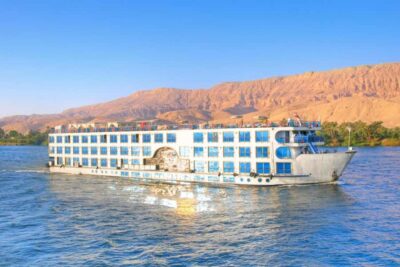
4-Day Nile Cruise from Aswan to Luxor with Guide
Read our review →Lists this trip appears in