
Review · USA
Fairbanks: Riverboat Cruise and Local Village Tour
A seaplane takes off and lands beside the boat, then the riverboat carries you to an Athabascan village and a sled-dog kennel. That quick change of scenes is the real appeal: in three hours, you see Alaska from the river, the air, and the trail.
I especially like the clear village explanations and the chance to see Trail Breaker Kennel, linked to four-time Iditarod champion Susan Butcher. The main drawback is the size and polished nature of the operation. It can feel tightly scheduled, and you may want more time at the village or a better view of the kennel.
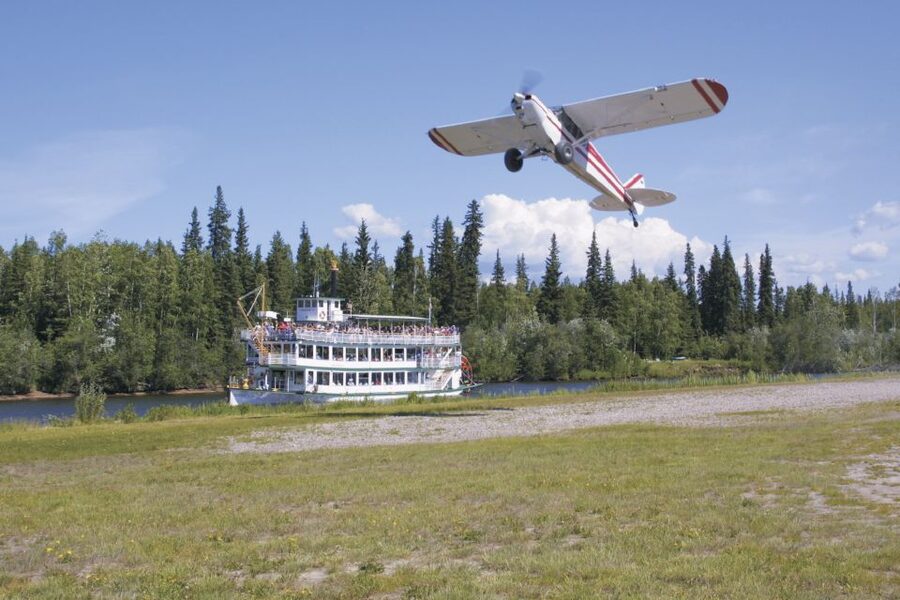
- A seaplane demonstration beside the boat: Watch a bush pilot take off and land on the Chena River while hearing how planes connect remote Alaskan communities.
- A walk through an Athabascan village: See spruce-log cabins, a storage cache, a bark hut, and fur pelts while learning about daily life and adaptation.
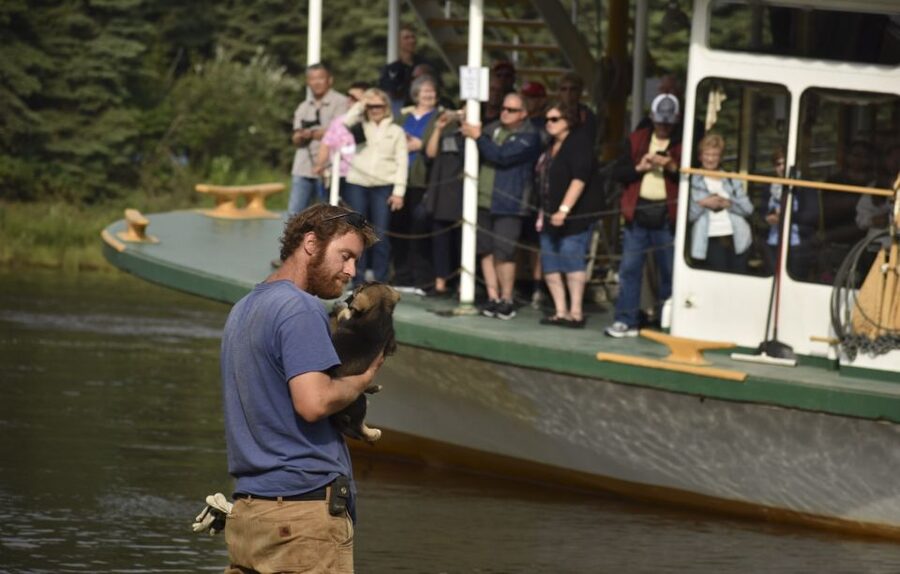
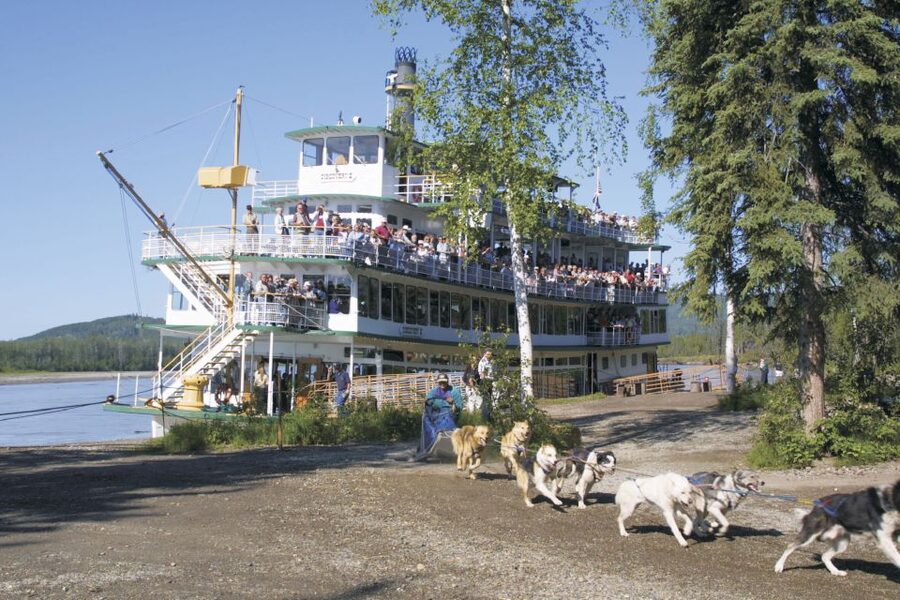
- A stop tied to Iditarod history: Visit Trail Breaker Kennel and watch a dog-mushing demonstration with puppies and working sled dogs.
- A well-managed riverboat presentation: Onboard narration, monitors, and camera feeds help you follow the action from different parts of the boat.
- Free coffee and donuts: A small but welcome touch, especially during a cool morning or early-season outing.
- An easy introduction to Fairbanks: The tour brings several major Alaska themes together without requiring a full day or complicated transport.
A Three-Hour Introduction to Alaska Along the Chena River
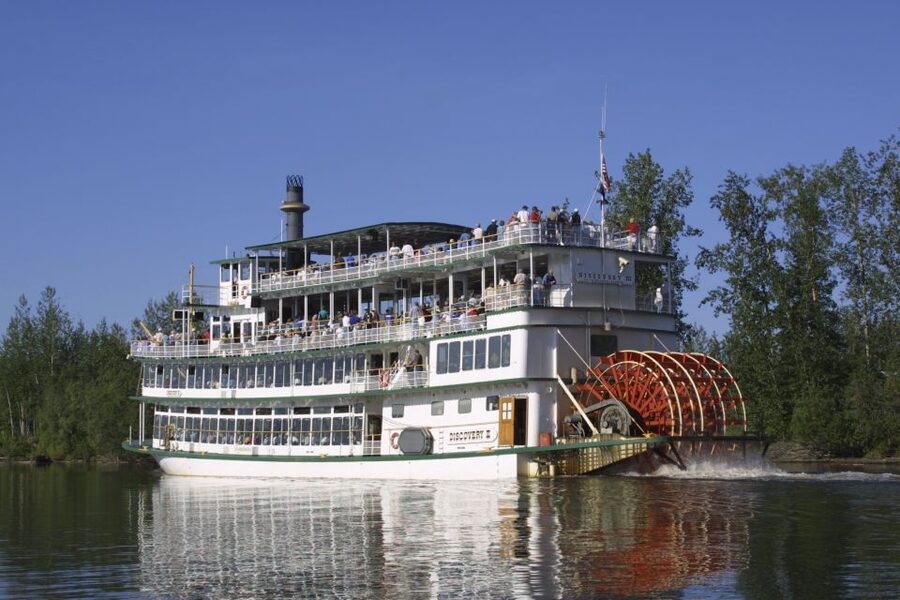
Riverboat Discovery’s Chena River cruise is built as a moving lesson in Alaska. You are not simply sitting on a boat looking at trees. The route includes staged demonstrations and shore stops that explain how people, planes, and sled dogs functioned, and still function, in the Interior.
The experience begins at 1975 Discovery Drive, a few miles from Fairbanks International Airport. From there, the boat spends about an hour cruising before reaching the village, then returns by river after the walking tour and other demonstrations. The full outing lasts three hours.
That compact schedule matters. If you have only a day or two in Fairbanks, you can see several of the area’s best-known themes without committing to a long road trip. You also get a guided introduction before deciding which parts of Alaska deserve a closer look later.
The presentation is clearly organized. The boat has onboard narration, monitors, and camera feeds, so you are less dependent on sitting in one exact place. That is useful during the seaplane and kennel demonstrations, when people naturally gather along one side of the boat.
Still, this is a popular attraction, not a quiet wilderness cruise. During busy summer periods, the boat can feel crowded. The operation is polished and sometimes scripted, which helps keep the schedule moving but leaves less room for spontaneous conversation.
What You See From the Riverboat
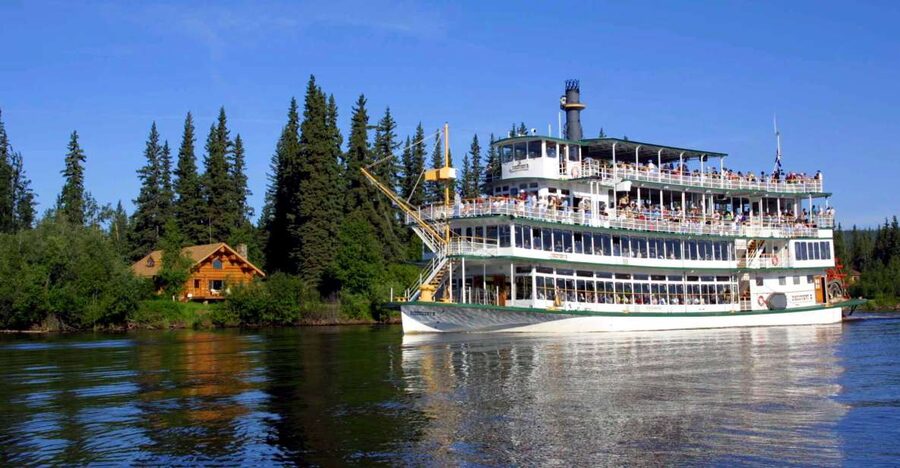
The Chena River is the thread connecting every part of the tour. From the boat, you get a calm view of the Fairbanks area and a sense of how waterways shaped local travel. The river also lets the tour bring its demonstrations directly to you instead of sending you from one separate attraction to another.
The captain and onboard host provide commentary throughout the cruise. The information covers local life, Alaska’s past and present, and the practical role of the river. The tone is designed for a broad audience, with enough history and explanation to hold the attention of adults while keeping children interested.
You can sit inside or move around the boat for different views. Several people particularly enjoy the upper deck on a clear day, but remember that Fairbanks weather can turn cool even in summer. Bring a jacket if you want to stay outside for much of the ride.
Coffee and donuts are included. Blueberry donuts receive special praise, and the snack is a pleasant way to begin the cruise. Additional food is not part of the ticket, though you can buy drinks and snacks aboard Discovery III. At Steamboat Landing, Captain’s Corner sells sandwiches, wraps, salads, and boxed lunches, which you can eat on the outdoor deck or take onto the boat.
Some outings also include a small salmon tasting, such as smoked salmon with cream cheese on a cracker. Treat that as a sample rather than a meal. If you expect to be hungry, plan to buy lunch or bring your appetite for the food available at the landing.
More River Cruises in the USA:
- Chicago Architecture River Cruise
★ 5.0 · 15,756 reviews - Boston Duck Boat Sightseeing City Tour with Cruise Along Charles River
★ 4.5 · 9,378 reviews - Chicago Architecture Center River Cruise aboard First Lady
★ 5.0 · 5,536 reviews
The Athabascan Village Stop
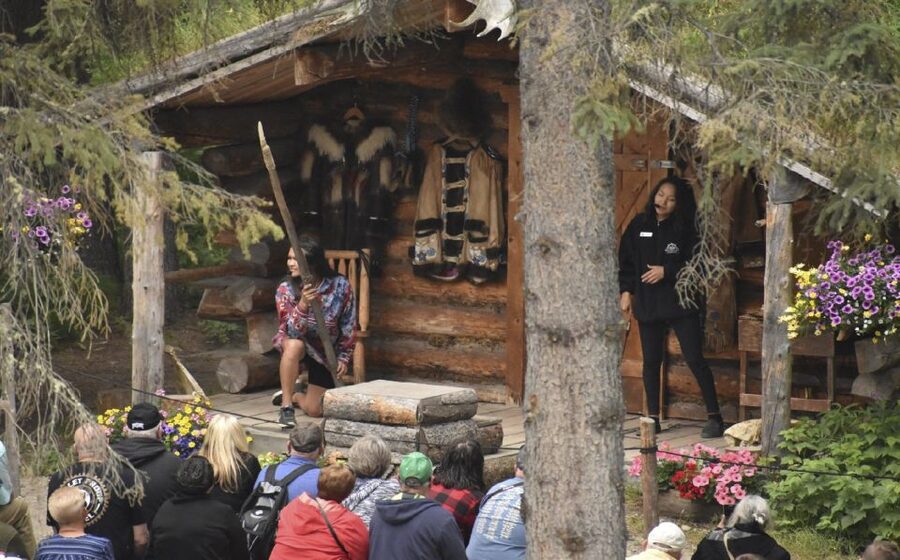
The village is the heart of the tour for many people. It gives you a physical setting for the stories you hear on the boat, with spruce-log cabins, a cache for storing supplies, a primitive spruce-bark hut, and displayed fur pelts.
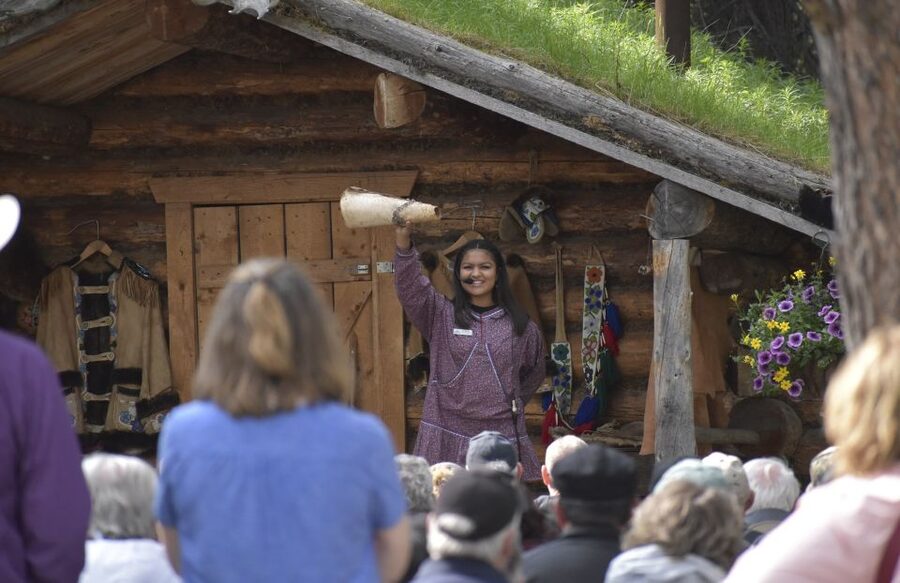
The guided walk explains how Athabascans used local animals for food, clothing, tools, and protection. Wolves, foxes, martens, and beavers each had a place in a demanding northern environment. The guides also describe how Athabascan communities maintained ways of life for thousands of years while adapting to village living and Western influence during the last century.
The value here is practical detail. Instead of hearing only broad statements about Indigenous culture, you can look at the structures and storage methods that made life possible through harsh winters. A raised cache, for example, shows the need to protect supplies from animals and weather. The cabins and bark shelter help you picture the different forms of housing used at different times.
The village is presented as a living cultural lesson, with guides explaining both earlier traditions and more recent change. Young local presenters may lead different stops, giving the walk a personal and direct feel. Listen closely, and take the chance to ask questions when the group pauses.
You also have some time to explore on your own. This is where the schedule can feel tight. If you like to examine displays, speak with each guide, and take photographs, the available free time may pass quickly. Keep an eye on the return time, because the boat cannot wait for one last look at a cabin.
The village is a reconstructed educational setting rather than an ordinary residential community. That distinction matters. It offers a useful introduction to Athabascan life, but it cannot replace visiting a working community or learning from a longer cultural program. Treat it as a carefully presented starting point.
The Bush Pilot Demonstration on the Chena

Alaska’s remote communities often depend on aircraft, and the bush-pilot stop makes that point vivid. A pilot brings a floatplane beside the boat, talks about village life, and then takes off and lands directly in front of you.
This is one of the most memorable moments because it is both practical and visual. You do not just hear that planes matter in remote Alaska. You see a small aircraft use the river as its runway.
The onboard camera feeds and monitors help if you are not standing on the side closest to the plane. That system is one of the better design choices on the boat, since the crowd can otherwise block the view. You will still want to move outside when possible for the full effect, especially for photographs.
The pilot’s stories add context. In a place where roads do not reach every village, an aircraft can carry people, supplies, and services across huge distances. The demonstration connects modern Alaska with the frontier theme running through the rest of the tour.
Trail Breaker Kennel and the Sled Dogs
The stop at Trail Breaker Kennel brings the Iditarod into view. The kennel was the home of the late Susan Butcher, a four-time Iditarod champion, and the presentation explains what goes into building and maintaining a competitive sled-dog team.
You will see the kennel area from the riverboat and watch a dog-mushing demonstration. Puppies may be part of the presentation, and they often provide the easiest crowd-pleaser of the day. The working dogs, however, are the real lesson. Sled racing requires conditioning, training, teamwork, and careful attention to each animal.
The talk also gives you a glimpse of kennel life and the demands of long-distance racing. It helps explain why mushing is more than a winter photo opportunity. The dogs are athletes, and a successful team depends on a close relationship between the dogs and the people who handle them.
The view can be uneven. If you are on the opposite side of the boat, you may have trouble seeing the kennel directly. The monitors help, but glare can make the smaller screens hard to use from certain seats. When boarding, think about where the tour action will take place, and be ready to move when staff direct you.
This stop is especially good for families. Children who might lose interest during a history talk often stay engaged when puppies and sled dogs appear. Adults get a useful look at the discipline behind an Alaska tradition that is sometimes reduced to a single famous race.
Same water, a different way to see it:
- Chicago: Architecture River Cruise Skip-the-Ticket Line
★ 4.8 · 4,325 reviews - 90-Minute Savannah Riverboat Sightseeing Cruise
★ 4.0 · 3,367 reviews - Chicago: 45-Minute Family-Friendly Architecture River Cruise
★ 4.7 · 2,304 reviews - Chicago: 1.5-Hour Lake and River Architecture Cruise
★ 4.7 · 2,050 reviews
How the Tour Handles a Large Crowd
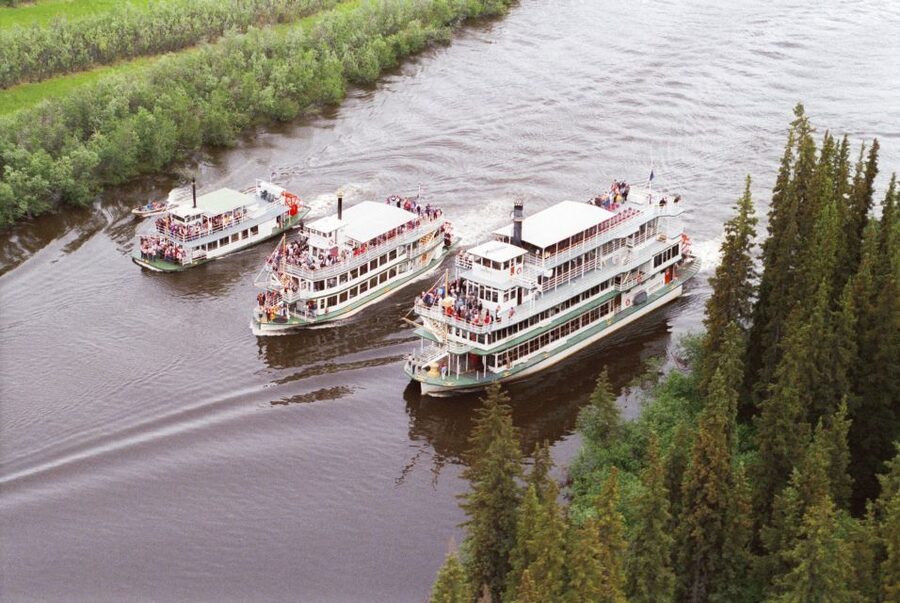
The boat’s systems are designed to make a large group manageable. The narrator, sound system, screens, and camera feeds keep the presentation moving even when people are spread across several decks.
That organization is a strength, but it also shapes the experience. You move from one event to the next on a set timetable. The village walk has several presentation points, and the boat must leave on schedule. You will not have the freedom to linger at every stop.
Some visitors find the format too scripted. I see that as a fair criticism, though the structure also prevents confusion and makes the tour accessible to a wide age range. You know where to go, what is happening next, and how long the main sections last.
The crew is used to helping people with mobility needs. The boat and village route are wheelchair accessible, and people using mobility scooters have been assisted during the outing. If you use a wheelchair or scooter, contact the operator before booking if you need details about your specific equipment.
Price, Timing, and Practical Value
At $127 per person, this is not a cheap boat ride. The fair question is what you are getting for the price. You receive a three-hour guided cruise, a village walk, a bush-pilot demonstration, a kennel presentation, onboard narration, and coffee and donuts. You also avoid arranging separate transportation to several attractions.
For a first visit to Fairbanks, that bundle can be good value. The tour provides an easy way to sample local history, Indigenous culture, aviation, and mushing in one half-day activity. It is particularly useful if your schedule is full or if you are traveling with people who want different types of sightseeing.
The value is weaker if you want a quiet river trip or a long, unhurried cultural visit. You are paying for the range of experiences and the coordination, not solitude. Food costs extra, and lunch at Captain’s Corner is convenient rather than a reason to book the tour.
The departure point is at 1975 Discovery Drive. From the airport area, take Airport Way west, turn right onto Dale Road, continue about half a mile, and turn right onto Discovery Drive. The operator does not provide a shuttle back to central Fairbanks, so plan your return ride in advance.
You can cancel up to two days before the activity for a full refund. Starting times vary, so check availability when you choose your date.
Who Will Enjoy This Chena River Cruise

I would recommend the tour most strongly to first-time visitors, families, cruise passengers with a limited Fairbanks schedule, and anyone who wants a broad introduction rather than one narrow subject.
It works well for mixed-age groups. Children get planes, puppies, and river views. Adults get explanations of Athabascan life, aviation, and Iditarod training. Older visitors can remain seated for much of the cruise, while the walking portion offers a manageable change of pace.
It also suits people who like clear narration and planned activities. The tour is not the right pick if you prefer independent exploration, small groups, or unstructured time. The village can feel rushed, and the overall presentation has the smooth, timed rhythm of a major attraction.
For the best experience, arrive ready to move between indoor and outdoor areas. Wear comfortable shoes for the village walk, carry a jacket, and keep your camera ready for the plane and dogs. If the kennel is important to you, try to position yourself where you can see the riverbank, then use the screens when necessary.
Should You Book Riverboat Discovery?
Book it if you want to fit several classic Fairbanks experiences into three well-organized hours. The Athabascan village, bush-plane demonstration, and sled-dog presentation give the tour more substance than a simple scenic cruise, while the river ride keeps the pace relaxed.
Skip it if you want a quiet wilderness outing or extended time with one community or kennel. The schedule is fixed, crowds can be heavy, and the village stop may leave you wishing for another 15 minutes.
For most first-time visitors, I think the range justifies the price. You will not leave with a full picture of Alaska, but you will leave with a much clearer sense of how the Chena River, airplanes, Indigenous traditions, and sled dogs fit into life around Fairbanks.
FAQ
How long is the Riverboat Discovery tour?
The experience lasts three hours. It includes about one hour of cruising before the village stop, a one-hour guided village visit, and about one hour of cruising afterward.
Where does the tour begin?
The tour begins at Riverboat Discovery, 1975 Discovery Drive, Fairbanks. The site is a few miles from Fairbanks International Airport.
Is the Athabascan village a guided visit?
Yes. You take a guided walking tour through the village, then have time to explore on your own and speak with the guides.
Will I see a bush plane take off and land?
Yes. A bush pilot takes off and lands beside the boat and explains the role of aircraft in remote Alaska.
Is food included?
Complimentary coffee and donuts are included. Other food is extra. Sandwiches, wraps, salads, boxed lunches, beer, wine, and snacks are available for purchase at the site or aboard the boat.
Is the experience wheelchair accessible?
Yes, the activity is listed as wheelchair accessible. The village area can also accommodate mobility scooters, though you may want to confirm details with the operator before arrival.
Newly reviewed in the USA
- NYC: Hudson River Fall Foliage Sailing Trip★ 5.0 · 9 reviews
- Fast and More 60 minute Airboat Tour on the Homosassa River★ 4.8 · 26 reviews
- Miami: Everglades River of Grass Small Airboat Wildlife Tour★ 5.0 · 7 reviews
- Crystal River: Sunset Cruise in Kings Bay★ 4.8 · 27 reviews
- Crystal River: Manatee Viewing Cruise★ 4.7 · 204 reviews
- Cocoa Beach: Banana River Sunset Cruise★ 4.7 · 66 reviews
- Cocoa Beach: Thousand Islands Banana River Boat Cruise★ 4.7 · 72 reviews
- City Cruises Chicago: Brunch, Lunch, or Dinner River Cruise★ 4.7 · 128 reviews
USA River Cruises, compared side by side.

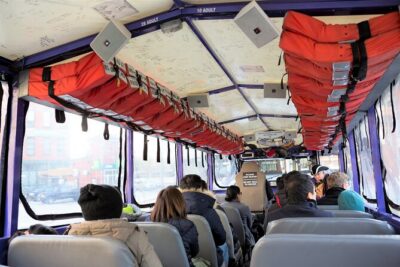
Boston Duck Boat Sightseeing City Tour with Cruise Along Charles River
Read our review →
Chicago Architecture Center River Cruise aboard First Lady
Read our review →
Architecture River Cruise Skip-the-Ticket Line
Read our review →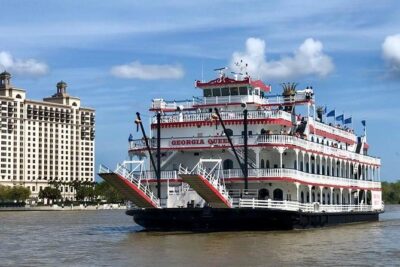
90-Minute Savannah Riverboat Sightseeing Cruise
Read our review →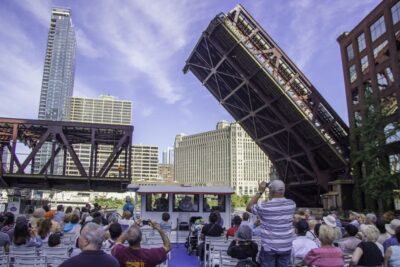
45-Minute Family-Friendly Architecture River Cruise
Read our review →
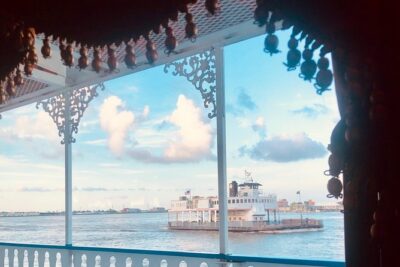
Paddlewheeler Creole Queen Historic Mississippi River Cruise
Read our review →Lists this trip appears in