
Review · ASWAN
4 Days Nile Cruise From Aswan To Luxor
The real prize here is the Nile itself. From the sundeck, you watch villages, fields, palms, and working river life pass by while Egypt’s greatest temples appear at intervals along the route. I like the smart northbound path from Aswan to Luxor and the chance to see both Abu Simbel and the main Luxor sights in one compact trip.
I also like the balance between guided sightseeing and quiet time aboard the Royal Princess. The pool, shaded bar, lounge, games, and open deck give you a place to rest after temple visits. The main drawback is the pace: Abu Simbel requires an early start and a three-hour drive each way, while the final two days pack in several major sites.
Key points at a glance
- Abu Simbel from Aswan: Leave early to see Ramesses II’s colossal temples before the worst heat.
- Philae by the Nile: Visit the temple of Isis, then see Aswan’s High Dam and the Unfinished Obelisk.
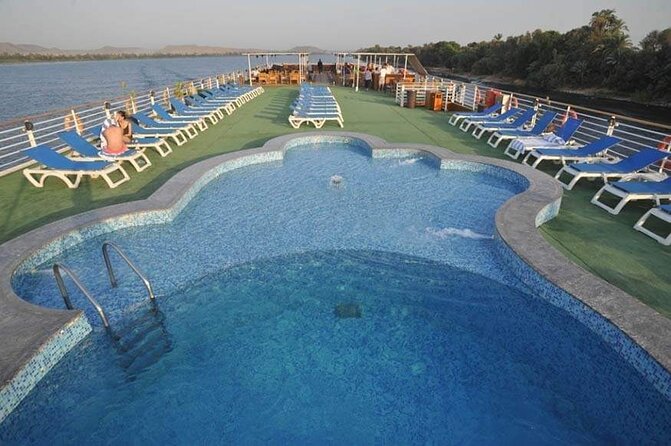
- Three nights aboard Royal Princess: Use the sundeck, pool, jacuzzi, lounge bar, and shaded pool bar between tours.
- Ptolemaic temples at Kom Ombo and Edfu: Compare the unusual double temple at Kom Ombo with Edfu’s remarkably preserved sanctuary to Horus.
- Luxor’s west and east banks: See the Valley of the Kings, Hatshepsut’s temple, Karnak, Luxor Temple, and the Colossi of Memnon.
- Private touring: Only your own group participates, with an Egyptologist guide included for the sightseeing program.
Why this four-day Nile cruise works
This is a compact introduction to southern Egypt, built around three nights on a cruise ship and a steady run of ancient sites. You begin in Aswan, sail north through the Nile Valley, and finish in Luxor after seeing the temples and tombs that define this part of the country.
The route is especially useful if you want to cover a lot without arranging separate hotels, transfers, and day tours. Your ship becomes your base, and the river does much of the moving. That matters in Egypt, where the distances between major sights can be tiring by road.
The schedule is full, but it is not only about checking off monuments. One of the best parts is the change of pace between visits. A morning may begin beside a huge temple, followed by lunch on board and a few hours watching the river from the deck. The experience can feel surprisingly restful, even with a demanding sightseeing plan.
The price is listed at $646.01 per person. That is a substantial cost, but it covers a great deal over four days: the cruise, scheduled sightseeing, admission tickets for the named attractions, meals arranged during the program, and a private group format. You should confirm exactly which meals are included before paying, since the detailed schedule lists breakfast, lunch, and dinner on board, while the stated inclusions specifically identify lunch.
More Nile Cruises in Aswan:
- 4-Days Nile Cruise From Aswan To Luxor including Abu Simbel and Hot Air Balloon
★ 5.0 · 3,142 reviews - 4-Day 3-Night Nile Cruise from Aswan to Luxor&Abu Simbel+Balloon
★ 5.0 · 2,023 reviews - 4-Day 3-Night Nile Cruise from Aswan to Luxor including Abu Simbel, Air Balloon
★ 4.5 · 612 reviews
Day one in Aswan: Philae, the High Dam, and unfinished stone
You board after arriving in Aswan, with lunch scheduled on the ship. The first day focuses on three of Aswan’s most important sights, plus a felucca ride around Elephantine Island.
Philae Temple and the worship of Isis
Philae is dedicated to Isis and is one of the last temples built in the classical Egyptian style. Construction began around 690 BC, making this a late chapter in ancient Egyptian religious architecture.
The temple is memorable not only for its columns and carved walls, but also for its modern story. The original site was threatened by rising water after construction of the Aswan High Dam. The temple complex was moved to higher ground on Agilkia Island, preserving it for visitors today.
Allow about two hours here. Your guide can help you read the carved scenes and understand the role of Isis, a goddess whose worship remained important long after many older Egyptian temples had fallen out of use. The setting beside the water gives Philae a different feeling from the inland monuments you will see later.
Aswan High Dam
The High Dam is a major piece of modern Egyptian engineering. Built between 1960 and 1968 and officially opened in 1971, it created Lake Nasser and changed how Egypt controlled the Nile.
The visit is brief in intellectual terms, but useful for understanding the region. The dam brought power and greater control over flooding, yet its reservoir also forced the relocation of temples and communities. Philae is the clearest example of the rescue work made necessary by the rising water.
The stop is planned for about two hours, which gives you time to take in the scale of the structure and hear how it changed southern Egypt.
More Four-Day Trips in Aswan:
- From Aswan: 4-Day Nile Cruise from Aswan to Luxor with Guide
★ 4.1 · 593 reviews - 4-Day 3-Night Nile Cruise from Aswan to Luxor – Private Tour
★ 5.0 · 369 reviews - 4 Days Nile Cruise from Aswan to Luxor including Abu Simbel and Hot Air Balloon
★ 4.5 · 356 reviews - 4-Day 3-Night Nile Cruise from Aswan to Luxor With Balloon and Abu Simbel
★ 5.0 · 327 reviews
The Unfinished Obelisk
At Aswan’s northern quarries, the Unfinished Obelisk gives you a rare look at ancient stonework before the final polish. The monument was cut from granite but abandoned after a flaw appeared in the rock.
If completed, it would have been nearly 42 meters long and weighed about 1,168 tonnes. That would have made it the heaviest single piece of stone the ancient Egyptians ever shaped.
This stop is valuable because it shows the work behind the finished monuments. At Karnak and Luxor, you see polished surfaces and formal inscriptions. Here, you see the quarry floor and the scale of the task. Wear practical shoes, since the quarry setting is less gentle than a paved temple court.
After the day’s visits, you return to the ship for dinner and your first night on board. A felucca ride around Elephantine is also included in the Aswan program, offering a slower look at the river before the cruise begins its longer sailing sections.
Day two: the long morning at Abu Simbel
Abu Simbel is the most demanding outing of the cruise, but it is also one of the major reasons to choose this route. You leave early from Aswan, with about three hours of driving to reach the temples.
That start can be hard, especially after boarding and sightseeing on day one. The early departure is sensible, though, because it helps you reach the site before the strongest heat of the day. Bring water, sun protection, and patience for the road journey.
Ramesses II’s mountain temples
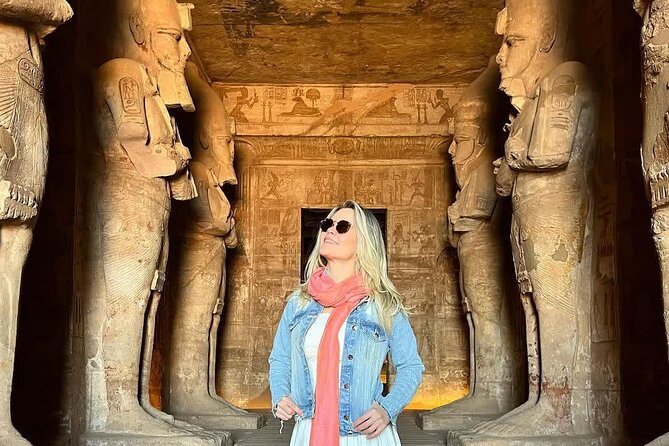
Ramesses II ordered the two temples at Abu Simbel to be carved from the mountainside in the 13th century BC. The Great Temple is fronted by four enormous seated statues of the pharaoh, each showing him at a different stage of life.
The scale is almost theatrical. Even before you enter, the façade makes a clear political statement: Ramesses wanted his power remembered by anyone moving through southern Egypt. Inside, the temple honors Amon-Re, Horakhty, and Ptah, while also presenting Ramesses as a ruler with divine status.
The visit lasts about three hours and includes an Egyptologist guide. That guidance matters here because the carvings are filled with religious and political meaning, and the site is large enough to become confusing without a clear explanation.
The main caution is simple: Abu Simbel takes most of the morning and involves a long road trip. If you prefer slow travel with little time in vehicles, this may feel like the least relaxed part of the experience. If seeing Abu Simbel is high on your list, the effort is justified.
Kom Ombo at sunset or late afternoon
After returning to the ship, lunch is scheduled on board, followed by sailing toward Kom Ombo. The temple sits about 40 kilometers north of Aswan and is unusual because it is dedicated to two gods, Sobek and Horus.
Sobek has a crocodile form, while Horus is linked with the falcon. The paired design gives the temple a distinctive layout, with areas associated with each deity. Most of what you see dates from the Ptolemaic and Roman periods, from 332 BC to AD 395.
The timing can make this visit especially pleasant, since the light often softens later in the day. You should still expect heat and open stone surfaces. After the visit, the ship continues toward Edfu, where you spend the night.
A galabeya party is scheduled on board. This is a light social event rather than a historic site, and its appeal will depend on your mood after a long day. You can enjoy it as a change from temple touring or treat it as optional entertainment.
Day three: Edfu, the Esna lock, and Luxor Temple
Day three begins with breakfast on the ship and a visit to Edfu. The cruise then continues toward Luxor through the Esna lock before an evening visit to Luxor Temple.
Edfu Temple and the story of Horus
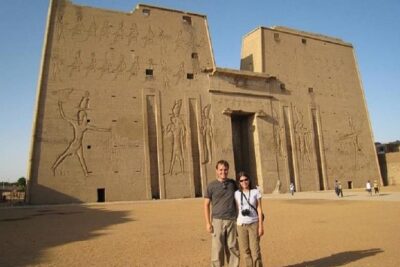
Edfu is dedicated to Horus, the falcon-headed god, and is one of the best-preserved large temples in Egypt. Construction took place under the Ptolemaic rulers, beginning during the reign of Ptolemy III in 246 BC.
The carved walls include the myth of the conflict between Horus and Seth. This story may once have been presented as a religious drama, and the inscriptions help you see the temple as more than a collection of columns. It was a working center of ritual, ceremony, and priestly life.
The visit is listed at about three hours. That gives you time to study the massive gateway, columns, inner rooms, and wall scenes without rushing through the complex. Edfu’s condition makes it easier to understand the basic plan of an Egyptian temple than some more damaged sites.
Sailing through the Esna lock
The passage through the Esna lock is one of the cruise’s smaller but more interesting moments. You see the ship move through a piece of working river infrastructure before continuing to Luxor.
This section is a good reminder that the Nile is not simply a scenic backdrop. It is a transport route, a source of water, and the reason these settlements and monuments existed where they did. Keep some time free on deck if you want to watch the process rather than remain inside.
Luxor Temple after dark
Luxor Temple was built largely under Amenhotep III and Ramesses II. It served as a setting for the Opet Festival, a major celebration designed to join the human role of the ruler with his divine office.
The temple feels different from Karnak. Karnak is sprawling and monumental, while Luxor Temple has a more contained sequence of courtyards, columns, and processional spaces. An evening visit can make the carved stone and illuminated courts easier to appreciate, although the exact atmosphere depends on the operating schedule and light.
The visit lasts about two hours. It is a strong introduction to Luxor before the more extensive west bank and Karnak program on the final day.
Day four: tombs, queens, and Karnak’s vast courts
The last morning is the busiest sightseeing block. After breakfast on the ship, you visit the west bank of Luxor, then cross to Karnak before disembarking.
Valley of the Kings
The Valley of the Kings served as the burial ground for rulers of Egypt’s 18th through 20th dynasties. Its tombs were stocked with objects believed to be useful in the next world, and many retain remarkably clear painted decoration.
You should expect the exact tomb selection to depend on site arrangements and the ticket rules in effect. The program identifies the valley and mentions tombs connected with rulers such as Ramesses II and Tutankhamen, but entry to individual tombs can be handled separately at Egyptian archaeological sites.
Inside, the key attraction is not the empty burial chamber alone. It is the long painted route into the mountain, covered with religious texts and scenes meant to guide the dead ruler into the afterlife. The valley can be hot, dry, and exposed, so the early timing is helpful.
Colossi of Memnon
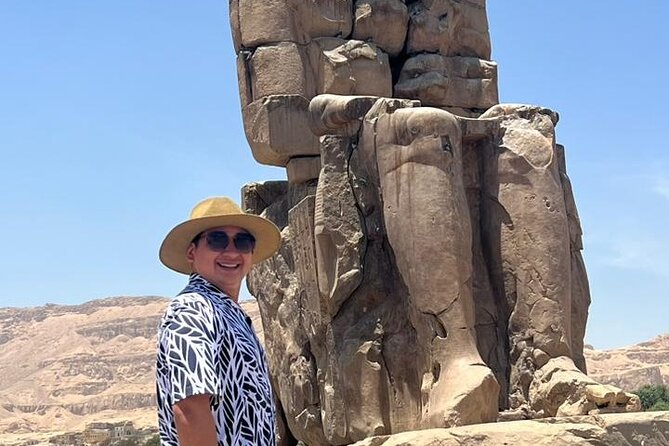
The Colossi of Memnon are two huge stone statues of Amenhotep III. They are the remaining pieces of a once-complete mortuary temple.
The stop is short, about 30 minutes, and admission is free. That makes it an easy pause between the valley and Hatshepsut’s temple. The statues are also a useful reminder that much of ancient Egypt has disappeared, leaving only isolated pieces of buildings that once filled the plain.
Hatshepsut’s temple at Deir el Bahari
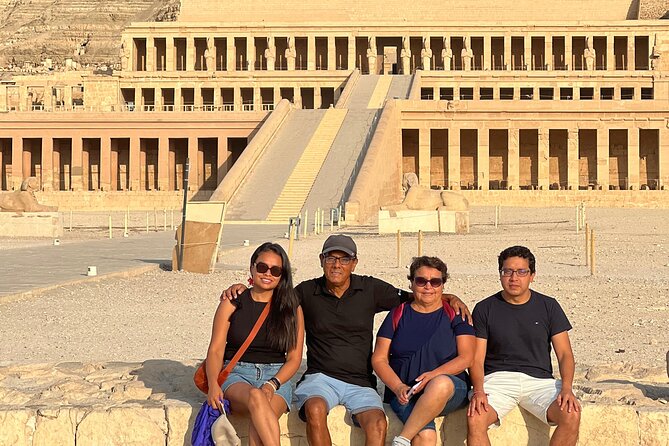
Hatshepsut’s temple is built into the cliffs at Deir el Bahari and rises through three levels connected by broad central ramps. Its design is more open and carefully ordered than many other Egyptian temples.
Hatshepsut ruled as pharaoh and presented herself through the formal symbols of kingship. Your guide can explain how the temple’s layout and reliefs supported that public image. Allow about two hours, since the terraces and approach deserve more than a quick photograph.
The site includes ramps and open areas, so you should be ready for sun. The broad design also gives you strong views back across the west bank, though the supplied information does not promise any particular photo conditions.
Karnak Temple
Karnak is the grand finale. The complex covers about 247 acres and includes three main temple areas, smaller enclosed sanctuaries, and outer temples built and altered by generations of pharaohs.
Do not expect a single compact building. Karnak is a whole religious center, and its size can make the visit feel less orderly than Luxor Temple. The Great Hypostyle Hall, with its forest of columns, is usually the architectural highlight, but the complex has much more to see.
The scheduled visit lasts about two hours. That is enough for a strong overview, though not enough to examine every corner. Listen for the links between Karnak, Luxor Temple, and the Opet Festival, because those connections help turn separate ruins into one coherent ceremonial center.
Disembarkation follows breakfast and the final sightseeing program. The stated end point is back at the meeting point, but the information does not provide a separate Luxor hotel or airport transfer, so arrange your onward plans carefully.
Life aboard Royal Princess between the temples
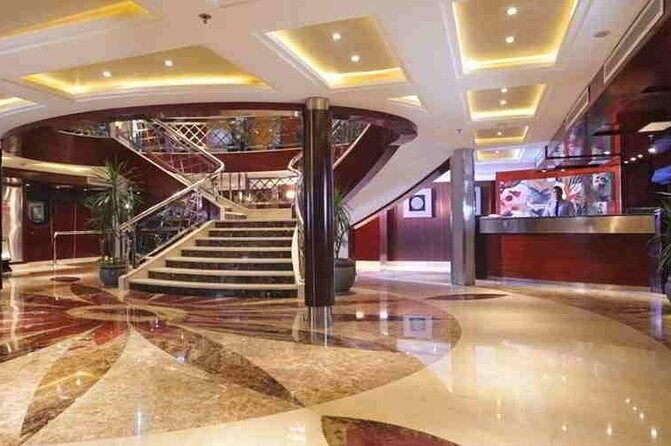
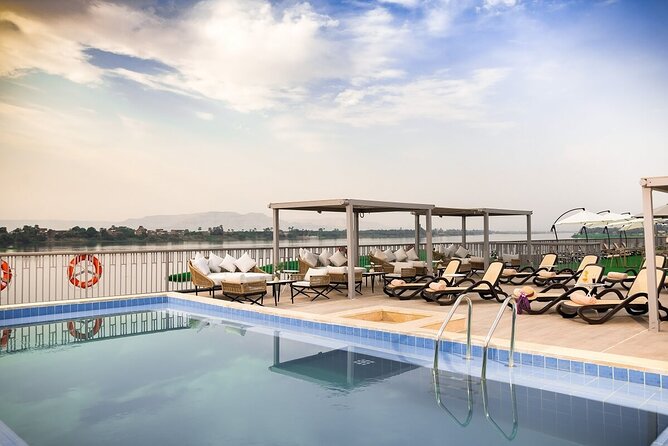
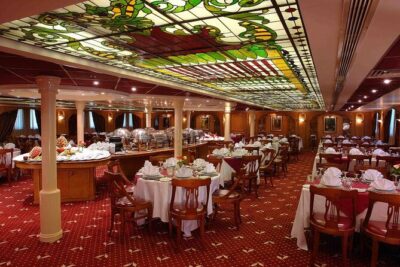
The ship’s facilities matter because the itinerary sends you out early and keeps you moving. Royal Princess has a main dining room, lounge bar, sundeck, swimming pool, jacuzzi, shaded pool bar, gym, massage therapist, pool table, chess and card tables, gift shop, public-area internet, and laundry service.
I would treat the sundeck as the main attraction. The hours between temple visits are your chance to watch the Nile and see ordinary life along the banks. The pool and shaded bar offer relief in the heat, while the indoor lounge gives you a quieter place to sit.
Internet is listed for public areas, but no details are provided about speed, coverage, or cost. The same applies to laundry, massage, drinks, and some onboard services. Ask what is included before using them.
This is a private activity, so only your group participates. That can make a real difference during early departures and temple visits, since your guide can focus on your group rather than managing a large mixed party. No guide’s name is provided, so you should request that detail before booking if the person leading your sightseeing is important to you.
Who should book this Nile itinerary?
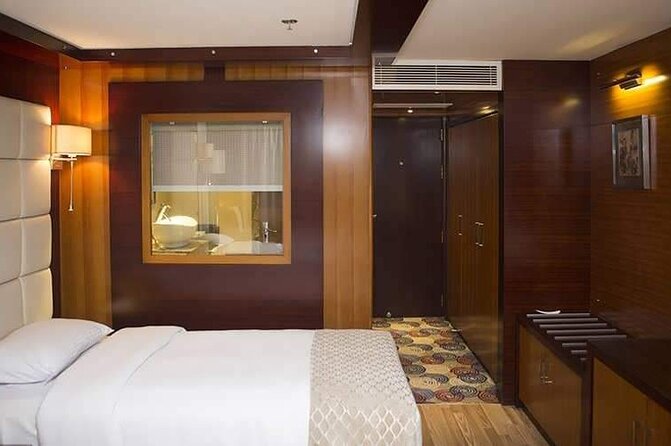
I would choose this cruise if you want the classic Aswan to Luxor route in a short period and value having transport, lodging, and sightseeing arranged together. It suits first-time visitors who want a clear introduction to ancient Egyptian temples, tombs, and modern Nile life.
Families can also find the format useful. The cruise gives children a swimming pool and open space between visits, while the private group setting avoids some of the strain of a large coach tour. Still, the Abu Simbel day is long, and the early starts may be tiring for young children.
You should think twice if you want slow, independent travel. The schedule leaves limited room to skip a stop, linger in a market, or change the order of the day. The experience is built around the set program.
Pickup is offered, but the stated starting point is Aswan and the start time is 5:00 am. Confirm the pickup location, boarding time, and final Luxor arrangements before you pay. Free cancellation is available if you cancel at least 24 hours before the local start time. Changes or cancellations inside that window are not accepted for a refund.
Should you book it?
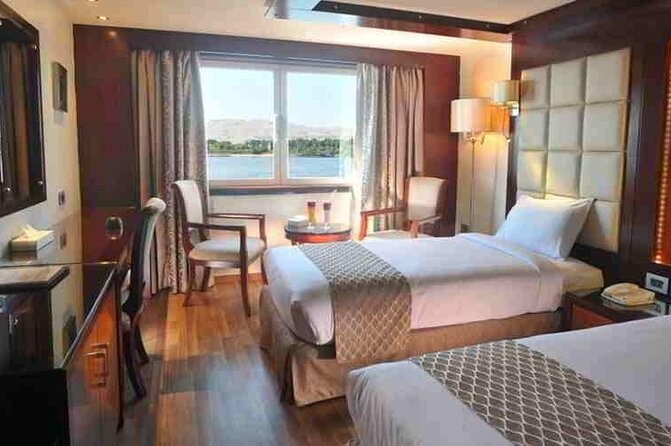
Book this cruise if your priority is seeing the major monuments between Aswan and Luxor with a private group, an Egyptologist guide, and a comfortable ship between outings. The combination of Philae, Abu Simbel, Kom Ombo, Edfu, Luxor Temple, the Valley of the Kings, and Karnak gives you a strong view of southern Egypt in four days.
Skip it if you dislike early mornings, long road transfers, or a fixed schedule. Before confirming, ask for the exact cruise dates, cabin details, guide name, meal inclusions, pickup plan, and what happens after disembarkation. At $646.01 per person, the value is strongest when those arrangements are clearly included and you plan to use the ship as both your hotel and your transport.
FAQ
How long is the Nile cruise?
The experience lasts approximately four days and includes three nights aboard Royal Princess.
Where does the cruise begin?
It begins in Aswan, in Egypt’s Aswan Governorate.
Where does the experience end?
The activity ends back at the meeting point after the Luxor program. The information does not specify a separate hotel or airport transfer.
What time does the tour start?
The listed start time is 5:00 am.
Is Abu Simbel included?
Yes. The second day includes an early visit to the Abu Simbel Temple Complex, with admission included in the stated itinerary.
Which temples are visited?
The program includes Philae, Kom Ombo, Edfu, Luxor Temple, Hatshepsut’s temple, and Karnak. It also includes the Valley of the Kings, the High Dam, the Unfinished Obelisk, and the Colossi of Memnon.
Is this a private tour?
Yes. Only your group participates in the activity.
What facilities are available on Royal Princess?
The ship lists a main dining room, lounge bar, sundeck, swimming pool, jacuzzi, shaded pool bar, gym, massage therapist, games tables, gift shop, public-area internet, and laundry service.
Can I cancel for a full refund?
You can cancel for a full refund up to 24 hours before the experience’s local start time. Cancellations or changes made less than 24 hours before the start are not accepted for a refund.
Newly reviewed in Aswan
- 4-Days Nile Cruise From Aswan To Luxor Abu Simbel and Air Balloon★ 4.5 · 2 reviews
- Sailing Nile Cruise from Aswan to Luxor for 2 Nights★ 4.5 · 139 reviews
- Sailing Nile cruise from Aswan to Luxor includes tours for 3 nights★ 5.0 · 16 reviews
- 4-Day Nile Cruise: Aswan to Luxor & Abu Simbel + Hot Air Balloon★ 4.5 · 35 reviews
- 4-Days Aswan sails Nile Cruise Luxor &Abu Simbel.Hot air Balloon★ 4.5 · 77 reviews
- Luxor: 4-Night Nile cruise , Hot Air balloon , west bank , abu simbel★ 5.0 · 3 reviews
- 4 Days Nile Cruise &Hot Air Balloon on M/S Movenpick Royal Lilly★ 5.0 · 4 reviews
- Sailing Nile cruise from Aswan for 2 nights★ 4.0 · 11 reviews
Nile Cruises, compared side by side.
4-Days Nile Cruise From Aswan To Luxor including Abu Simbel and Hot Air Balloon
Read our review →
Dinner Cruise on the Nile River with Entertainment
Read our review →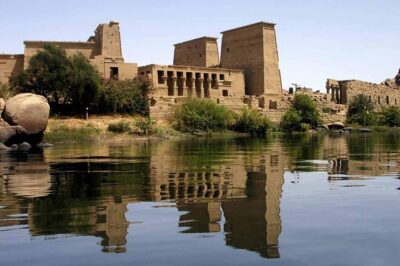
4-Day 3-Night Nile Cruise from Aswan to Luxor&Abu Simbel+Balloon
Read our review →
Nile Dinner Cruise with Belly Dancer Show with Pickup
Read our review →
4-Day 3-Night Nile Cruise from Aswan to Luxor including Abu Simbel, Air Balloon
Read our review →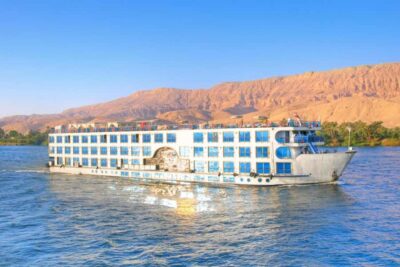
4-Day Nile Cruise from Aswan to Luxor with Guide
Read our review →Lists this trip appears in