
Review · ON THE RIVER
Geneva Walk & Cruise:The secrets of the Jet D’eau & apéritif
Geneva’s famous Jet d’Eau began as a practical piece of waterworks, not a grand symbol for postcards. This tour follows that story through the Rhône, old industrial districts, buried channels, and the waterfront before giving you a close lake-level view of the fountain.
I like the way the walk links Geneva’s past to real places, especially the old washwomen’s quarter and the former Machine district. I also like the finish: a short Lake Geneva cruise followed by a Swiss apéritif with cheese, charcuterie, and local wine.
The main catch is physical. You will walk on city streets and cannot use this tour if you have a wheelchair or major mobility limits. At $127 per person, the value depends on wanting a guided history walk, boat ride, and tasting in one package rather than just a quick look at the Jet d’Eau.
Key points to know
- The Jet d’Eau has an industrial backstory: You learn how Geneva used the Rhône’s force before the city became known for watches and diplomacy.
- Historian Arnaud Bosch leads the tour: His style is engaging and flexible, with time for questions and local stories.
- The route follows water through Geneva: Expect the Bâtiment des Forces Motrices, old washhouse districts, Bel-Air, Machine Cordier, and the Rhône.
- A 45-minute cruise changes the view: Lake-level sightlines bring you close to the Jet d’Eau and Geneva’s waterfront.
- The tasting is part of the price: Finish with regional cheeses, charcuterie, and local wine in a friendly setting.
- Plan for comfortable walking: Bring water, sunscreen, a camera, and weather-appropriate clothing.
Geneva’s fountain began with machinery, not glamour
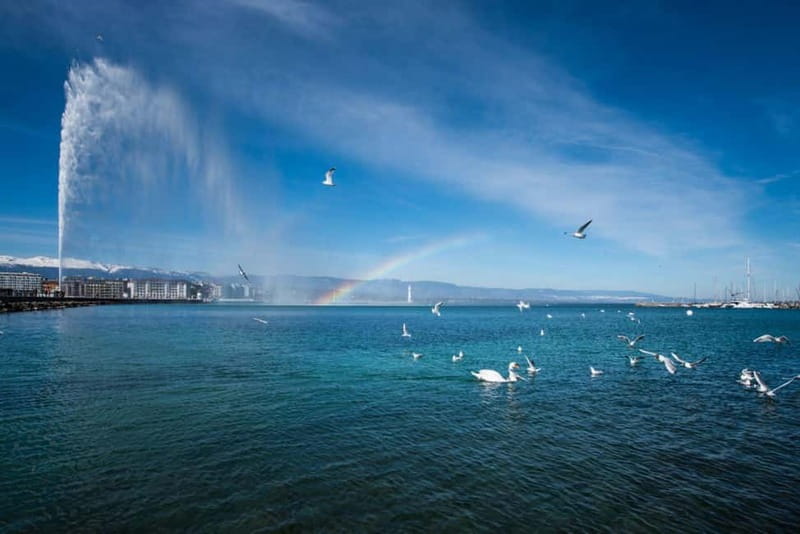
The Jet d’Eau is Geneva’s unmistakable symbol, but its first role was far less romantic. It grew out of the city’s hydraulic system and its need to control water pressure. That practical beginning gives the tour a useful angle: you are not only looking at a fountain, you are tracing how water helped build Geneva.
You begin at Keytours SA, where you check in at the desk and wait for the guide to call the group. The first transfer is by mini train and takes about 15 minutes. It is a simple way to reach the opening stop without spending the first part of the tour on a long city walk.
Your guide is listed as a professional historian, and the tours are offered in English and French. Arnaud Bosch leads the experience described here. His strength is connecting small places to larger stories, so a quiet riverside corner can become part of Geneva’s industrial past rather than just another photo stop.
More River Cruises in the world:
- Paris: 1-Hour Seine Cruise departing from the Eiffel Tower
★ 4.4 · 77,472 reviews - Istanbul: Bosphorus Dinner Cruise & Show with Private Table
★ 4.8 · 62,058 reviews - Amsterdam Luxury Canal Cruise + Unlimited Drinks & Bites option
★ 5.0 · 30,518 reviews
The Bâtiment des Forces Motrices sets the tone
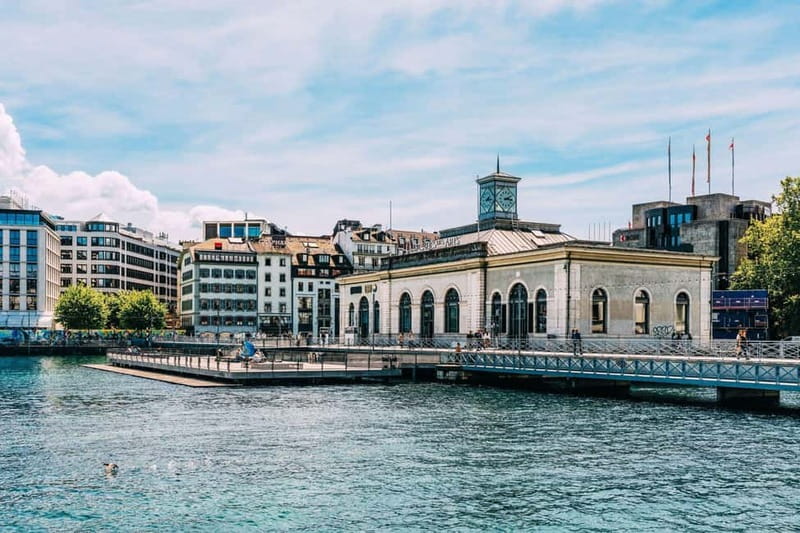
The first important stop is the Bâtiment des Forces Motrices, once Geneva’s main hydraulic factory. You have about 10 minutes for a guided visit and photographs.
This building matters because it gives you the tour’s central idea in one place. Geneva’s rivers were not just scenic features. They supplied power, supported industry, and shaped where people worked and lived. Before luxury watches and international diplomacy defined the city abroad, water helped Geneva compete with larger industrial centers such as Zurich and Basel.
The stop is fairly brief, so do not expect a long interior visit or a museum-style presentation. Its value comes from the explanation. With the right context, the building becomes evidence of a working city, not simply an impressive old structure beside the Rhône.
A slideshow of old photographs is included during the tour. That is especially useful here and at the later stops, since modern Geneva can hide the industrial uses of the river. Old images help you compare today’s streets and waterfront with a city powered by water.
Following the Rhône through the old washwomen’s districts
From the hydraulic factory, the route follows the Rhône. You stop for about 15 minutes along the river, then continue through several shorter guided sections of around 10 to 15 minutes each.
The river walk is where the tour feels most different from a standard central Geneva sightseeing route. Instead of moving from one famous monument to another, you follow a practical thread: water, work, transport, and the people who depended on the river.
One of the most memorable subjects is the old district of the washwomen. The name points to a daily side of city life that grand civic buildings often leave out. Laundry work depended on access to water, and the riverside was part of the city’s labor system. You get a glimpse of the people and trades that made Geneva function.
I like this section because it gives the Rhône a human scale. You are not only hearing about engineering or industry. You are also hearing about the workers whose routines were tied to the water.
The stops are short enough to keep the tour moving, though the walking route may feel less structured than a traditional monument tour. Some locations are described as photo stops and story points rather than major attractions with formal entrances. That suits curious walkers who enjoy city texture, but it may disappoint anyone hoping for long visits inside historic sites.
Halles de l’Île and the city’s changing waterfront
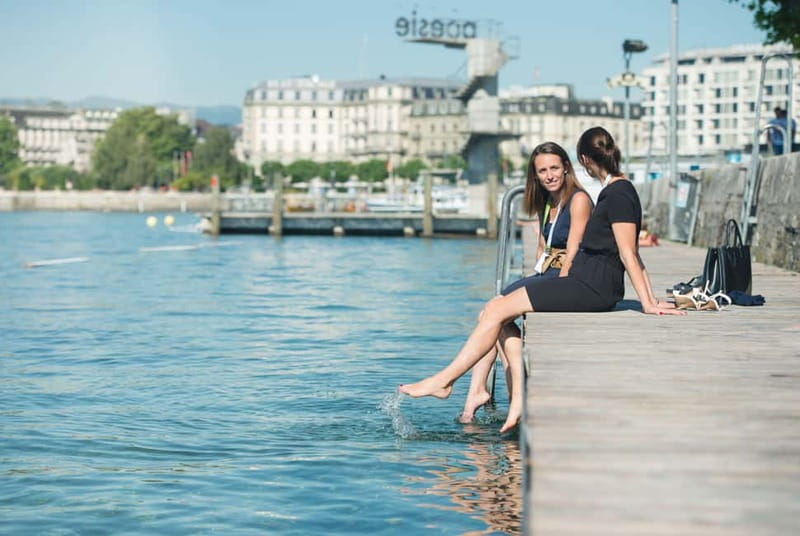
The route reaches Halles de l’Île, a former center of Geneva’s meat industry. Today, it has been turned into a bar and brasserie.
This is a useful example of how Geneva reuses old working spaces. The building’s current social role is different, but the guide connects it to the older food and trade networks that once operated there. The contrast between former market activity and today’s dining culture helps you see how the city has changed without losing every trace of its past.
You should not expect a meal at Halles de l’Île. The proper apéritif comes later and includes local products. Here, the stop is about the building, the district, and the story of how the waterfront has shifted from industry to leisure.
As you walk, the guide also discusses water tunnels and channels beneath the city. These details give the route a sense of mystery without turning it into a ghost tour. The point is practical: Geneva had systems for moving and controlling water, and many parts of that system are easy to miss when you pass through the modern streets.
Same water, a different way to see it:
- London: Westminster to Greenwich River Thames Cruise
★ 4.5 · 22,836 reviews - Paris: Evening River Cruise with Music
★ 4.4 · 22,721 reviews - Amsterdam: Heated Canal Cruise with Unlimited Drinks & Bite
★ 4.5 · 21,431 reviews - Amsterdam: 75 Minute City Canal Cruise with Audio Guide
★ 4.4 · 19,938 reviews
Bel-Air was once Geneva’s Machine district
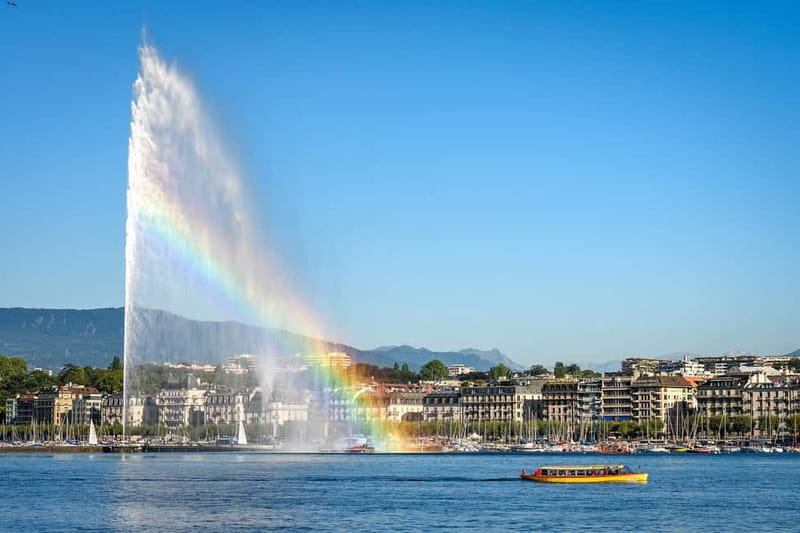
The walk then turns toward Bel-Air, a district many people now connect with banking and the polished center of Geneva. The tour presents a different past. Bel-Air was once known as the Machine district, a name linked to the machinery and water-powered activity that occupied the area.
That change is one of the strongest parts of the route. You see how a district can move from industrial work to private finance, while the city around it keeps building over the old story. The guide’s job here is not just to name the former district. It is to explain why machinery was placed there and how the Rhône made that possible.
The idea is easy to miss on an ordinary city visit. Geneva can look prosperous and refined, but its growth also came from engineering, commerce, labor, and competition. The tour puts those less polished foundations back into view.
You may also hear about the city’s secret underground channels and the ways water once powered an entire industry. Exact access to these channels is not promised, so think of this as a guided look at hidden infrastructure rather than an underground excursion.
Machine Cordier and the road to the Jet d’Eau
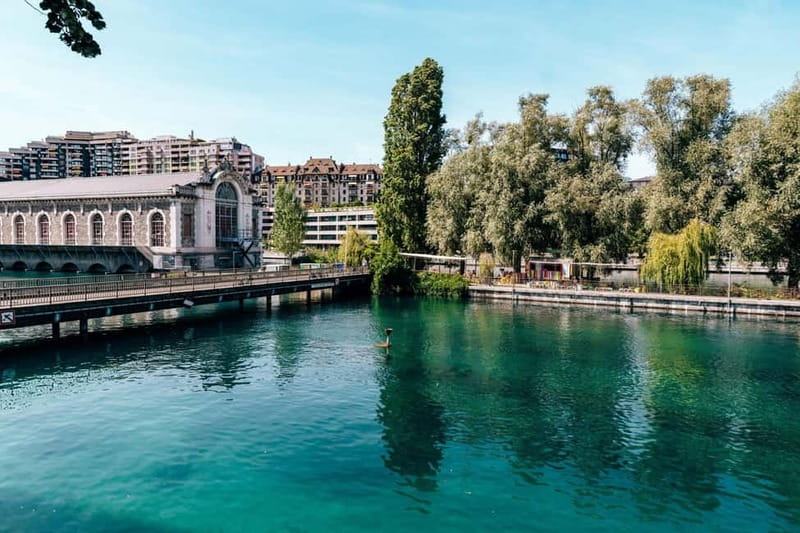
The route continues to the mysterious Machine Cordier before reaching the Jet d’Eau. This stop helps bridge the technical story of Geneva’s waterworks with the fountain everyone recognizes.
The machine is part of the tour’s lesser-known material. It represents the sort of machinery that made the Rhône useful as a source of power. You do not need an engineering background to appreciate the point. Geneva’s river was a working tool, and machinery like this helped turn moving water into economic power.
Then the Jet d’Eau comes into focus. You have around 20 minutes here for a guided visit and photographs, enough time to hear the fountain’s unexpected origin story and the legends that have grown around it.
The guide’s explanation is the reason to visit the Jet d’Eau on this tour instead of simply walking there alone. A solo visit gives you the spray, the view, and the familiar silhouette. This tour adds the question of why the fountain exists in the first place and how a piece of hydraulic equipment became an emblem.
Bring a camera, but also keep your distance from the spray and check the weather. Wind and rain can change the feel of this part of the walk. Sunscreen and water are sensible additions, particularly if the day is bright.
A 45-minute cruise gives you Geneva from the lake
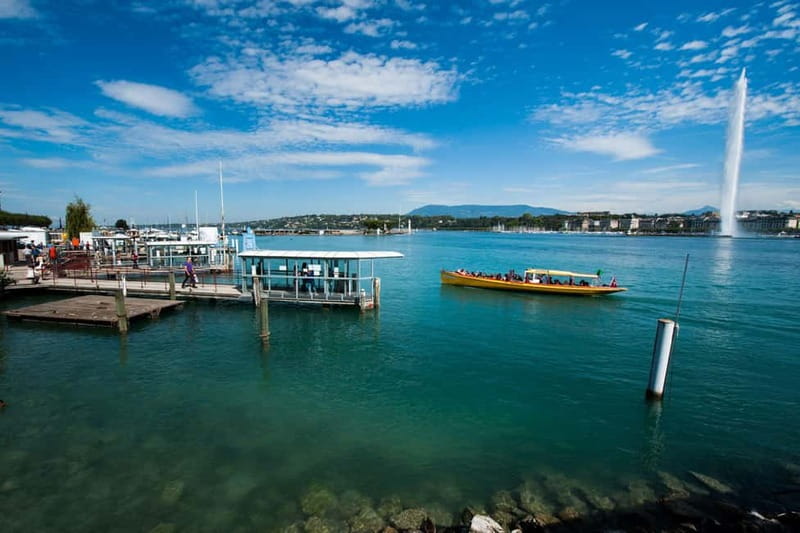
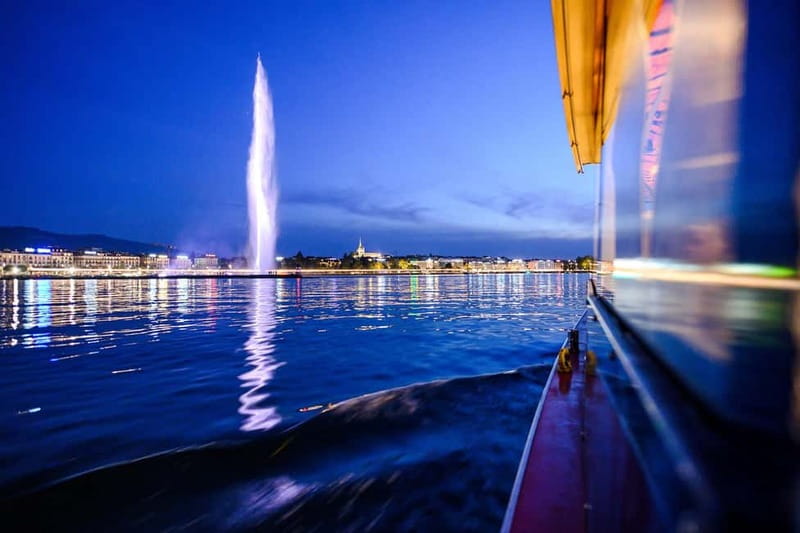
After the walking portion, the experience includes a 45-minute cruise on Lake Geneva. This is more than a rest break. From the water, you get a different angle on the waterfront and the Jet d’Eau.
The lake-level view is one of the best reasons to choose this tour. On land, the fountain dominates the scene from a fixed point. On the boat, the viewpoint changes as you move, and you can look back toward the city rather than only toward the spray.
The cruise also gives your feet a break after the walking sections. That matters because the full activity lasts 210 minutes, or three and a half hours. The day is not an exhausting hike, but it is long enough that a boat ride improves the rhythm.
Boat schedules and operating conditions can be affected by weather, though no specific disruption policy is given here. Dress for the forecast rather than assuming the lake will feel warm. A light layer and water bottle are practical choices.
The Swiss apéritif is a real part of the value
The final social element is an apéritif featuring local products. You are served regional cheeses, charcuterie, and a selection of local wines in a welcoming office setting.
This is not presented as a full dinner, so plan your meals accordingly. It is a tasting and a chance to relax after the walk and cruise. The food gives the tour a distinctly local finish, especially after spending the afternoon learning about Geneva’s working past.
I like this part because it keeps the experience from ending at the usual fountain photo. You have time to discuss what you saw, ask final questions, and sample a few regional staples. The combination is practical for a short stay in Geneva: history, views, transport, and food in one booking.
The apéritif also helps explain the $127 price. If you only want to see the Jet d’Eau, that cost is hard to justify. If you want a historian-led walk, the mini train transfer, the lake cruise, old photographs, local stories, and food and wine, the package becomes more reasonable.
Who will get the most from the $127 price
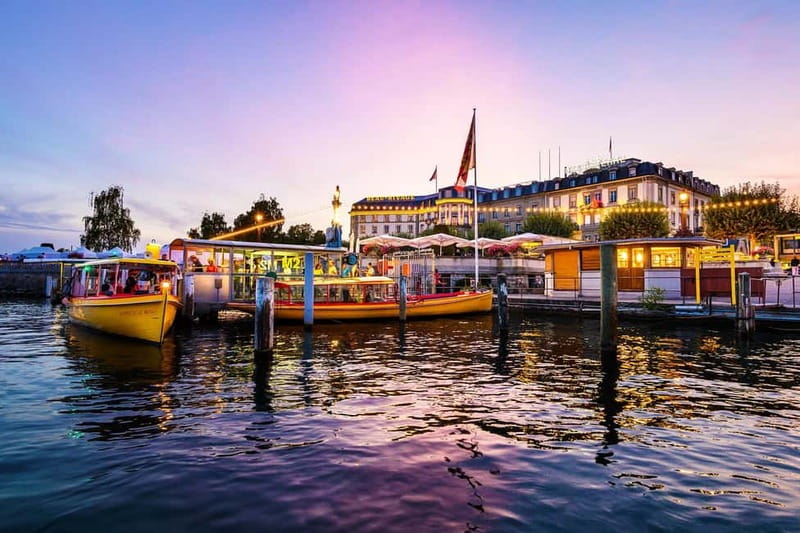
I would choose this tour if you want a focused introduction to Geneva that goes beyond the main monuments. It suits you especially well if you enjoy urban history, engineering, riverfront walks, and the small stories behind familiar places.
It is also a good fit for a first visit when you want someone else to connect the city’s parts. The route covers several subjects that do not naturally appear together: hydraulic factories, washwomen, meat markets, banking districts, underground channels, and the Jet d’Eau.
The tour may be less suitable if your main goal is free time for shopping, museums, or a long meal. Three and a half hours is a firm block in your day, and the route includes several stops that are primarily guided explanations rather than major attractions.
Mobility is the clearest limitation. The activity is not suitable for wheelchair users or people with mobility impairments. Wear proper walking shoes, bring water, and check the forecast before you go. Smoking is not allowed.
Cancellation is flexible: you can cancel up to 24 hours before the start for a full refund, and you can reserve now and pay later. Hotel pickup and drop-off are not included, so you need to reach the Keytours SA desk yourself.
Should you book Geneva Walk and Cruise?
Book it if you want to understand why the Jet d’Eau exists, not just photograph it. The strongest parts are Arnaud Bosch’s storytelling, the Rhône-centered route, the old photographs, and the boat view that brings the fountain into a new frame.
Skip it if you want a short, cheap sightseeing stop or a tour built around major interiors. At $127, this is a bundled half-day outing. Its value comes from the connection between the walk, cruise, and apéritif.
For an active visitor who enjoys local food and overlooked city stories, I think it is a smart way to meet Geneva. For anyone with limited walking ability, the route is not a practical choice.
FAQ
How long does the Geneva Walk and Cruise last?
The activity lasts 210 minutes, or three and a half hours.
Where does the tour start?
You check in at the Keytours SA desk, which has a waiting room. The guide calls the group from there.
What languages are available?
The live tour guide is available in English and French.
Is transportation included?
Yes. The tour includes transport by mini train and a Lake Geneva cruise. Hotel pickup and drop-off are not included.
Does the tour include the Jet d’Eau?
Yes. The route includes a guided visit and photo stop at the Jet d’Eau, with about 20 minutes there.
What food and drinks are included?
The experience ends with an apéritif featuring local cheeses, charcuterie, and a selection of local wines.
Is the tour suitable for wheelchair users?
No. The activity is not suitable for wheelchair users or people with mobility impairments.
What should I bring?
Wear comfortable walking shoes and dress for the weather. Bring a camera, sunscreen, and a water bottle.
Newly reviewed in the world
- Guilin: Private Full-Day Li River Cruise and Liusanjie Show★ 4.2 · 27 reviews
- Guilin: Li River Cruise, Yangshuo Biking & Flexible Pricing★ 4.6 · 20 reviews
- Guilin: Night Cruise on Two Rivers & Four Lakes with Lights★ 4.8 · 5 reviews
- Guided Dolmabahce Palace Tour with Bosphorus Sunset Cruise★ 4.3 · 5 reviews
- Groningen: Informative city canal cruise + drinks & cookies★ 3.9 · 8 reviews
- Guilin: 3 star Li River Cruise & Sightseeing Tour★ 3.5 · 20 reviews
- Groningen: City canal cruise (with unlimited drinks)★ 4.8 · 29 reviews
- Groningen: Open Boat City Canal Cruise★ 4.7 · 250 reviews