
Review · INDIA
Full-day private Varanasi tour with AC car, boat & Sarnath
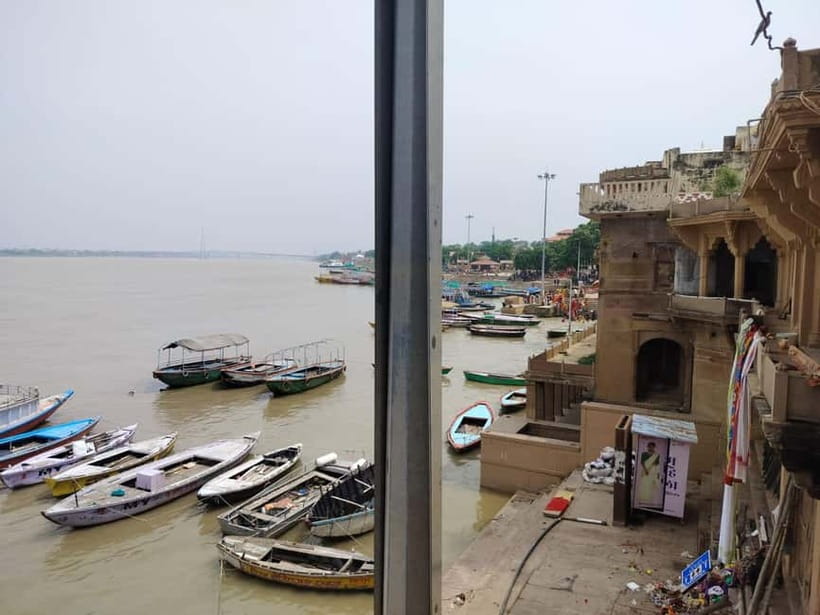
Varanasi makes its first impression from the water. At sunrise, your private boat glides past the ghats as worshippers bathe, priests perform morning rites, and smoke rises from the cremation grounds. This full-day outing then links the river, old city, temples, Banaras Hindu University, and Sarnath in one well-planned circuit.
I like the private boat ride, which gives you time to look, listen, and ask questions without sharing the experience with a large group. I also like the air-conditioned car between walking sections, plus the guide’s help in finding lanes and temples you would likely miss alone.
The drawback is the pace. Ten hours is a long day, and Varanasi can feel intense, hot, crowded, and dusty. The itinerary also includes several temples and monuments, with entrance fees and meals extra, so you should expect to spend beyond the advertised $61 per person.
Key points at a glance
- 5:30am sunrise start: See the ghats from the Ganges before the heat builds.
- Private boat on the river: Get a close view of morning rituals, bathing ghats, and cremation grounds.
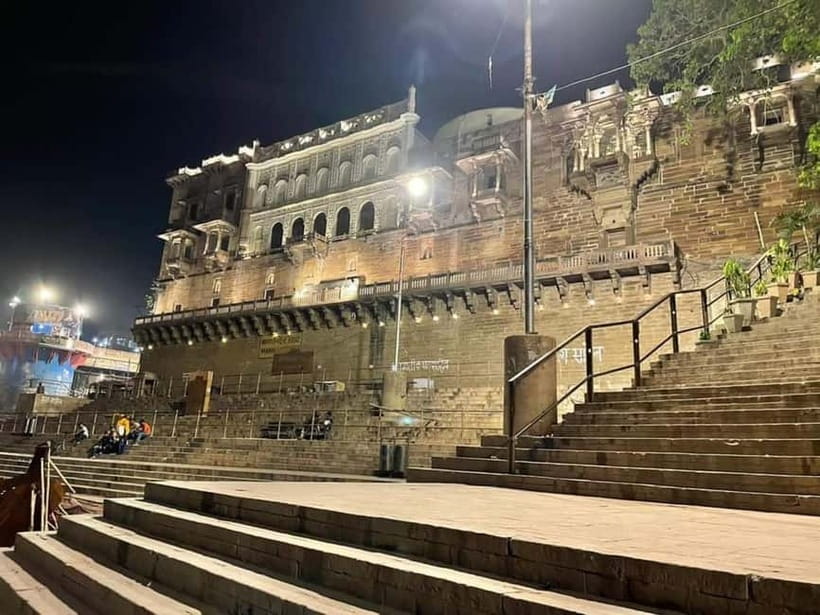
- Guide-led old-city walk: Explore narrow lanes around Manikarnika Ghat and Kashi Vishwanath.
- A useful change of mood at Sarnath: Visit the Buddhist site where the Buddha gave his first sermon.
- Air-conditioned transport: Rest between walking stops instead of spending the whole day on foot.
- Anmol and other named guides: The strongest praise goes to guides who explain customs clearly and adjust the pace to the group.
Why the 5:30am start is worth it
The early pickup is not a minor detail. It shapes the best part of the day.
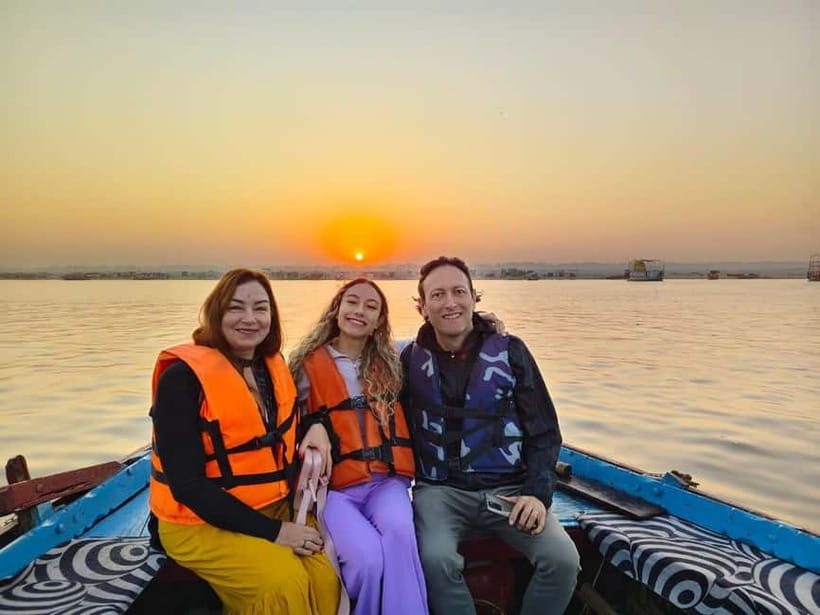
You begin at the Ganges while the light is soft and the city is stirring. From the boat, the ghats appear as a long ceremonial edge to Varanasi. You may see people bathing, offering flowers, praying, or taking part in morning rituals. Your guide can explain what you are seeing and help you understand the difference between an ordinary morning rite and a larger ceremony.
This is also the most comfortable time to be outdoors. By late morning, the sun can make walking between temples tiring. Starting early lets you see the river before the heat and crowds become harder work.
The boat ride is private, which matters here. You can ask about cremation customs, the religious role of the Ganges, or the names of the ghats without worrying about a large group. The experience is powerful, but it can also be confronting. Cremation grounds are part of daily life along the river, and the guide’s calm, respectful explanation is important. You should approach this part as observation, not entertainment.
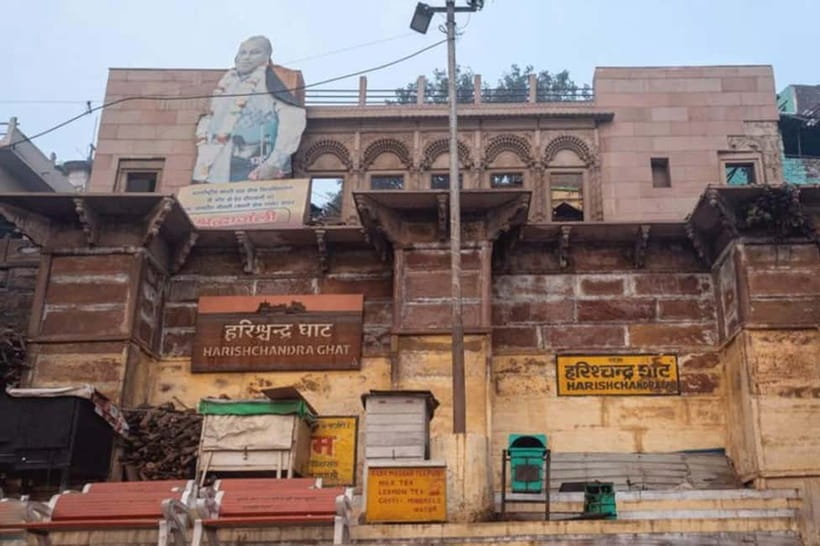
The schedule later includes Assi Ghat, Manikarnika Ghat, and Dashashwamedh Ghat. Seeing several ghats helps you understand that they are not all used in the same way. Some are linked with bathing and worship, some with cremation, and others with major public ceremonies.
More Full-Day Trips in the world:
- Full-Day Prague Tour with Prague Castle, Lunch and Vltava Cruise
★ 4.0 · 921 reviews - Porto: Douro Valley Full-Day Boat, Train, and Lunch Tour
★ 4.7 · 787 reviews - Washington, DC: Full-Day Tour with a Scenic River Cruise
★ 4.7 · 571 reviews
Walking Varanasi’s old lanes and sacred temples
After the boat, you move into the old city. This is where a guide earns the day’s fee.
The lanes around the ghats are narrow and confusing. A short walk can reveal shrines, temple entrances, markets, homes, and everyday scenes that are easy to miss from a car. The tour includes Manikarnika Ghat and a view of the Kashi Vishwanath Temple, one of Hinduism’s most important pilgrimage sites.
The practical point is that you do not simply look at buildings. You receive context. A good guide explains why the temple matters, how the ghats fit into religious life, and how to behave respectfully around worship and funerary activity.
Kashi Vishwanath itself may involve restrictions or limited viewing from outside, depending on current rules. The tour includes a guided visit and sightseeing around the temple area, but the description does not promise entry into every part of the shrine. Keep expectations flexible.
The temple stops continue with Durga Mandir, also called Durga Kund Mandir, and Sankat Mochan Hanuman Mandir. These visits give you a wider view of Varanasi’s religious life beyond the famous riverfront. Durga Temple is a major shrine in the city, while Sankat Mochan is associated with Hanuman worship.
You will spend time walking, standing, and removing or managing footwear at temple sites as required. Dress modestly, follow your guide’s instructions, and keep photography rules in mind. A towel is listed among the recommended items, which is useful after an early boat ride or in warm weather.
Breakfast, rest, and an easier rhythm
One smart feature is the chance to stop for breakfast after the early river and old-city sections. Breakfast is not included, so you pay for it yourself.
That pause matters. A full day that begins before sunrise can become exhausting if every stop follows without a break. The air-conditioned car gives you another chance to cool off and rest between visits. Several people who booked with guides such as Anmol appreciated the flexible pace, with time to sit down between major sections.
The exact timing can shift. The supplied schedule places Banaras Hindu University around 10am and the silk-weaving visit around 12:30pm, with lunch also at your own expense. Treat these times as a working plan rather than a guarantee. Traffic, temple access, crowds, and the length of your questions can all affect the day.
Banaras Hindu University and the Birla Temple
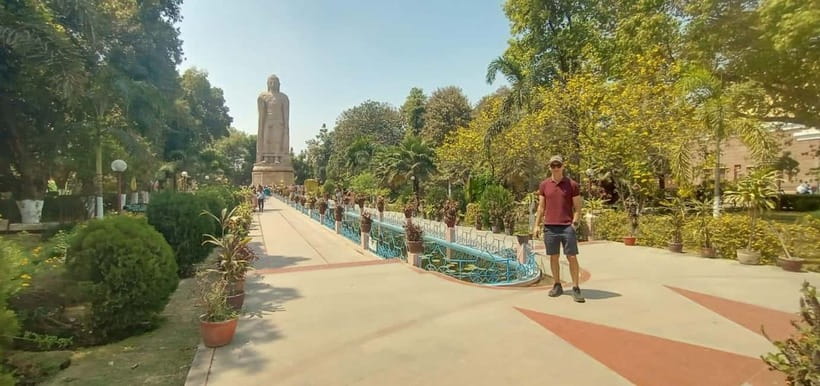
Banaras Hindu University is included as a guided visit and pass-by stop. Founded in 1916, it is described as the largest university campus in Asia.
The campus offers a change from the crowded old city. Instead of sacred lanes and riverfront rituals, you see an important modern institution tied to education and Indian public life. The tour also includes the new Vishwanath Temple, often called the Birla Temple, which is described as an exact replica of the original Vishwanath Temple.
This stop is valuable if you want more than a list of famous shrines. It shows how Varanasi connects pilgrimage, learning, and modern civic life. It is not the most dramatic stop of the day, but it gives the itinerary some balance.
You should not expect a long academic campus tour. The visit is one part of a packed day, and the amount of time on campus may depend on traffic and the group’s interests.
Same water, a different way to see it:
- Paris: 1-Hour Seine Cruise departing from the Eiffel Tower
★ 4.4 · 77,472 reviews - Istanbul: Bosphorus Dinner Cruise & Show with Private Table
★ 4.8 · 62,058 reviews - Amsterdam Luxury Canal Cruise + Unlimited Drinks & Bites option
★ 5.0 · 30,518 reviews - London: Westminster to Greenwich River Thames Cruise
★ 4.5 · 22,836 reviews
Silk weaving and lunch at your own cost
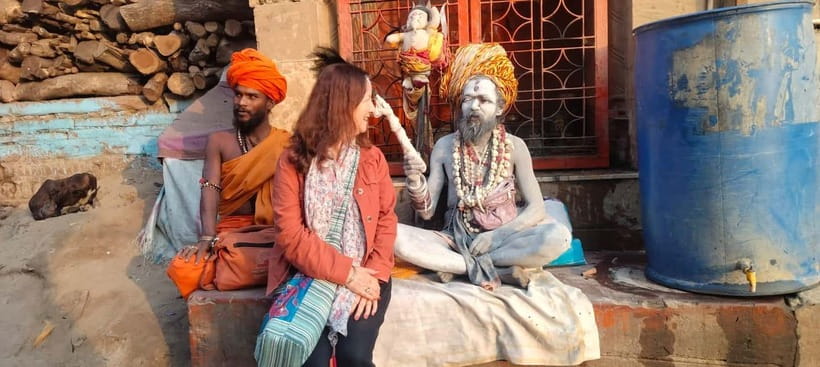
Around midday, the tour introduces you to Varanasi’s silk-weaving traditions. This is a useful addition because silk is closely tied to the city’s craft identity and local economy.
The exact format of the visit is not specified, so you should ask your guide how much time is planned and whether any shopping is involved. If you are interested in textiles, ask about how the fabric is made, how long a piece takes, and what distinguishes handwoven work from factory production. If you do not want to shop, say so clearly and politely.
Lunch is not included. That keeps the headline cost low, but it means the $61 price is not your final spending total. You will also pay monument fees and any other extra expenses. Ask your guide early in the day what entrance charges apply to the places you plan to enter.
Sarnath: a calm second chapter
After the intensity of Varanasi, Sarnath can feel like a different world. It lies about 13 kilometers from the city and is associated with the Buddha’s first sermon. This is where the Buddhist Sangha is traditionally said to have begun after Kondanna attained enlightenment.
The main sight is Dhamekh Stupa. Its scale and setting give you space to slow down after the crowded lanes and busy ghats. Your guide can connect the site with the early spread of Buddhism and explain why Sarnath matters far beyond Uttar Pradesh.
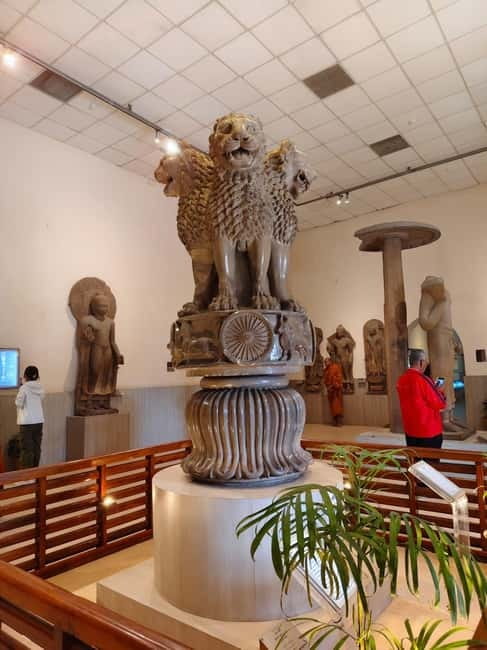
The Archaeological Museum adds another layer. It contains objects dating to the 3rd century BC, including important material from the area. The museum is closed on Fridays, so this is one of the most useful details to check before booking. Sarnath itself remains the key stop even when the museum is unavailable.
The tour description also links Sarnath with the origin of India’s national symbol. A good explanation here helps you see the site as both a religious center and an important part of Indian history.
Sarnath is one of the strongest reasons to choose this tour instead of a Varanasi-only city outing. You get a clear contrast between Hindu pilgrimage on the Ganges and Buddhist heritage in a quieter setting.
Bharat Mata Mandir and an unusual map of India
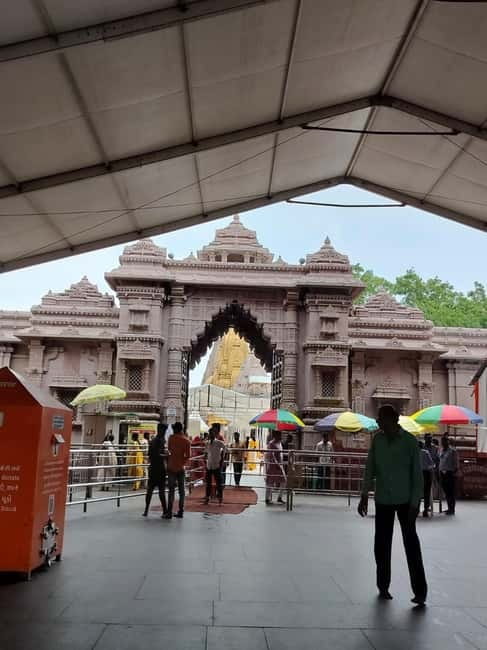
Bharat Mata Mandir is unlike the other temples on the route. It is dedicated to Mother India rather than a traditional deity.
Inside is a large marble relief map of undivided India, with mountains, rivers, and islands carved into Makrana marble. Shiv Prasad Gupta built the temple, and Mahatma Gandhi inaugurated it in 1936.
This visit gives you political and national context that the other religious sites do not. There is no central idol as the focus. Instead, the map turns the country itself into the object of respect.
The stop may be especially interesting if you want to understand how religion, national identity, and public memory overlap in India. It is also a good reminder that Varanasi’s sacred sites are not all ancient. Some reflect more recent ideas and events.
Returning to the Ganges for evening prayer
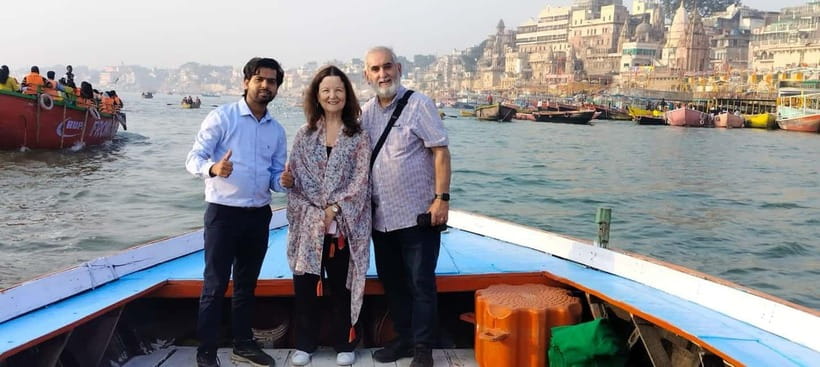
The day finishes at the river, usually around 5pm, with a view of the cremation grounds before the Ganga Aarti at Dashashwamedh Ghat. Your return to the river gives the day a circular shape: sunrise rituals first, evening ritual last.
Ganga Aarti is a formal ceremony of lamps, chants, conch shells, and flower offerings. Priests raise glowing lamps toward the river as worshippers gather along the ghat. It is visually striking, but you should remember that this is an active religious service, not a stage show.
Dashashwamedh Ghat draws a large gathering, so the final section can feel crowded. Your guide helps you find the right area and explains what is happening, but personal space may be limited. Keep your belongings secure and stay close to your guide in the crowd.
The tour ends with a return to your hotel around 8pm. That makes for a long day, but the final ceremony is a meaningful payoff if you want to see Varanasi at two different times of day.
The guide and driver matter more than usual
This is not a tour where transport alone is enough. Varanasi’s lanes, customs, and ceremonies can be hard to interpret without local help.
Guides named in the booking feedback include Anmol, Saurabh Rajbhar, Anurag, Prasan, and Shiva. Anmol receives especially strong praise for explaining history and culture, checking on comfort, adjusting plans, and offering useful local suggestions. One booking with Anurag highlighted his study of history and Sanskrit, while another guide, Saurabh Rajbhar, was praised for patience and for covering specific requests.
You cannot assume which guide you will receive, so ask when booking if a particular language or guide is important. English, Spanish, Japanese, Italian, and Hindi are listed as available languages.
The driver is also part of the experience. You use the private car for transfers between the river, temples, university, weaving stop, and Sarnath. The most useful benefit is not luxury. It is having a cool, quiet place to recover between walks.
What the $61 price really covers
At $61 per person, the tour offers strong value if you want to see both Varanasi and Sarnath in one day.
The price includes a local guide, private vehicle, bottled water, one cup of tea, hotel or airport pickup and drop-off, and a private boat ride. For a private group, that is a good amount of coverage, especially since hiring separate transport and arranging a boat can be awkward in Varanasi.
The price does not include monument fees, breakfast, lunch, or other extra expenses. Your total cost will therefore be higher. Still, the value lies in the time saved and the interpretation provided. You are not paying only to be driven from one address to another. You are paying for someone to connect the ceremonies, temples, Buddhist sites, and city streets.
Free cancellation up to 24 hours before the start and reserve-now, pay-later booking make the arrangement less rigid. The tour is also described as wheelchair accessible in the general booking information, but it is separately marked as unsuitable for wheelchair users. That contradiction should be settled directly before you book if mobility is a concern. It is also marked as unsuitable for people over 70, although one booking described the guide adjusting the pace for a 72-year-old participant. If you are older or have limited stamina, ask about rest breaks and walking distances in advance.
Who should book this full-day tour
I would choose this tour if you have only one full day in Varanasi and want a broad introduction without arranging several separate trips. It covers the river, old city, major temples, BHU, local silk work, Sarnath, and the evening ceremony.
It suits first-time visitors who want explanations rather than simple transport. It also works well for photographers, provided you respect restrictions around temples and cremation areas. One guide adapted the route for a photography-minded participant and included unusual corners beyond the main sights, but special requests should be made before the day begins.
I would think twice if you dislike early starts, long days, religious ceremonies, or changing between walking and car travel. You may prefer to split the same places over two days. The schedule is full, and a ten-hour private tour can still feel tiring even with an air-conditioned vehicle.
Should you book it?
Book this tour if you want the major Varanasi experiences in one carefully connected day, especially the sunrise boat ride and evening Ganga Aarti. The combination of private transport, a local guide, and Sarnath gives you far more context than a short city transfer.
Skip it if you want a slow, unstructured visit or if you are uncomfortable with cremation grounds and intense religious settings. Before confirming, check the guide language, Friday museum closure, entrance fees, meal plans, and mobility arrangements. For most first visits, the early start and packed schedule are a fair trade for seeing so much in one day.
FAQ
What time does the tour start?
Pickup is scheduled for 5:30am from your hotel or another requested location in Varanasi. The early start allows time for a sunrise boat ride on the Ganges.
Is hotel pickup and drop-off included?
Yes. Pickup and return are included from a hotel, Varanasi Airport, or another location agreed with the provider.
What is included in the price?
The tour includes a local guide, private vehicle, bottled water, one cup of tea, and a private boat ride. Monument fees, meals, and other extra expenses are not included.
Is the Sarnath Archaeological Museum open every day?
No. The museum is closed on Fridays. Sarnath and Dhamekh Stupa remain part of the planned visit, but the museum cannot be visited that day.
Which languages are available?
The listed guide languages are English, Spanish, Japanese, Italian, and Hindi.
Is the tour suitable for wheelchair users or people over 70?
The booking information gives conflicting accessibility details. It mentions wheelchair accessibility but also says the tour is not suitable for wheelchair users. It is also marked as unsuitable for people over 70, although the pace was adjusted for a 72-year-old participant in one booking. Confirm your needs with the provider before booking.
Newly reviewed in the world
- Guilin: Private Full-Day Li River Cruise and Liusanjie Show★ 4.2 · 27 reviews
- Guilin: Li River Cruise, Yangshuo Biking & Flexible Pricing★ 4.6 · 20 reviews
- Guilin: Night Cruise on Two Rivers & Four Lakes with Lights★ 4.8 · 5 reviews
- Guided Dolmabahce Palace Tour with Bosphorus Sunset Cruise★ 4.3 · 5 reviews
- Groningen: Informative city canal cruise + drinks & cookies★ 3.9 · 8 reviews
- Guilin: 3 star Li River Cruise & Sightseeing Tour★ 3.5 · 20 reviews
- Gouda: Historical Canal Cruise★ 4.3 · 158 reviews
- Groningen: City canal cruise (with unlimited drinks)★ 4.8 · 29 reviews
India River Cruises, compared side by side.
Full Day City Highlights Day Tour & Ganges Cruise
Read our review →
Varanasi & Sarnath: Full-Day Tour with Ganges Boat Ride
Read our review →Alleppey: Shikara Boat Ride with Village Tour & Canal Cruise
Read our review →
Lists this trip appears in