
Review · CAIRO
Cairo: All-Inclusive 6-Day Egypt Highlights & Nile Cruise
The most striking thing about this six-day trip is how much of Egypt it fits into one neatly arranged route. You go from the Pyramids of Giza and Tutankhamun’s treasures to Luxor’s temples, a Nile cruise, and Abu Simbel, with flights and transfers taking care of the long gaps.
I like the combination of private guiding and full-board cruising, which gives you context at the monuments and quiet time on the river. I also like the unusual extras: a felucca ride and a sunrise balloon flight above the Valley of the Kings. The tradeoff is pace. Six days leaves little room for lost time, long lunches, or a second look at any one site.
Key points to know before booking
- Giza, Saqqara, Dahshur, and Memphis give you a strong sweep through Egypt’s Old Kingdom in the first two days.
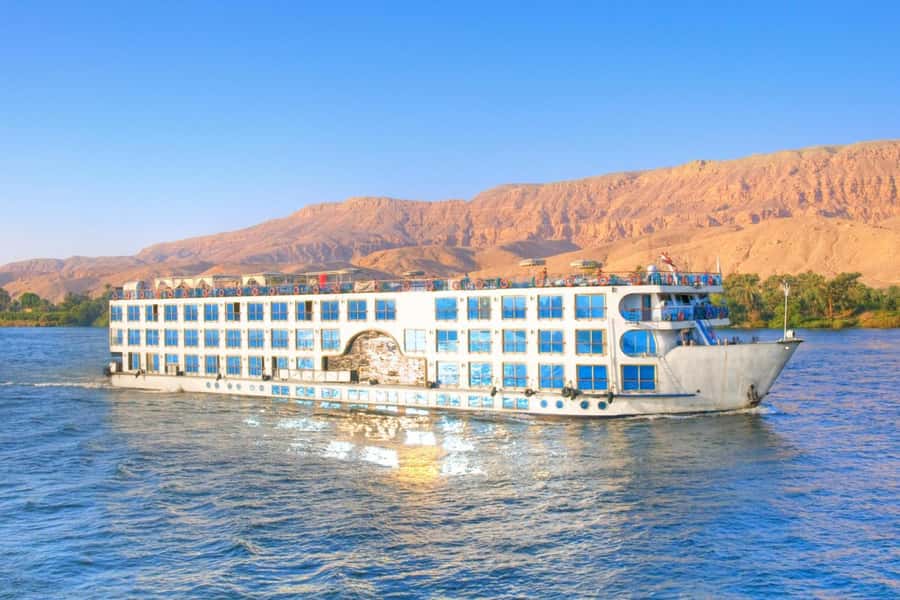
- Three nights on a five-star Nile cruise cover the main temples between Luxor and Aswan, with meals included.
- The sunrise balloon flight is a memorable Luxor extra, but it depends on weather and is not suitable for children under six.
- Abu Simbel is included, though Day 6 involves an early transfer, a flight to Cairo, and only breakfast.
- Named guides praised for clear explanations include Ahmed Rabea, Fatma, Hesham, Omar, Hadeer, Jackie, and Demiana. Assignments can vary.
- At $1,700 per person, the package is good value if you want the major logistics handled, but drinks, Wi-Fi, and personal spending remain extra.
Why this six-day route works
Egypt is not a compact sightseeing destination. Cairo, Luxor, and Aswan are far apart, and a trip that tries to link them by road alone can become a long exercise in sitting beside a highway. This plan uses domestic flights to save time, then places the central Luxor to Aswan stretch on the Nile.
You get one night in Cairo, one night in Luxor, and three nights aboard the cruise. That gives you a useful mix of city hotels, guided ancient sites, and slower river hours. It is not a relaxed holiday in the traditional sense, but it is an efficient first look at Egypt.
The tour price of $1,700 covers a lot: two domestic flights, five nights of accommodation, meals listed in the schedule, entrance fees, private air-conditioned vehicles, an English Egyptologist, the balloon ride, the felucca outing, and Abu Simbel transport. Add those costs separately and the package begins to look quite fair, especially for a private itinerary.
You should still budget for drinks and personal expenses. Wi-Fi is not included, and a Spanish, German, or French guide costs extra. The advertised five-star standard applies to the Cairo and Luxor hotels and the cruise, but hotel and ship quality can vary from one property to another, so think of the label as a useful category rather than a promise of identical service everywhere.
More Nile Cruises in Cairo:
- Cairo: Dinner Cruise on the Nile River with Entertainment
★ 4.2 · 2,190 reviews - Cairo: Nile Dinner Cruise with Belly Dancer Show with Pickup
★ 4.4 · 835 reviews - Cairo: Dinner Cruise on the Nile River
★ 4.2 · 741 reviews
Day 1: Giza, the Sphinx, and Cairo’s museum
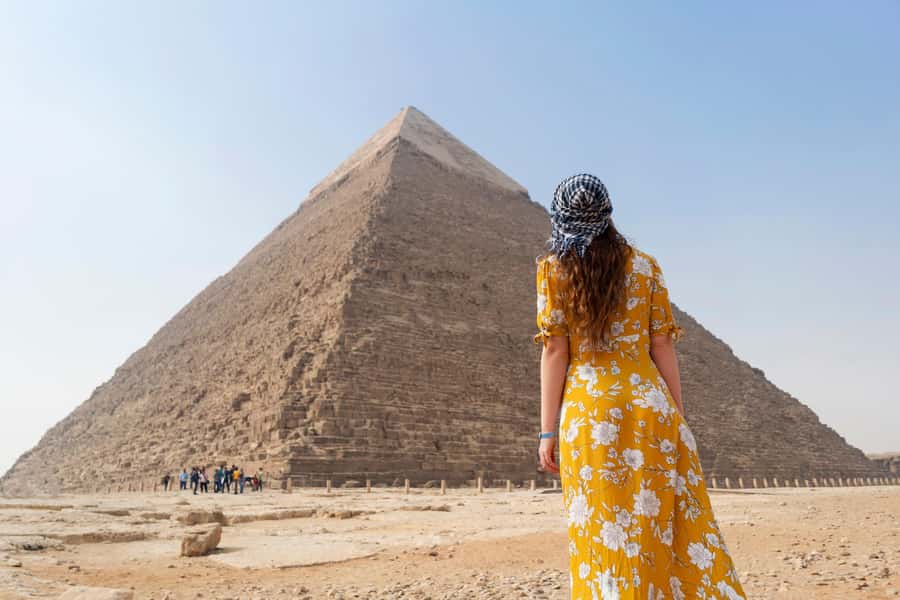
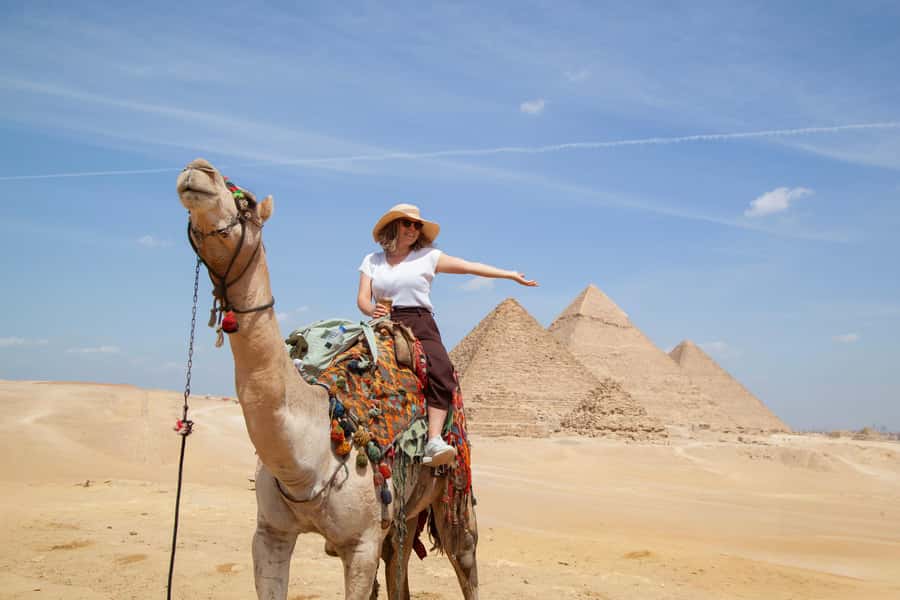
Your first morning begins with hotel pickup and a meeting with your Egyptologist guide. The Giza Plateau is the obvious headline, and rightly so. The Great Pyramid of Khufu, the Pyramid of Khafre, and the Pyramid of Menkaure are not just famous silhouettes. Seeing them together helps you grasp the scale and changing design of royal burial monuments.
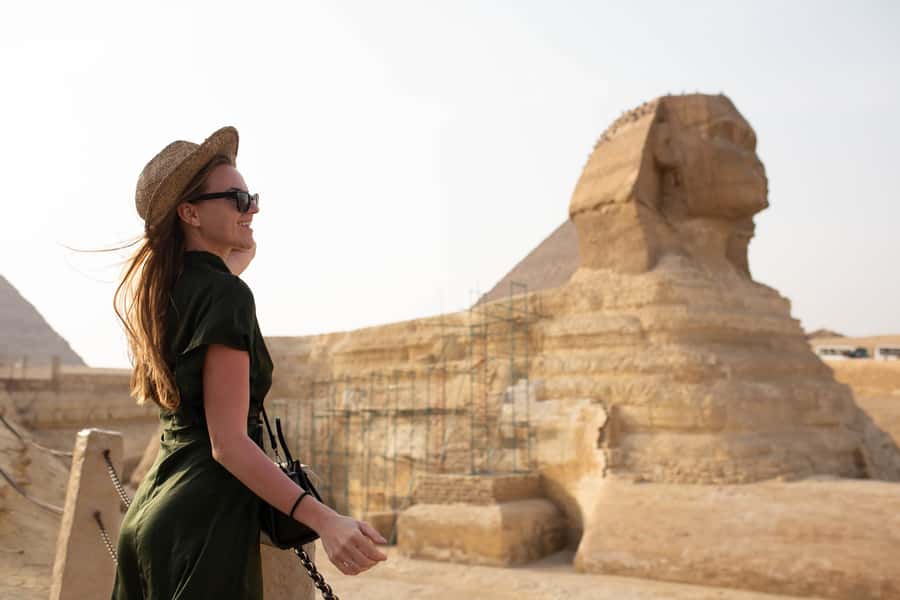
The Great Sphinx adds a different mood. Its human head and lion body are cut from the bedrock, and its position facing the pyramids makes the whole plateau feel carefully staged. Give yourself time for photographs, but also pause to look at the stonework and the surrounding desert rather than treating the stop as a quick photo call.
The guide matters here. Ahmed Rabea was praised for giving clear explanations while leaving enough time for personal photographs and independent looking. Fatma was also noted for her historical knowledge and photography skills, while Omar was praised for taking especially good pyramid pictures. You may not receive one of these guides, but the company has several named guides working across the route.
After lunch, you visit the Egyptian Museum, described as home to more than 120,000 ancient objects. The collection can feel overwhelming, so a guide is especially useful. Tutankhamun’s treasures are the main draw, but the value of the museum is the chance to see how daily life, religion, royal power, and burial customs connect across different periods.
Dinner is included, and you spend the night at a five-star Cairo hotel. This is a full first day, and Cairo traffic can make transfers tiring. Still, beginning with both Giza and the museum gives you a solid foundation for the monuments that follow.
Day 2: Memphis, Saqqara, and the pyramids at Dahshur
Day 2 moves into Egypt’s Old Kingdom, when the capital was Memphis and pyramid building was still developing. Memphis itself is not a vast city site today, but the visit helps explain the political setting behind the monuments. The remains and museum displays include important royal sculpture, with the giant reclining figure of Ramses II among the best-known sights associated with the area.
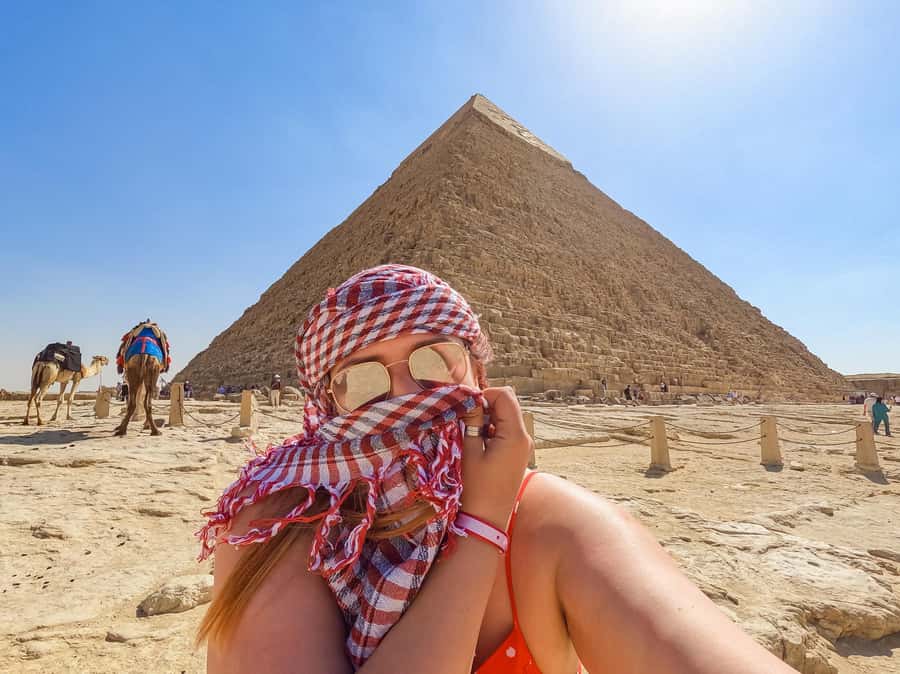
At Saqqara, the Step Pyramid of Djoser is the star. Its stacked form marks a major change in royal tomb design, moving beyond the earlier low, flat-topped mastaba. This is one of the most useful stops for understanding how Egyptian pyramid architecture developed, rather than simply collecting another famous photograph.
Dahshur gives you two more pieces of that story. The Bent Pyramid changes angle partway up, while the Red Pyramid shows a more settled approach to the smooth-sided form. Seeing the three sites in one day lets you compare experiments and improvements directly.
Hesham received strong praise for his explanations at Saqqara, Dahshur, and Memphis. That makes this day more than a sequence of ruins. Ask your guide to point out the design changes between the monuments, since that comparison is the real payoff.
After lunch, you transfer to Cairo Airport for the included flight to Luxor. A driver meets you on arrival and takes you to a five-star hotel. This flight saves you a great deal of road time, but the day remains demanding. Pack essentials where you can reach them, since you will be shifting between hotel, sites, airport, and another hotel.
Day 3: Karnak, Luxor Temple, and your first Nile evening
Karnak is one of the largest religious complexes in the ancient world, and its scale can be hard to absorb at first. The Great Hypostyle Hall, with its massive columns, is the visual centerpiece, but the site is really a collection of temples, courts, gateways, and additions made over many centuries.
Your guide will help separate the different periods and religious functions. Without that context, Karnak can become a blur of stone. With it, you begin to see how rulers added their own marks to an already sacred place.
Luxor Temple feels more compact and direct. It was connected with Karnak by the Avenue of Sphinxes, and its columns, statues, and ceremonial spaces are especially effective when you understand its role in royal and religious life. The two temples work well together: Karnak gives you scale, while Luxor gives you a more concentrated sense of procession and ceremony.
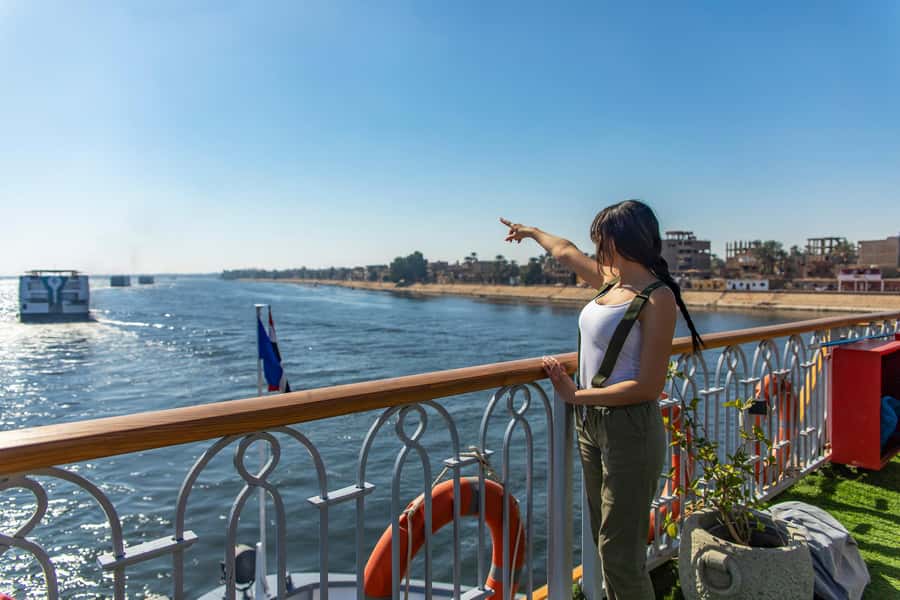
After the morning touring, you board the five-star Nile cruise. Lunch is included, and the pace changes. A felucca ride offers a simpler view of the river, with the small traditional sailboat providing a quiet contrast to the large cruise ship.
The felucca outing is also one point to clarify before departure. One guest needed help from the coordinator, Marina, when a local issue affected the ride, and it was fixed quickly. That suggests the value of having a tour coordinator available, but it also reminds you that small local arrangements can be less fixed than the major hotel and flight schedule.
More Six-Day Trips in Cairo:
- Cairo: 6-Day Egypt Tour with Flights and Nile Cruise
★ 3.8 · 177 reviews - From Luxor: 6-Day Nile Cruise to Aswan with Hot Air Balloon
★ 4.6 · 14 reviews
Day 4: Balloon sunrise and Luxor’s West Bank
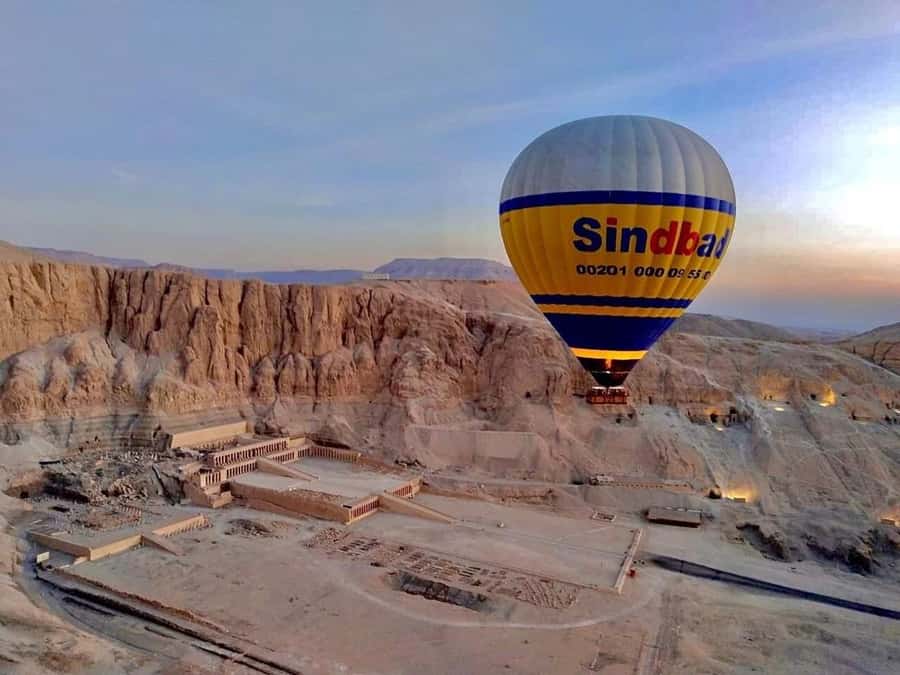
The hot air balloon ride begins early, before the day heats up. From above Luxor, you can look across the Nile toward fields, villages, temples, and the dry hills around the Valley of the Kings. The sunrise is the point: soft light reveals the contrast between cultivated land and desert in a way you cannot get from ground level.
The balloon is weather dependent. If conditions force a cancellation, the balloon portion can be refunded, but the rest of the day continues. Children must be at least six years old to take part, so families with younger children need to plan around that restriction.
Back on the West Bank, the Valley of the Kings brings you into the burial world of Egypt’s rulers. Your entrance allows access to the included visits, while particular tomb arrangements can vary. The key point is to look beyond the empty chambers and focus on the painted scenes, symbols, and the ancient belief system that made these tombs important.
The Temple of Hatshepsut has a very different character. Its terraces rise against the cliffs, and its design makes a strong visual statement about the power of one of Egypt’s most famous female rulers. The Colossi of Memnon provide a shorter stop, but their enormous scale makes them worthwhile.
You return to the ship for lunch and begin sailing. This is one of the best-balanced days in the schedule. The balloon and West Bank sites fill the morning, then the river gives you a chance to rest without losing travel time.
Day 5: Edfu and Kom Ombo by river
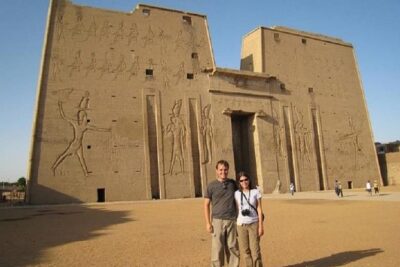
At Edfu, you take a horse-drawn carriage to the temple. The ride is part of the practical transport plan, not a full excursion in itself, but it adds a distinctly local note to the morning. Edfu Temple is dedicated to Horus and is one of the best-preserved major temple complexes on the route.
The reliefs and inscriptions are easier to appreciate with a guide. Look for the repeated imagery of the falcon-headed Horus, royal rituals, and scenes that show how ancient Egyptians presented divine order and kingship.
The ship then continues to Kom Ombo. This temple is unusual because it has a twin design, with one side dedicated to Sobek, the crocodile god, and the other to Horus. The shared layout makes the site visually memorable and gives your guide a clear way to explain the different religious roles.
Day 5 is less frantic than the Cairo days, but it still follows the ship’s sailing schedule. You need to return to the boat on time, and the walking surfaces around ancient sites can be uneven. Comfortable shoes are more useful here than dress clothes.
All meals are included on the cruise. Drinks are not, so keep that in mind when comparing this package with a genuinely no-cost-extra dining plan.
Day 6: Abu Simbel and the flight back to Cairo
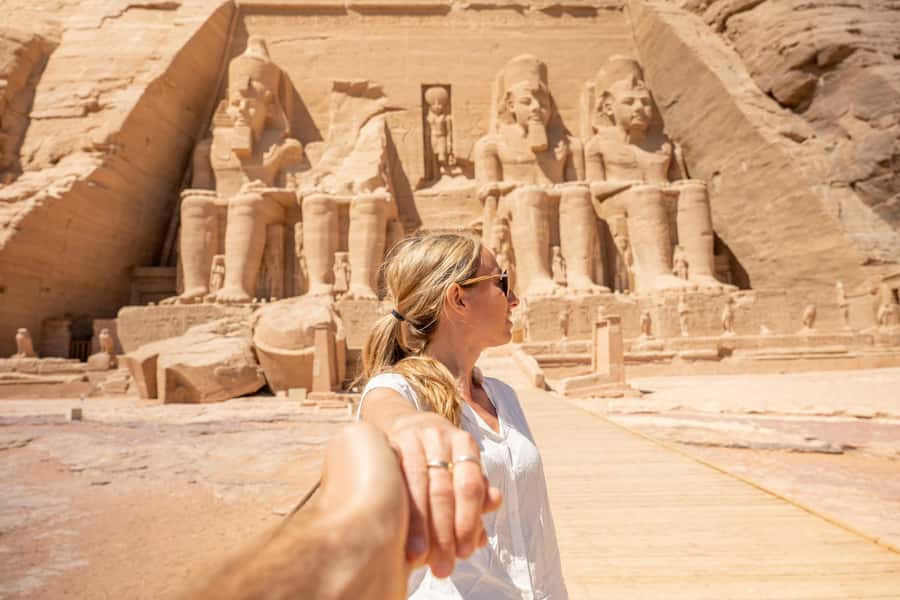
Abu Simbel is the grand finale, but it makes Day 6 the hardest day physically. After checking out, you travel by small-group transfer to the twin temples built for Ramses II and Queen Nefertari. The temples were relocated in modern times to protect them from rising water, yet the carved facades still deliver the full sense of royal scale intended by their builders.
The temple of Ramses II is known for its four enormous seated figures, while Nefertari’s temple has its own striking facade and interior decoration. The paired monuments are especially valuable because they show how royal power and queenship were presented side by side.
Ahmed Ashiraf was praised for his clear explanations at Abu Simbel, and the Aswan to Abu Simbel transport was described as well organized. The excursion is not a private transfer for every participant, however. It uses a small-group arrangement, unlike the private vehicles used for the main touring.
After Abu Simbel, you return to Aswan and fly to Cairo. On arrival, your driver takes you to your chosen drop-off location. Breakfast is the only included meal that day, so arrange your expectations accordingly. You are fitting one of Egypt’s most distant major sights into a day that also includes a flight and final transfer.
Guides, vehicles, and how the trip feels
The strongest pattern in the feedback is the quality of the guiding. Ahmed Rabea, Fatma, Hesham, Omar, Hadeer, Jackie, Demiana, and Ahmed Ashiraf were all singled out for clear explanations, patience, friendliness, or help with photographs. Hadeer and driver Mo were praised for making Cairo easier to manage, while Jackie was praised for her Luxor temple explanations.
Guide assignments can change, so do not book solely because you expect one particular person. The important advantage is the format: you have an English Egyptologist with you for the touring, rather than trying to decode major sites alone.
Private, air-conditioned vehicles are used for the main transfers and excursions. That gives you more control than a large coach and makes Cairo’s traffic easier to tolerate. The Abu Simbel segment is the exception, since it uses a small-group transfer.
If you have restricted mobility, discuss the route before booking. One guest found access difficult at some sites even though the guides were helpful and understanding. Ancient monuments involve uneven ground, steps, and exposed areas, and the packed schedule leaves little spare time when walking takes longer.
Who should book this Egypt itinerary?
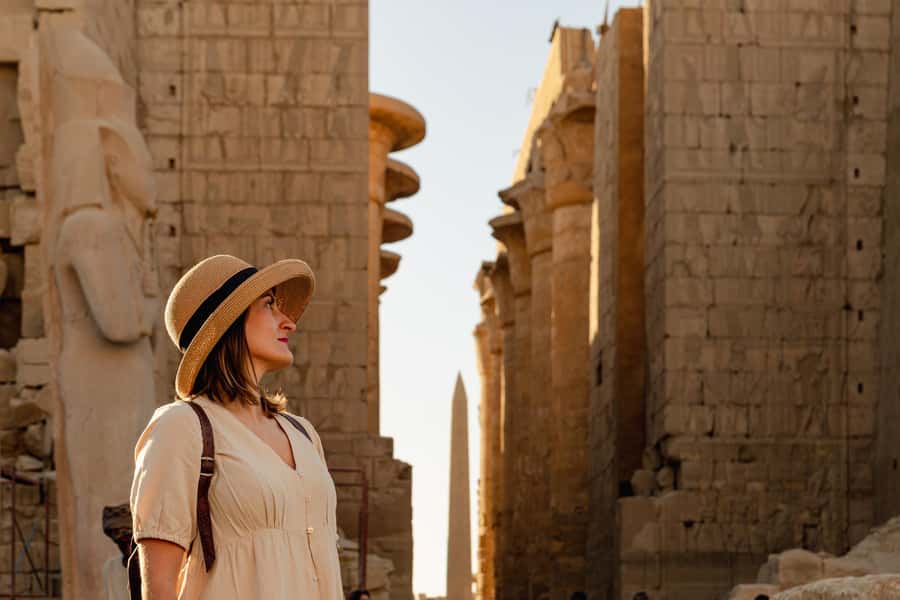
I would recommend it to a first-time visitor who wants the major sights without arranging flights, hotels, guides, tickets, and transfers separately. It is also a good fit if you like having an expert explain the monuments but want some private-vehicle flexibility instead of a large group tour.
The tour suits adults and families with children six or older who can manage early starts and long sightseeing days. It is less suited to anyone seeking a slow, resort-style holiday, a great deal of free time, or a fully private Abu Simbel transfer.
The six-day length is both its strength and its limit. You see Cairo, Luxor, the Nile temples, Aswan’s great southern excursion, and Abu Simbel in one sweep. You do not get extra days for Cairo neighborhoods, shopping, rest, or spontaneous changes.
Should you book it?
At $1,700 per person, I think the value is strong for an efficient first Egypt trip. The price includes the costly pieces that are easy to underestimate: domestic flights, five-star accommodation, a full-board cruise, entrance fees, private transport, guiding, the balloon ride, and Abu Simbel.
Book it if you want Egypt’s essential ancient sites packaged with steady support and very little planning work. Think twice if you need a relaxed schedule, have mobility concerns, or want every transfer and meal to be completely private. For most capable walkers with six days to spare, this is a practical route with memorable extras and a sensible balance between sightseeing and time on the Nile.
FAQ
What is included in the $1,700 price?
The price includes one night in a five-star Cairo hotel, one night in a five-star Luxor hotel, three nights on a five-star Nile cruise, domestic flights from Cairo to Luxor and Aswan to Cairo, meals listed in the schedule, entrance fees, private air-conditioned transport, an English Egyptologist guide, the felucca ride, the sunrise balloon ride, and Cairo hotel pickup and drop-off.
Are drinks included with the meals?
No. Drinks and personal expenses are not included. Wi-Fi is also excluded.
Is the hot air balloon ride included for children?
Children must be at least six years old to participate. The ride can be cancelled because of weather, in which case the balloon portion can be refunded.
What languages are available for the guide?
Arabic, English, French, German, and Spanish are available. The package includes an English Egyptologist guide. Spanish, German, or French guiding is available as an add-on.
Is Abu Simbel included?
Yes. Day 6 includes a small-group transfer to Abu Simbel, entry to the temples of Ramses II and Queen Nefertari, transport back to Aswan, and the flight from Aswan to Cairo.
Can I cancel the booking?
You can cancel up to 24 hours in advance for a full refund. The activity also offers reserve-now, pay-later booking.
Newly reviewed in Cairo
- From Cairo by Plane: 5 Days & 4 Nights Nile Cruise to Luxor★ 3.7 · 39 reviews
- From Cairo: 5-Day Nile Cruise to Aswan & Balloon by Flights★ 3.8 · 15 reviews
- Cairo: 4-Day Nile Cruise to Luxor with Balloon & Flights★ 4.3 · 7 reviews
- From Cairo: 5-Day Tour with Nile Cruise, Balloon, & Flights★ 4.2 · 27 reviews
- From Cairo: 4-Day Nile Cruise to Luxor with Balloon Flight★ 4.2 · 112 reviews
- From Cairo: 11-Day Tour, Nile Cruise, Flights, Balloon★ 4.3 · 20 reviews
- Egypt: 7-Day Private Tour, Baloon, Flights and Nile Cruise★ 4.3 · 5 reviews
- Egypt: Private 5-Day Tour, Nile Cruise, Flights & Balloon★ 4.1 · 248 reviews
Nile Cruises, compared side by side.
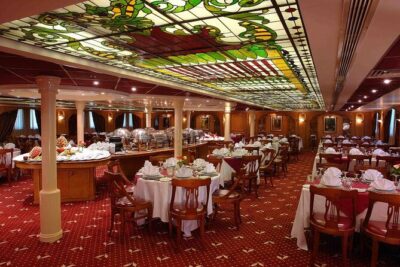
4-Days Nile Cruise From Aswan To Luxor including Abu Simbel and Hot Air Balloon
Read our review →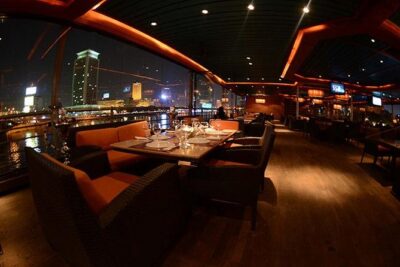
Dinner Cruise on the Nile River with Entertainment
Read our review →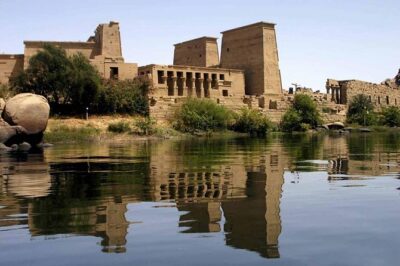
4-Day 3-Night Nile Cruise from Aswan to Luxor&Abu Simbel+Balloon
Read our review →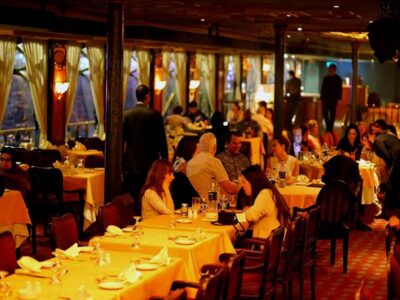
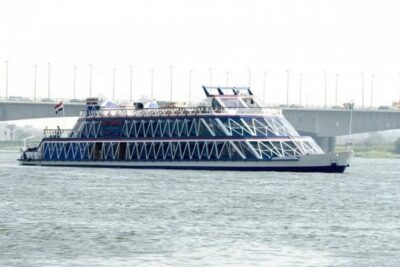
Nile Dinner Cruise with Belly Dancer Show with Pickup
Read our review →
4-Day 3-Night Nile Cruise from Aswan to Luxor including Abu Simbel, Air Balloon
Read our review →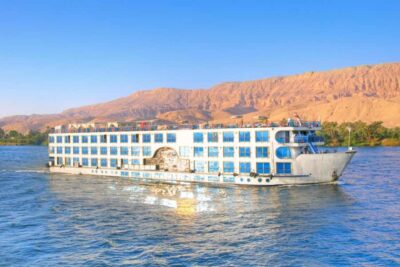
4-Day Nile Cruise from Aswan to Luxor with Guide
Read our review →Lists this trip appears in