
Review · CAIRO
Best of Egypt Tour Discover Cairo & Luxor & Aswan & Nile Cruise Flight Included
The great strength of this 9-day Egypt tour is its reach. You see the pyramids, royal tombs, major temples, Cairo’s old quarters, and the Nile itself without having to piece together hotels, flights, guides, and transfers on your own. The route covers the classic first-time highlights at a brisk but sensible pace.
I like the small maximum group of 10, which should make airport handoffs and sightseeing easier than on a large coach tour. I also like that the price includes domestic flights, entrance fees, eight breakfasts, six lunches, four dinners, and four nights on the Nile. The main drawback is the pace: Cairo and Luxor can feel full, and the package does not include drinks or excess luggage charges.
Key points to know before booking
- The pyramids and Saqqara arrive early in the trip, giving you Egypt’s biggest sights before moving south.
- The 4-night Nile cruise links Luxor and Aswan, with temples at Edfu and Kom Ombo along the way.
- An Egyptologist guide leads the sightseeing, helping explain the people, gods, tombs, and building projects behind each site.
- Domestic flights are included, saving long overland journeys between Cairo, Luxor, Aswan, and Cairo.
- The group is capped at 10 people, a useful middle ground between a private trip and a large bus tour.
- The itinerary can be customized, although changes should be discussed before booking because the schedule already runs tightly.
Cairo begins with pyramids, tombs, and a crowded old city
Your arrival day is intentionally light. An airport representative meets you, assists with arrival, and transfers you to your Cairo hotel. That help matters after an international flight, especially when you are handling visas, luggage, traffic, and an unfamiliar city all at once.
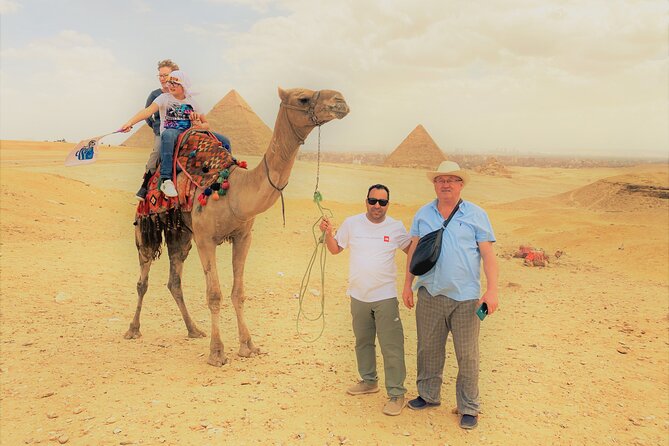
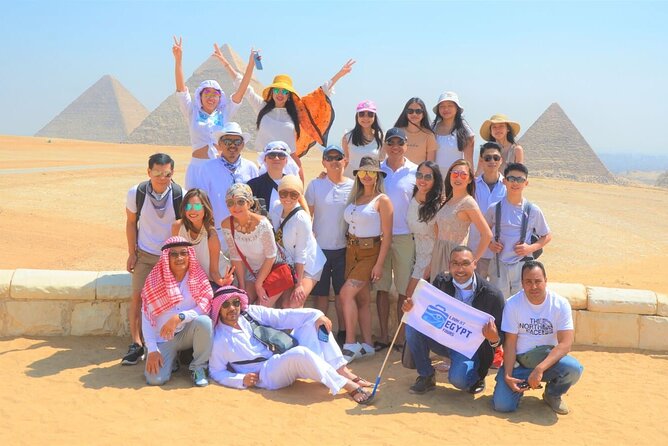
Day two goes straight to the main event: the Giza Plateau. You have about three hours for the Great Pyramids and the Sphinx, with admission included. The pyramids are not a quick photo stop. Give yourself time to look at the scale, the stonework, and the busy human scene around them.
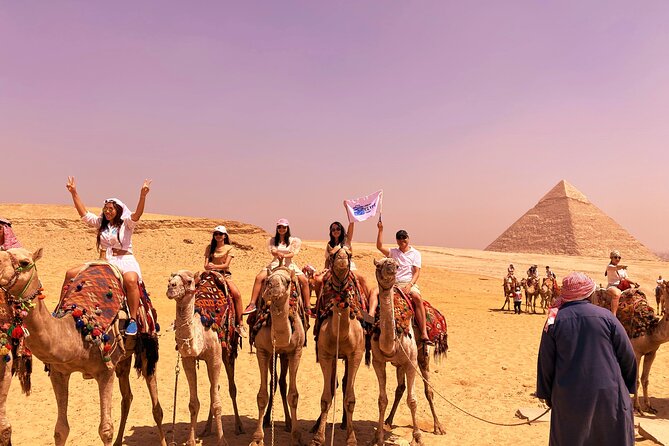
The Great Pyramid is the only surviving monument from the ancient Seven Wonders. You can expect plenty of people offering camel rides, souvenirs, and photo help around the plateau. The tour gives you a guide and transportation, but you should still keep your belongings close and listen carefully when the guide sets a meeting point.
From Giza, the day continues to Saqqara. Its Step Pyramid of Djoser is one of Egypt’s earliest major stone structures, built for the Third Dynasty ruler Djoser. The site feels different from Giza. Instead of one famous group of monuments, you encounter a wider archaeological area with pyramids, tombs, and open stretches of desert.
That extra context makes Saqqara valuable. Giza shows the finished pyramid tradition at its most famous. Saqqara helps you see how that tradition developed. You may find the site less visually tidy, but it rewards attention to the details your Egyptologist points out.
The final stop is Memphis, the ancient capital of Lower Egypt. The visit includes the enormous fallen statue of Ramses II and an alabaster sphinx associated with Queen Hatshepsut. Memphis is not as visually dramatic as Giza, yet it adds an important piece to the story: ancient Egypt was organized around major political and religious centers, not only royal tombs.
This is a long sightseeing day, with roughly three hours at Giza, three at Saqqara, and one at Memphis. Wear light clothing, bring water, and expect heat and dust depending on the season.
More Nile Cruises in Cairo:
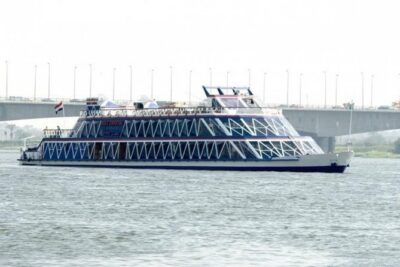
- Cairo: Dinner Cruise on the Nile River with Entertainment
★ 4.2 · 2,190 reviews - Cairo: Nile Dinner Cruise with Belly Dancer Show with Pickup
★ 4.4 · 835 reviews - Cairo: Dinner Cruise on the Nile River
★ 4.2 · 741 reviews
Cairo’s museum, churches, and souk fill the second sightseeing day
Day three shifts from monuments to collections, neighborhoods, and daily life. At the Museum of Egyptian Antiquities, you have about two hours to see a large selection from a collection of roughly 120,000 objects. The museum can feel crowded and unevenly arranged, but that is part of its character. You are seeing an enormous record of ancient Egypt in one place.
The tour specifically highlights the treasures of Tutankhamun. The museum visit gives you a useful introduction to royal burial customs and the objects linked to the young pharaoh. Do not expect every display to receive equal attention in two hours. Let your guide direct you toward the most important rooms and leave time to look at objects that catch your eye.
Coptic Cairo follows, with about an hour for the Babylon Fortress, the Coptic Museum area, the Hanging Church, and other historic Christian sites. This stop broadens the trip beyond pharaohs and temples. Egypt’s story continued through Coptic Christian and later Islamic periods, and the old quarter makes that change visible in a compact area.
You finish at Khan Al-Khalili, Cairo’s famous souk. The market is a place to browse, shop, and watch the city move around you. Expect sales pressure in some shops, so decide what you want to spend before you enter. If you buy souvenirs, compare prices and keep your bargaining friendly.
The combination of museum, Coptic Cairo, and Khan Al-Khalili is one of the tour’s better-balanced days. You get objects, architecture, religion, and modern street life instead of another sequence of ancient ruins.
Flying south makes Luxor’s temples easy to reach
After breakfast on day four, you check out and fly from Cairo to Luxor. Including the domestic flight is a major practical advantage. Egypt is large, and a long road transfer would take time away from sightseeing.
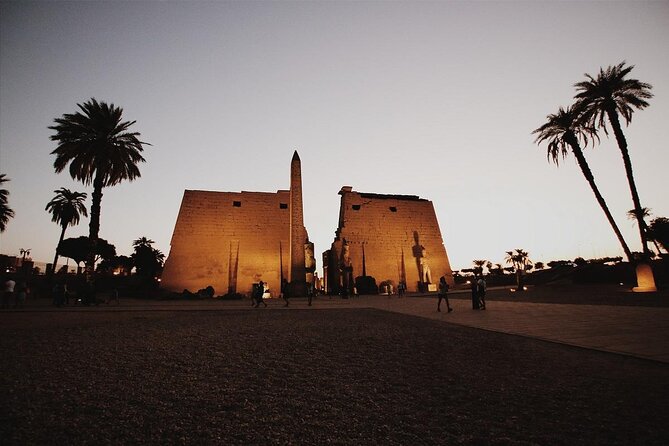
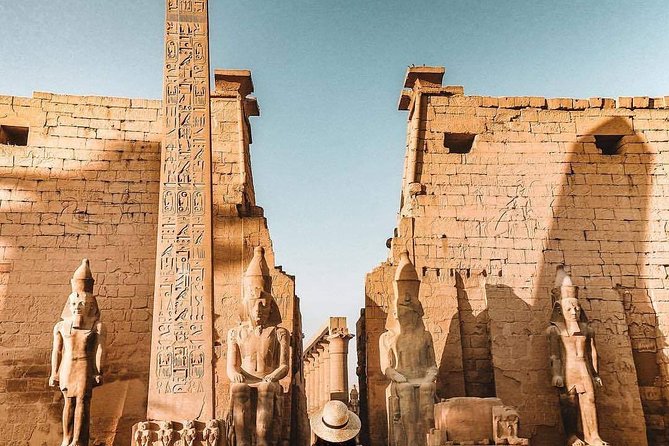
In Luxor, the program includes Karnak Temple and Luxor Temple on the east bank of the Nile. Karnak receives about two hours. It is a huge complex dedicated mainly to Amun, with halls, columns, courts, and layers of construction from different periods. The scale can be hard to grasp from a guidebook. Walking through the complex gives you a better sense of how religious centers expanded over centuries.
Luxor Temple is a shorter visit of about an hour. Built around 1400 BCE, it served as a major sanctuary on the east bank. Its city setting makes it feel different from Karnak, which spreads across a much larger area. Pay attention to the contrast between the two sites and to the way later rulers added their own marks.
The order of the day may feel unusual because the flight and temple visits are presented together. Your exact timing will depend on flight schedules and local arrangements. The important point is that you are not wasting a full day traveling from Cairo to Luxor by road.
The West Bank brings you close to royal tombs
Day five focuses on Luxor’s West Bank. At the Valley of the Kings, your included ticket generally allows entry to three tombs, while Tutankhamun’s tomb requires a separate ticket. The valley contains 63 known tombs, though many are closed at different times for conservation or maintenance.
The tomb interiors are the real reward. Painted walls and carved scenes explain the pharaohs’ journey into the afterlife, but the spaces can be narrow, steep, hot, and crowded. Photography rules can change, so follow your guide and site staff. Flash photography is particularly damaging to ancient pigments.
Tutankhamun’s tomb is famous because it was discovered nearly intact in 1922. It is not included in the standard three-tomb ticket, so decide in advance if seeing it matters to you. The included tombs still offer a strong look at New Kingdom burial art.
The Temple of Hatshepsut is next. Its broad terraces are built into the cliffs and honor one of Egypt’s most unusual rulers. Hatshepsut ruled for about 16 years and presented herself as a male king, a political choice reflected in her statues and images.
The stop at the Colossi of Memnon is brief but worthwhile. These two massive statues represent Amenhotep III and have watched over the Theban Necropolis for about 3,400 years. They are an easy photo stop, not a full museum visit, so keep your expectations in line with the short time.
More River Cruises in Cairo:
- 2-Hour Nile River Dinner Cruise From Cairo
★ 4.5 · 672 reviews - ViP Private Effective Nile River Dinner Cruise in Cairo
★ 4.5 · 370 reviews - Nile River Dinner Cruise on a Yacht with Open Buffet
★ 4.5 · 292 reviews - Cairo Dinner Cruise in Nile River With Belly Dancer & Tanora show
★ 4.5 · 256 reviews
Edfu and Kom Ombo make the cruise worthwhile
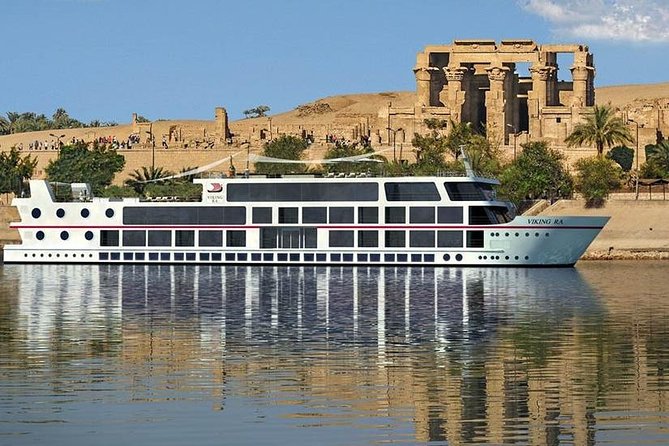
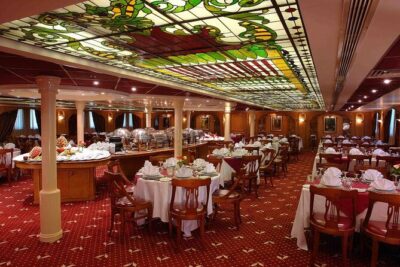
The Nile cruise is the trip’s central rhythm. Rather than changing hotels every night, you sleep aboard ship while the river carries you between major temple sites. The package includes four nights on the cruise, along with four dinners and the listed breakfasts and lunches.
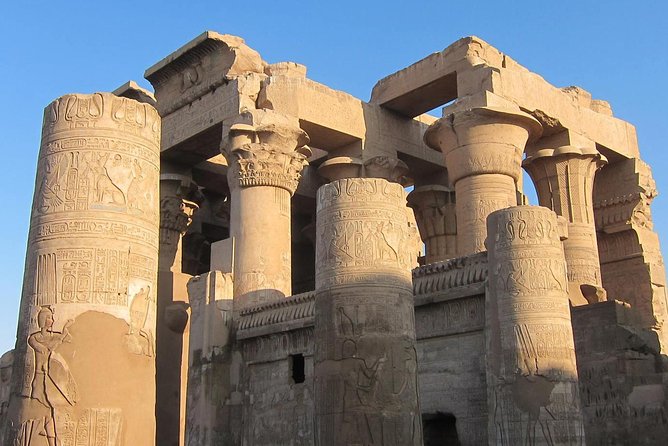
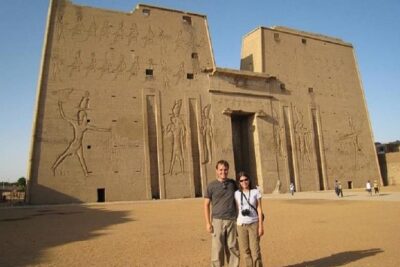
At Kom Ombo, you visit an unusual double temple built during the Ptolemaic period between 180 and 47 BCE. One side honored Sobek, the crocodile god, while the other was linked to Horus. The divided design makes the site easy to understand, even if you are new to Egyptian religion.
Edfu is one of the best-preserved ancient temples in Egypt. Built between 237 and 57 BCE, it was dedicated to Horus and remained protected by desert sand after pagan worship ended. Its roof is still intact, which gives the interior a more enclosed, atmospheric feel than many open-air ruins.
The itinerary allows about two hours at Kom Ombo and three hours at Edfu. These visits can be busy, especially when multiple ships arrive, but the cruise format keeps the route logical. You see major temples without repeatedly packing and unpacking.
The cruise also includes a traditional Galabeya party. You are invited to dress up and join the evening entertainment on board. This is a lighter, social part of the trip, and it breaks up the steady sequence of archaeological sites.
Aswan and Philae add a gentler final chapter
Day seven brings you to Aswan and the Temple of Philae. The temple complex sits on Agilika Island after UNESCO moved it block by block to save it from rising water. It was first associated with the worship of Isis and continued to receive additions during the Greek, Roman, and Byzantine periods.
The island setting gives Philae a different mood from the desert temples. You are surrounded by water, and the site feels connected to the river rather than simply placed beside it. The supplied schedule lists only a few minutes for the stop, which appears too short for a proper visit, so confirm the actual timing with the operator before departure.
The Aswan portion may also be where a good local representative makes a real difference. Names associated with especially strong support from the company include Ayman, Randa, Mahmoud, and Niveen. Ahmed has also been specifically associated with Cairo guiding. Staff assignments can change, but these names are useful to know if you are coordinating details with the operator.
After breakfast on day eight, you check out of the cruise and fly back to Cairo. A hotel transfer is provided for a final period of rest. Day nine is simply breakfast, airport assistance, and departure.
What the $2,515 price really covers
At $2,515 per person, this is not a budget-only Egypt package, but the price includes several expensive and time-saving pieces. You receive eight nights of accommodation, domestic flights from Cairo to Luxor, onward air arrangements through Aswan, and the return flight to Cairo.
You also get an Egyptologist guide, round-trip private transfers, entrance fees, eight breakfasts, six lunches, and four dinners. Those inclusions matter because Egypt sightseeing involves constant movement between airports, hotels, ships, and archaeological sites.
The unknown is the exact hotel and cruise-ship standard. The package information does not name them, so ask before paying if room category, ship category, cabin position, or upgrade choices matter to you. Drinks are not included, and excess luggage charges may apply.
The small group limit improves the value. A group of up to 10 is large enough to keep the price below a fully private tour, but small enough for easier questions and faster movement. Group discounts may also be available.
Who should book this Egypt itinerary?
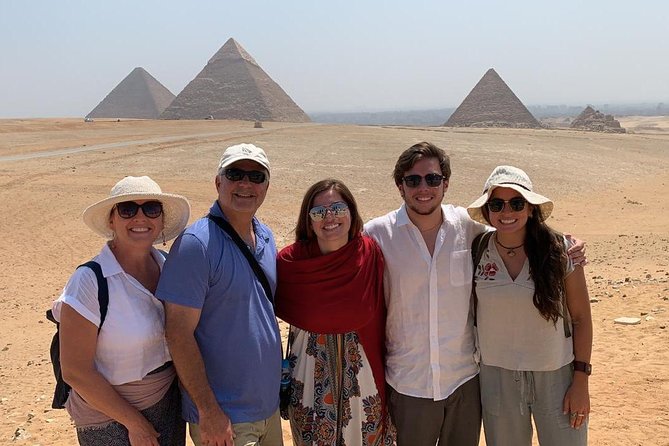
I would choose this trip if you want the classic first visit to Egypt handled in one package. It suits you if you want Cairo, Luxor, Aswan, and the Nile but do not want to arrange domestic flights and local transfers yourself.
It is also a good match for families and first-time visitors who value airport assistance and a guide. Children must be accompanied by an adult, and most people can take part, but expect walking, heat, uneven surfaces, and early starts at archaeological sites.
I would think twice if you want long, unhurried museum visits or several free days. The schedule covers a great deal in nine days. Customization is possible, yet adding major sights without extending the trip could make an already full program tiring.
The cancellation terms are worth noting before you book. A full refund is available when you cancel at least six full days before the start time. Cancelling two to six days ahead allows a 50 percent refund, while cancelling less than two full days before departure brings no refund.
Should you book this tour?
Book it if your goal is maximum coverage with minimum planning. The combination of Cairo’s major sights, Luxor’s temples and tombs, a four-night Nile cruise, Aswan, included flights, and a small group gives you a strong first look at Egypt.
Ask the operator to confirm the hotel and ship names, the exact cruise direction, the Philae timing, luggage rules, and any extra ticket costs before you pay. If those details fit your expectations, this is a practical way to see Egypt’s essential sights without spending your vacation solving transport problems.
FAQ
How long is the Best of Egypt Tour?
The tour lasts approximately nine days, with eight nights of accommodation.
Which places in Egypt does the tour visit?
The route includes Cairo, Giza, Saqqara, Memphis, Luxor, Edfu, Kom Ombo, and Aswan.
Are domestic flights included?
Yes. Domestic flights are included for the Cairo, Luxor, Aswan, and Cairo portions of the trip.
How many nights are spent on the Nile cruise?
The package includes four nights on a Nile cruise.
Are entrance fees included?
Yes. Entrance fees for the listed sightseeing stops are included. Tutankhamun’s tomb is specifically excluded from the standard Valley of the Kings ticket.
Is a guide included?
Yes. A qualified Egyptologist guide accompanies the sightseeing portions of the tour.
What meals are included?
The package includes eight breakfasts, six lunches, and four dinners. Drinks are not included.
What is the maximum group size?
The group has a maximum of 10 people.
Can the itinerary be customized?
Yes. The tour allows flexibility to customize the itinerary according to your preferences, subject to the operator’s arrangements and the schedule.
Newly reviewed in Cairo
- Cairo Private layover tour Giza pyramids,sphinx&Nile Felucca Boat★ 4.5 · 13 reviews
- 8 Day Stunning Cairo Pyramids and Nile cruise and Hurghada All inclusive★ 5.0 · 43 reviews
- Cairo dinner Nile cruise with belly dancer show on Nile river★ 5.0 · 2 reviews
- night-tour Nile dinner cruise with open buffet and belly dancer★ 5.0 · 9 reviews
- Private Full Day Tour Giza Pyramids ,Museum & Nile Felucca Boat★ 4.0 · 3 reviews
- VIP Private Tour Giza Pyramids ,Nile Dinner Cruise&Pyramid Inside★ 5.0 · 3 reviews
- Private Tour Giza Pyramids , Sphinx & Dinner Nile cruise Show★ 4.5 · 3 reviews
- Dinner Nile Cruise belly dancer open buffer tanora show sailing on Nile★ 5.0 · 9 reviews
Nile Cruises, compared side by side.
4-Days Nile Cruise From Aswan To Luxor including Abu Simbel and Hot Air Balloon
Read our review →
Dinner Cruise on the Nile River with Entertainment
Read our review →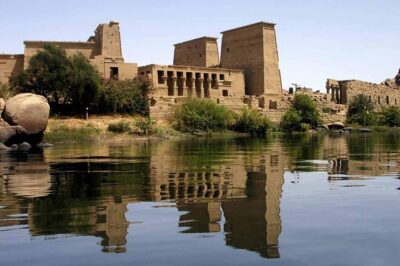
4-Day 3-Night Nile Cruise from Aswan to Luxor&Abu Simbel+Balloon
Read our review →
Nile Dinner Cruise with Belly Dancer Show with Pickup
Read our review →
4-Day 3-Night Nile Cruise from Aswan to Luxor including Abu Simbel, Air Balloon
Read our review →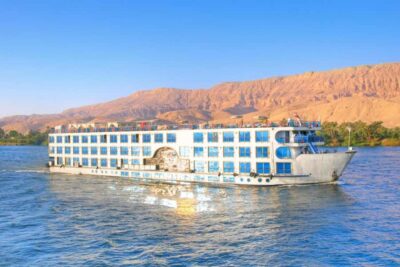
4-Day Nile Cruise from Aswan to Luxor with Guide
Read our review →Lists this trip appears in