Review · LUXOR
Aswan to Luxor: 4-Day Luxury Dahabiya Nile Cruise Adventure
The best part of this journey is the boat itself. A dahabiya carries far fewer people than the large diesel cruise ships, so you get quiet Nile sailing, open views, and a slower rhythm between the temples. I especially like the peaceful sun deck and the chance to stop at a local village instead of seeing Egypt only through famous monuments.
I also like the warm, personal service from the crew, along with the Egyptian cooking and carefully paced visits. Guides such as Mahmoud, Mohamed, and Hazem have earned strong praise for bringing the sites to life. The main caution is that this is not a fully self-propelled sailing ship: the dahabiya is pulled by a small tug, and entrance fees are not included in the $950 price.
Key points to know before booking
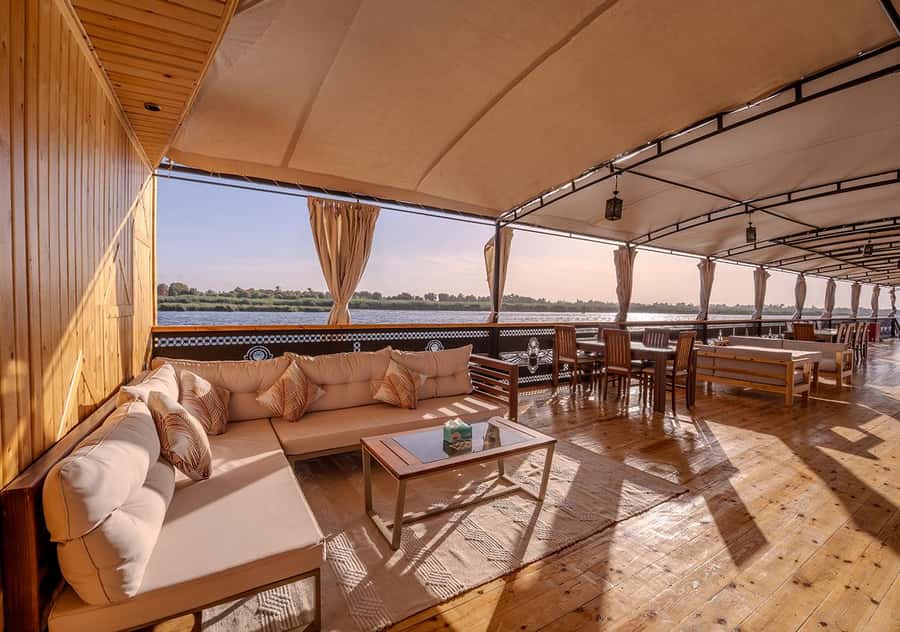
- A small traditional boat: The Anoush Dahabiya carries about 20 people, giving the trip a quieter feel than a standard Nile cruiser.
- A strong temple route: You visit Philae, Kom Ombo, Gebel El-Silsila, Edfu, the Valley of the Kings, Hatshepsut’s Temple, and Karnak.
- Personal service: Hussein, Sherif, Rambo, and the onboard team are frequently praised for attentive care and a welcoming atmosphere.
- Good food and full-board travel: Lunch on day one through breakfast on day four are included, with Egyptian dishes prepared onboard.
- A few extra costs: Entrance fees are separate, and wine costs around €15 a bottle onboard.
- Cool nights and basic WiFi: Pack warm layers for winter departures, and bring mobile data if reliable internet matters to you.
Why a dahabiya feels different on the Nile
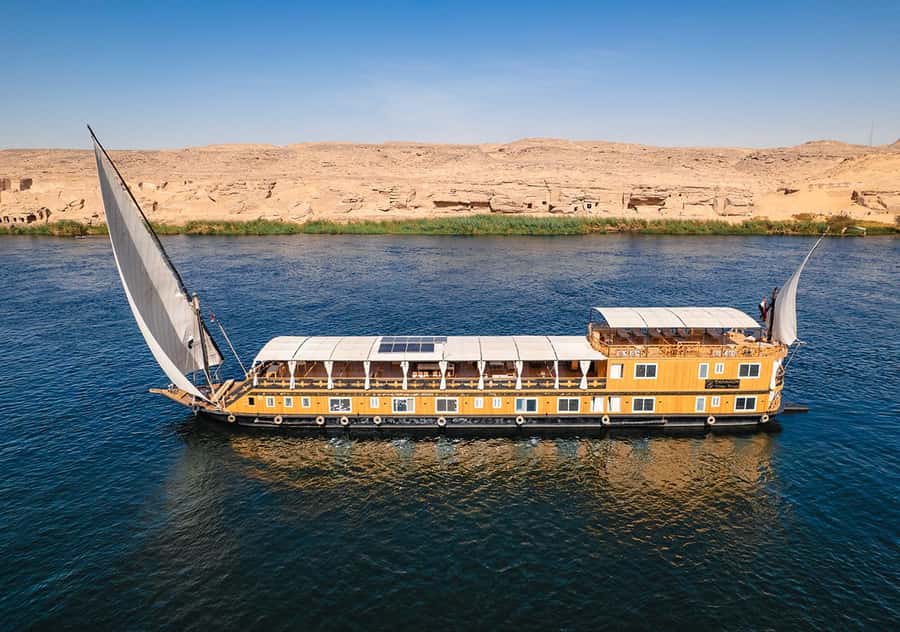
Large Nile ships can carry hundreds of people and often keep to a set schedule. A dahabiya gives you a smaller setting, with fewer people around the dining area, sun deck, and shore visits. That changes the mood more than you might expect.
You can sit outside and watch palms, fields, villages, and river islands pass at an easy pace. The Nile is not just scenery here. It becomes the main event between the temples.
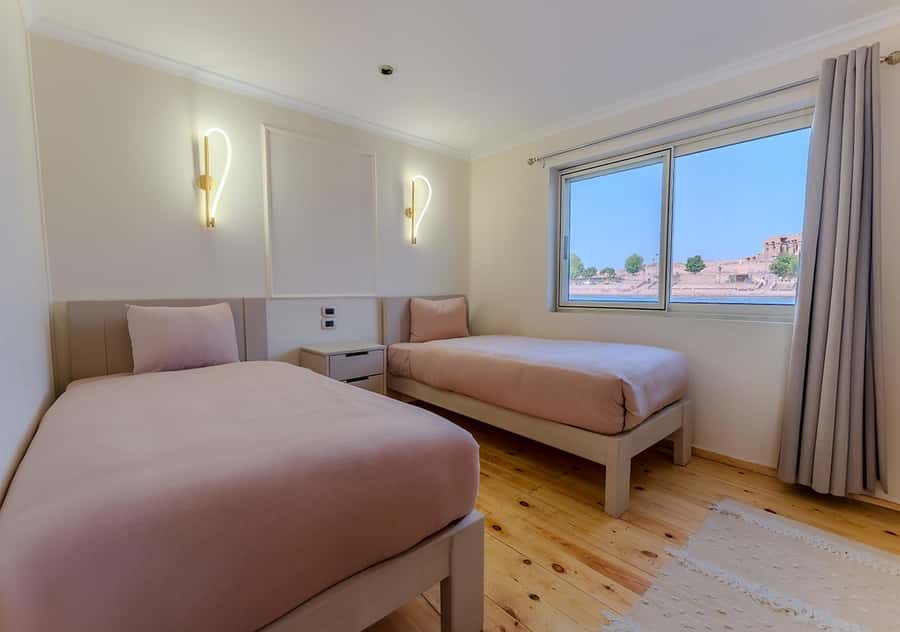
The boat has a simple colonial look, comfortable rooms, and an atmosphere that feels more like a small floating hotel than a resort. One cabin, room 16, has been especially prized for its balcony. A balcony is not guaranteed, and upgrades need to be arranged directly with the boat rather than through the booking app. One passenger paid an additional $100 per night for a suite with a balcony.
That detail matters. If having private outdoor space is important to you, ask about cabin category before paying. The standard rooms can still be attractive, but the price and availability of a balcony suite should be clear in advance.
The quiet comes partly from the boat’s design and partly from the tug. The dahabiya itself does not sail independently all the time. A small tug pulls it along, which means less engine noise onboard, but you should not book this expecting four days of pure wind-powered sailing.
More Luxury River Cruises in Egypt
- Luxury 5 Days Nile River Cruise from Luxor to Aswan with Private Tour Guide
★ 5.0 · 114 reviews - 5 Day 4 Night – Deluxe Nile Cruise Luxor to Aswan – Private Tour
★ 5.0 · 86 reviews - 4-Night, 5-Star Nile Cruise from Luxor to Aswan
★ 4.5 · 55 reviews
Day 1: Philae Temple and your first night onboard
Pickup is available from Aswan airport, train station, or a hotel on Aswan’s east bank. You should send your exact location by WhatsApp or email at least 24 hours ahead, then expect the local team to confirm the meeting point the day before.
Once onboard, you have lunch before visiting Philae Temple. The temple sits on an island in the Nile, and reaching it by boat gives the arrival a fitting sense of place. The setting is one of the trip’s strongest moments: stone monuments surrounded by water, with Aswan’s distinctive river scenery all around.
Philae is dedicated mainly to Isis and is known for its striking columns, gateways, and reliefs. Your guide should explain how the temple was moved to a higher island after the construction of the Aswan High Dam. That engineering story helps you understand why the site looks so carefully placed on its island today.
This first visit also sets the pattern for the trip. You see a major monument, return to a small boat, eat onboard, and spend the evening watching the river rather than rushing through another city.
An evening talk with the guide covers Egyptian culture and the stories behind the places you are seeing. Hazem has received particularly warm praise for his guiding, while Mahmoud and Mohamed have also been singled out for clear, engaging explanations. Guide quality can affect a history-heavy trip, so this is an important strength.
Your first night is onboard. The schedule gives you time to settle in rather than forcing you straight into a long series of stops.
Day 2: Kom Ombo, swimming, and a quiet afternoon
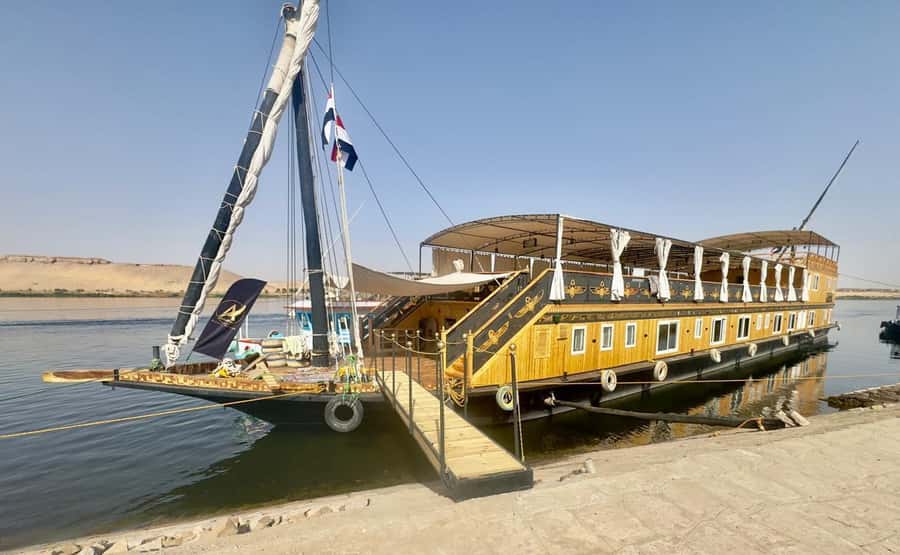
Day two is built around the pleasure of being on the river. You spend time on the sun deck, take in the views, and enjoy hot drinks and water provided during your stay.
The main visit is Kom Ombo Temple, an unusual double temple dedicated to Sobek, the crocodile god, and Horus the Elder. Its paired layout reflects the worship of two gods in one complex. Your guide can also explain the crocodile connection, which makes the temple story easy to remember.
Kom Ombo has an attractive position beside the Nile, but it is exposed to the sun. Comfortable shoes, a hat, sunglasses, and sunscreen are sensible. The stone surfaces can be uneven, so this is not the place for flimsy footwear.
The day also includes the option to swim in a safe, warm area of the Nile. This is a distinctive touch, but you should treat it as optional rather than a central promise. Bring beachwear if you want to take part, and follow the crew’s instructions about where swimming is allowed.
Back onboard, you can have a local Egyptian drink on the sun deck while the boat continues south toward Luxor. This unhurried middle section may be the main reason to choose a dahabiya. You get time to read, watch river life, or simply sit without another monument demanding your attention.
Food is another strong point. Meals are included from lunch on the first day through breakfast on the last, and the onboard chef serves Egyptian dishes in generous portions. The food has been praised repeatedly, though one recent passenger had stomach trouble during the trip. Pack any medication you normally use for digestive problems, and be sensible with unfamiliar dishes, drinks, and heat.
WiFi is not consistently reliable. If you need internet for work, messaging, or navigation, a personal data SIM is a sensible backup.
Day 3: Gebel El-Silsila, village life, and Edfu
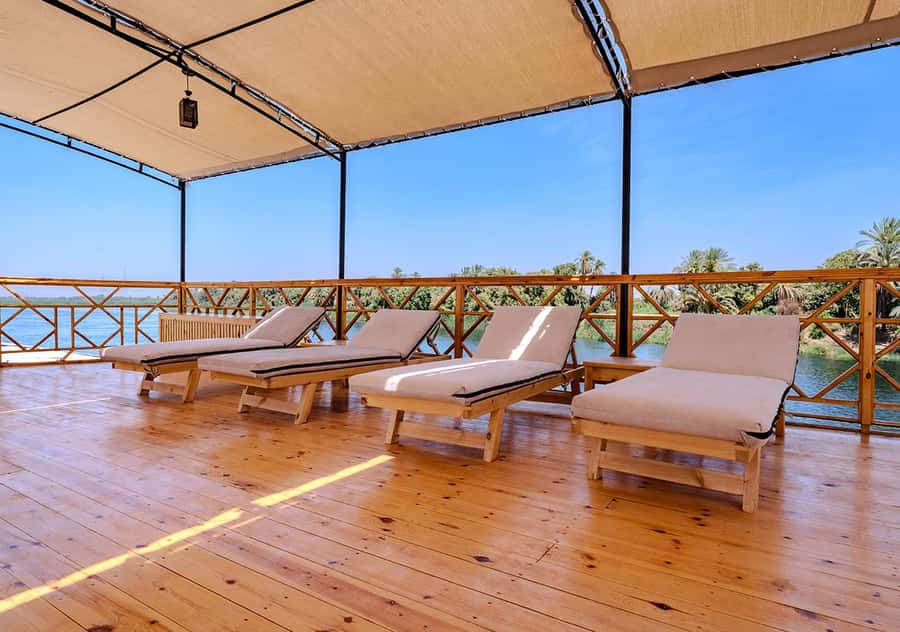
Day three gives you the most varied shore program. You begin with sailing and views from the deck before reaching Gebel El-Silsila.
Gebel El-Silsila was a major sandstone quarry area, and its cut cliffs supplied stone for many Egyptian temples. The remains include temples, tombs, and quarry marks. The stop helps you see how monumental building worked. The grand temples did not simply appear; workers extracted and shaped enormous blocks with basic tools such as chisels and hammers.
This is one of the places where a good guide makes a real difference. Without explanation, you might see scattered remains and a quarry face. With context, you can connect the stone under your feet to the temples visited elsewhere on the route.
Next comes a local village and time around the Nile islands. The purpose is not a staged show, but a look at everyday life beyond the main monuments. You can see the river as a working part of the region, not just a route between archaeological sites.
Keep your expectations sensible. The village visit is described as a chance to discover daily life and Egyptian simplicity, not as a long cultural workshop or formal performance. You will likely get the most from it by paying attention to the surroundings and accepting that the experience is less polished than a temple tour.
Edfu Temple is the day’s major monument. It is dedicated to Horus and is one of Egypt’s best-preserved large temples. Its condition allows you to read the basic shape of an ancient temple clearly: massive pylons, courtyards, columns, and reliefs that still show the power of the original design.
The Horus and Set story gives the visit a strong narrative. Horus defeats Set, and the temple presents that struggle through its decoration and religious meaning. It is easier to follow when your guide explains the symbols as you walk rather than leaving you to guess at the walls.
After Edfu, the boat continues toward Luxor. A simple farewell party is held onboard, followed by your final night on the dahabiya. This is also the point when you may notice the tradeoff of the four-day format: the route covers many major sites, but the final day is packed.
More Luxury River Cruises in Luxor
- From Luxor:7-Night Luxury Nile River Cruise & Hot Air Balloon
★ 5.0 · 35 reviews
Day 4: The Valley of the Kings, Hatshepsut, and Karnak
After breakfast, you disembark at Esna and transfer by air-conditioned vehicle to Luxor. This is a practical arrangement because the west-bank sites and East Bank temples are spread across the city and surrounding area.
The Valley of the Kings is the morning centerpiece. More than 60 tombs are cut into the hills, though the exact tombs open during your visit can vary. The attraction is not just the number of burials. These tombs were designed as elaborate homes for the afterlife, with painted corridors and chambers meant to guide the dead through the next world.
The heat, dust, and walking can build up quickly here. Wear comfortable shoes, carry water, and keep your hat and sunscreen handy. The tour includes the site visit, but entrance fees are extra, so budget for those costs before you go. If you want to enter special tombs with separate charges, confirm the current arrangements with your guide.
Next comes the Mortuary Temple of Hatshepsut. Its broad terraces rise against the cliffs, making it one of Luxor’s most memorable settings. Hatshepsut’s story adds a political edge to the visit. She ruled as pharaoh in a male-dominated system and used art and architecture to present her authority.
The guide’s explanation is useful here because the site is easy to admire without fully understanding its purpose. You will get more from the terraces and reliefs if you know how Hatshepsut shaped her public image and why later rulers altered parts of her legacy.
The final major stop is Karnak on Luxor’s East Bank. This is not one single building but a vast temple complex developed over many centuries. Its scale can be overwhelming, especially after several days of smaller sites, but the avenue, pylons, columns, and sacred spaces show why Karnak is one of Egypt’s essential visits.
You finish with a transfer to your destination in Luxor. The exact timing depends on the day’s pace, the sites, and your drop-off location. The last day is excellent for covering the major sights, but it is also the busiest day of the cruise. If you prefer slow sightseeing, keep that in mind.
Cabins, service, and onboard life
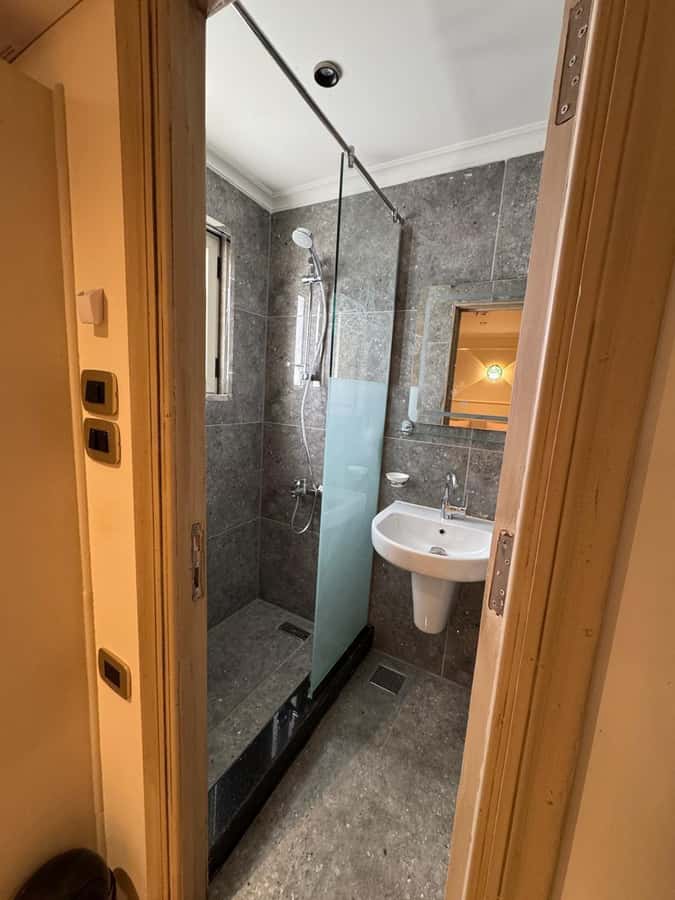
The Anoush Dahabiya has rooms described as beautiful, clean, and comfortable, with suites and at least some balcony options. The boat holds about 20 people, though the actual number onboard can vary. A smaller group makes meals and shore visits feel more personal.
Service is a major part of the experience. Hussein, Sherif, and Rambo have been praised for making people feel welcome, and the crew’s attentive approach is one of the strongest reasons to choose this boat over a much larger ship.
Housekeeping may not happen automatically every day. You might need to request room cleaning, so ask the crew early if daily service matters to you.
The boat provides air conditioning, water, and hot drinks. Smoking indoors is not allowed. Pets, drones, bicycles, scooters, fireworks, and open fires are also prohibited.
Evening temperatures can be surprisingly cool, especially in winter. Bring a fleece or light jacket, not just summer clothes. One useful tip comes directly from the onboard experience: pack warm layers even if Aswan and Luxor feel hot during the day.
Is $950 per person good value?
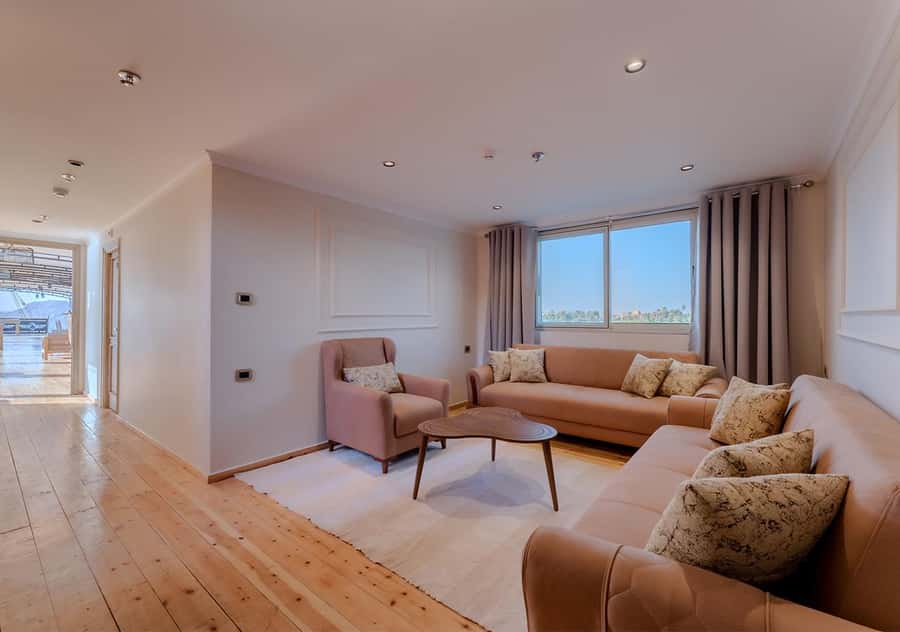
At $950 per person, this is not the cheapest way to travel from Aswan to Luxor. The price includes three nights onboard, all listed meals, air-conditioned transfers at both ends, a guide, water and hot drinks, taxes, and transport to the named sites.
It does not include entrance fees. That is the biggest item to add to your budget. Drinks other than the included water and hot drinks also cost extra. A bottle of wine onboard has been priced at about €15.
The value comes from the setting and the small scale. You are paying for a calmer boat, personal service, a full-board stay, and a route that combines major temples with a village and extended time on the river. If you would rather spend your nights in a large ship with more facilities and a lower price, this may not suit you.
I think the price is easiest to justify for couples, families, and small groups who care about quiet surroundings and attentive staff. It also works well for someone who wants the cruise itself to be part of the holiday rather than simply a way to move between monuments.
Who should book this Nile cruise?
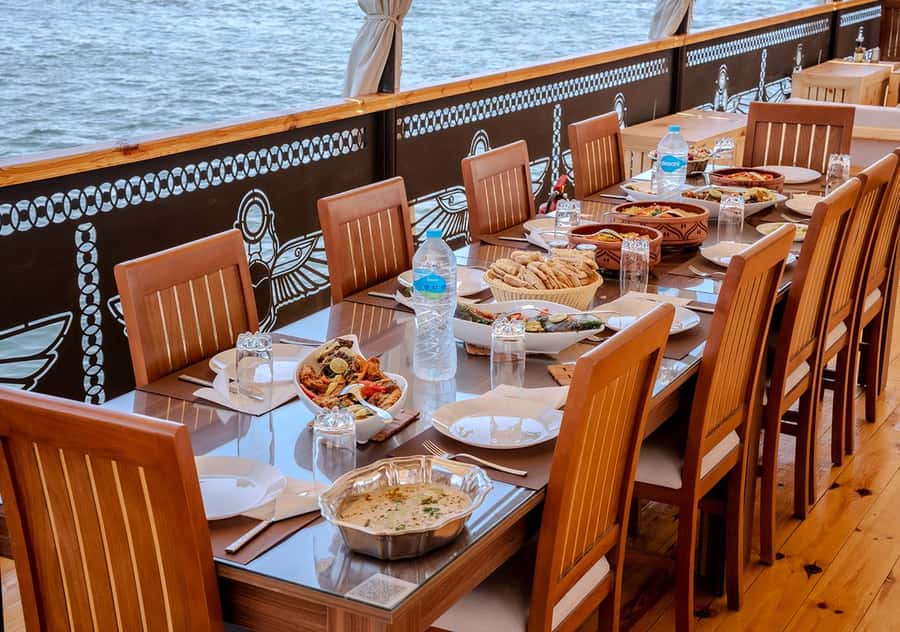
I would choose this trip if you want a slow, intimate Nile experience with the main Aswan to Luxor sights included. It suits people who enjoy sitting outside, eating onboard, and having open time between guided visits.
It is also a good fit if you want a smaller group and a personal guide. The English and French language options make it accessible to many international visitors, and the itinerary covers the sites most first-time visitors want to see.
I would think twice if you need strong WiFi, daily automatic housekeeping, or a completely independent sailing experience. You should also be comfortable with a busy final day and with paying monument entrance fees separately.
The tour accepts cancellations up to 24 hours before departure for a full refund and allows you to reserve now and pay later. Pickup is available from Aswan airport, train station, or an east-bank hotel, but exact location details need to be sent ahead.
Should you book the Anoush Dahabiya?
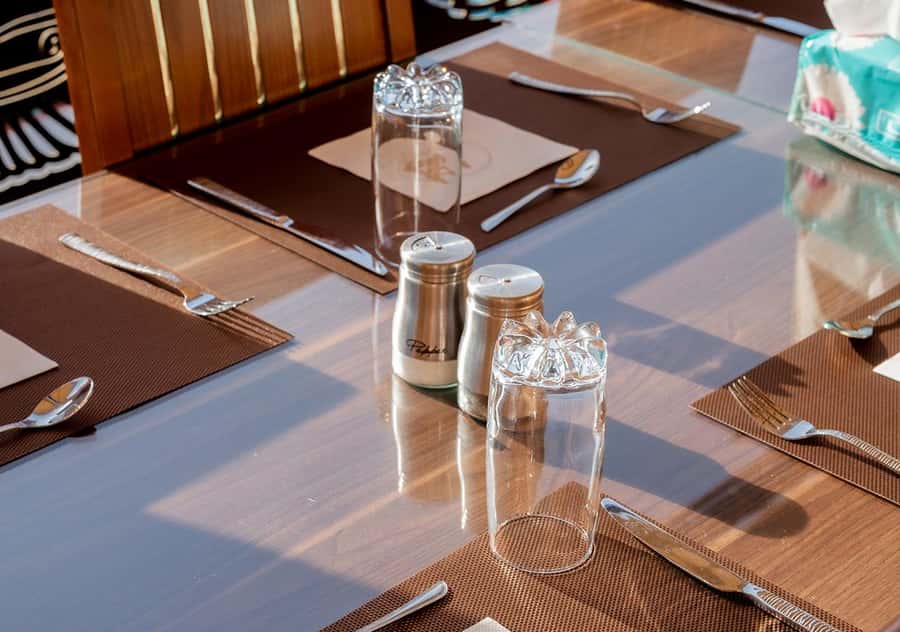
Book it if you value quiet river time, good Egyptian food, a small boat, and kind personal service more than low cost or resort-style facilities. The combination of Philae, Kom Ombo, Gebel El-Silsila, a local village, Edfu, and Luxor’s major sites gives you a strong four-day introduction to the Nile.
Before paying, ask about the exact cabin, especially if you want a balcony or suite. Also confirm the guide, entrance-fee budget, housekeeping expectations, and what is included in your drinks package.
For many people, the best memory will not be a single temple. It will be the space between them: a quiet deck, a warm drink, the river sliding past, and the feeling that Egypt does not need to be hurried.
FAQ
How long is the dahabiya cruise from Aswan to Luxor?
The experience lasts four days and includes three nights onboard the dahabiya. You disembark at Esna on the fourth day before continuing by vehicle to Luxor.
What meals are included?
Meals are included from lunch on the first day through breakfast on the last day. Water and hot drinks are also provided during your stay onboard.
Are entrance fees included?
No. Entrance fees for the listed sites are not included in the tour price, so you should plan an additional budget for Philae, Kom Ombo, Gebel El-Silsila, Edfu, the Valley of the Kings, Hatshepsut’s Temple, and Karnak.
Which sites are visited?
The route includes Philae Temple, Kom Ombo Temple, Gebel El-Silsila, a local village, Edfu Temple, the Valley of the Kings, the Mortuary Temple of Hatshepsut, and Karnak Temple.
What languages are available for the guide?
Live guiding is available in English and French. Guides including Hazem, Mahmoud, and Mohamed have led different departures.
What should I pack?
Bring comfortable shoes, sunglasses, a sun hat, sunscreen, comfortable clothing, beachwear, and your passport or a copy. Warm clothes are also important because evenings on the river can feel cool.
More Four-Day Trips in Luxor
- From Cairo: 4-Day Nile Cruise to Aswan w/ Balloon & Flights
★ 3.6 · 86 reviews - From Aswan: 4-Day 3-Night Nile Cruise with Hot Air Balloon
★ 4.5 · 50 reviews - From Cairo: 4-Day Nile Cruise from Aswan to Luxor with Meals
★ 4.4 · 24 reviews - From Luxor: 4-Day Nile Cruise to Aswan with Balloon Ride
★ 3.3 · 6 reviews
More Nile Cruises in Luxor
- From Luxor: 3-Night Nile Cruise to Aswan and Hot Air Balloon
★ 3.7 · 297 reviews - 5 Days Private Guided Nile River Cruise Tour from Luxor to Aswan
★ 5.0 · 229 reviews - Historia Hotel Nile Cruise, Mon. from Luxor 4 nts inc. Excursions
★ 5.0 · 185 reviews - From Luxor: 5-Day Nile Cruise to Aswan with Balloon Ride
★ 4.2 · 168 reviews
Newly reviewed in Luxor
- From Luxor: 8-Day Nile Cruise with Entry Tickets★ 3.8 · 5 reviews
- From Luxor: 4-Day Nile Cruise to Aswan with Balloon Ride★ 3.3 · 6 reviews
- From Luxor: 7-Day Nile Cruise to Aswan with Hot Air Balloon★ 5.0 · 2 reviews
- From Luxor: 6-Day Nile Cruise to Aswan with Hot Air Balloon★ 4.6 · 14 reviews
- From Luxor: 3-Day Nile Cruise to Aswan with Balloon Ride★ 3.6 · 43 reviews
- From Hurghada: 3-Day Nile Cruise to Aswan & Hot Air Balloon★ 3.5 · 12 reviews
- From Cairo: 4-Day Nile Cruise to Aswan w/ Balloon & Flights★ 3.6 · 86 reviews
- From Cairo: 4-Day Nile Cruise from Aswan to Luxor with Meals★ 4.4 · 24 reviews
Nile Cruises, compared side by side.
4-Days Nile Cruise From Aswan To Luxor including Abu Simbel and Hot Air Balloon
Read our review →
Dinner Cruise on the Nile River with Entertainment
Read our review →
4-Day 3-Night Nile Cruise from Aswan to Luxor&Abu Simbel+Balloon
Read our review →
Nile Dinner Cruise with Belly Dancer Show with Pickup
Read our review →
4-Day 3-Night Nile Cruise from Aswan to Luxor including Abu Simbel, Air Balloon
Read our review →