
Review · CAIRO
Egypt: 7-Day Private Tour, Baloon, Flights and Nile Cruise
The hot-air balloon ride over Luxor is the star here. At sunrise, you look down on the Nile valley, temple ruins, fields, and the world’s largest open-air museum before visiting the Valley of the Kings and Karnak. This is not a slow, single-region holiday. It is a fast sweep through Egypt’s greatest sights, with Cairo, Luxor, Aswan, Abu Simbel, and Alexandria packed into seven days.
I like the private transport and guide support, especially for a first visit to Egypt, where airports, hotel transfers, and temple visits can take real effort. I also like the rare mix of major monuments and lesser-visited stops such as Edfu, Kom Ombo, and a Nubian village. The main drawback is the pace. You will spend long hours in vehicles, on flights, and checking in and out, and the Cairo hotel choice needs careful confirmation before you pay.
Key points to know before booking
- Sunrise over Luxor: The hot-air balloon ride adds a memorable aerial view before a full morning of ancient sites.
- Two nights on the Nile: The standard five-star cruise links Luxor, Edfu, Kom Ombo, and Aswan without changing hotels each night.
- Abu Simbel included in the route: The early road trip reaches Ramses II’s great rock-cut temple, one of Egypt’s most worthwhile detours.
- Flights save ground time: Domestic flights connect Cairo and Luxor, then Aswan and Cairo, though airport days still require patience.
- A demanding seven-day schedule: You see a lot, but this is better for a first overview than for quiet museum time or relaxed evenings.
- Check the hotel location: One booking placed a visitor at Sofia Hotel in a remote Giza area, far from shops and restaurants.
What this seven-day Egypt trip is really like
At about $900 per person, this package aims to bundle the costly pieces of an Egypt holiday: private transfers, flights, hotels, a Nile cruise, a hot-air balloon ride, and guides. That can be good value if you want one booking to handle a complicated route.
The price does not include entry fees or drinks, including water. That matters because the trip visits many paid monuments, and the excluded tickets can add a noticeable amount. Ask for a written list of entrance costs, meals, and airport charges before departure. The schedule describes lunches and dinners, but you should confirm which meals are covered in the amount you pay.
The tour is private in its transport and guiding, although the Nile cruise itself is a larger ship experience. English guiding is included, with German, Spanish, and French available at an extra cost. Isaac receives special praise for his explanations and personal attention, while Marina is noted for keeping the day’s arrangements clear and helping with questions. Ask in advance which guide will accompany you in each city.
More Nile Cruises in Cairo:
- Cairo: Dinner Cruise on the Nile River with Entertainment
★ 4.2 · 2,190 reviews - Cairo: Nile Dinner Cruise with Belly Dancer Show with Pickup
★ 4.4 · 835 reviews - Cairo: Dinner Cruise on the Nile River
★ 4.2 · 741 reviews
Day 1: Pyramids, the Egyptian Museum, and dinner on the Nile
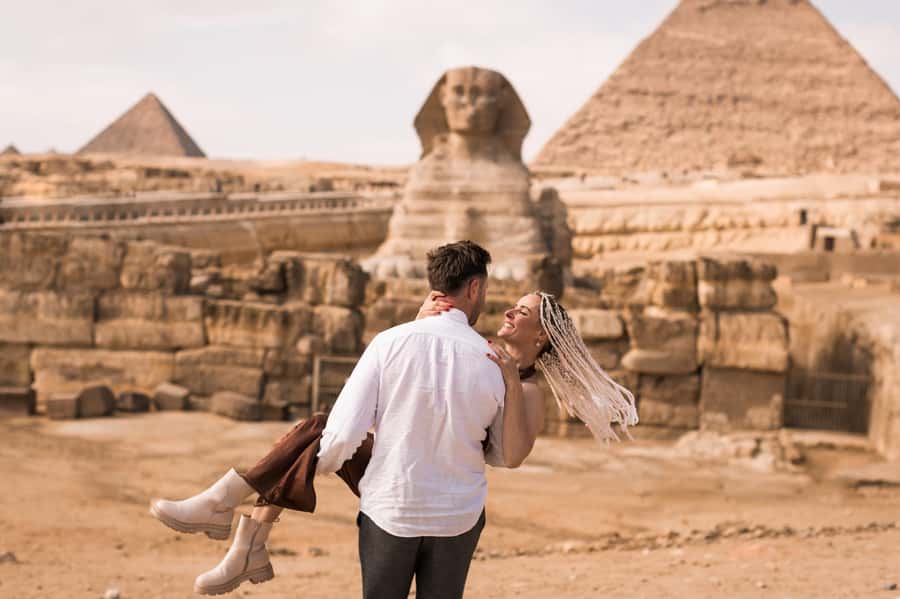
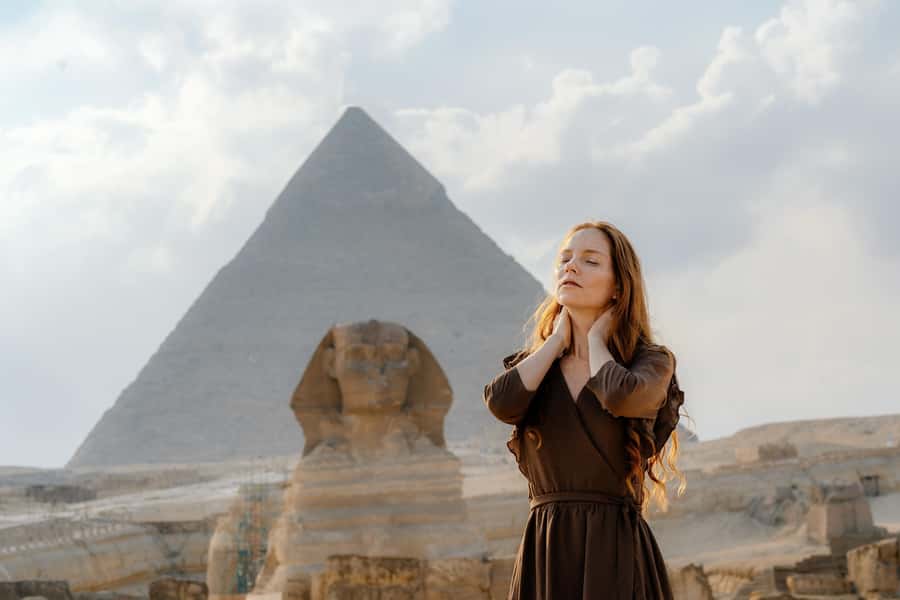
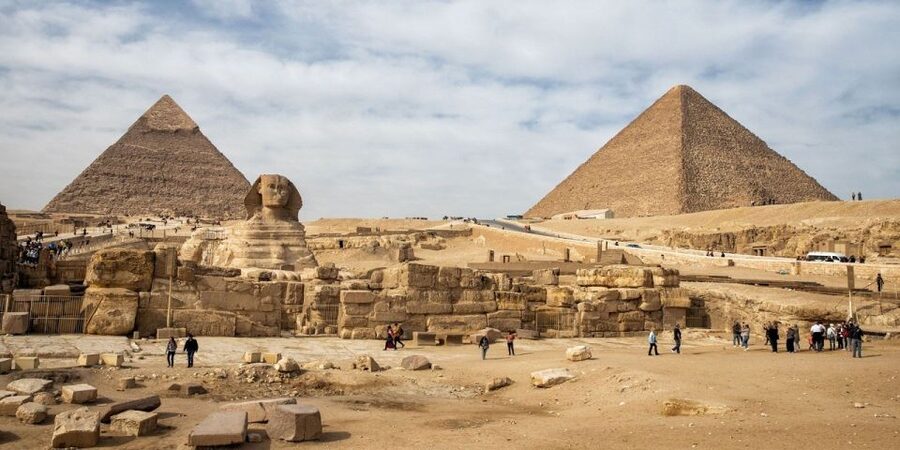
Your first morning begins at the Giza pyramids, the only surviving wonder of the ancient world. The Great Pyramid is the main event, but the wider Giza site also gives you the scale of ancient Egypt’s building program. Your guide can explain the role of the pyramid complex and help you make sense of what you are seeing instead of leaving you to fight through the crowds alone.
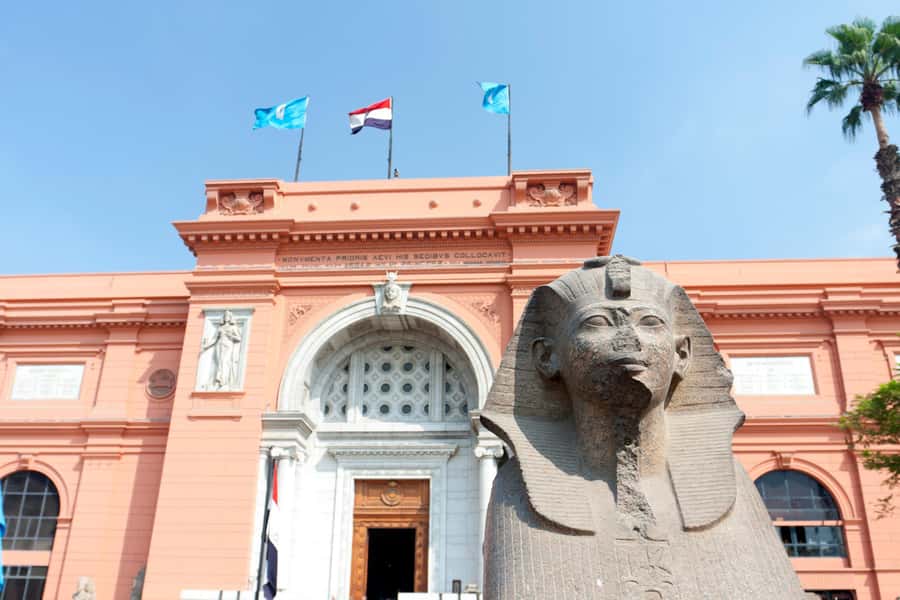
The Egyptian Museum follows. Its collection brings together royal objects, jewelry, household goods, toys, mummies, and burial items from people whose names never made it into the history books. That mix is important. Egypt is not only a story of kings and monumental tombs. The ordinary objects help you picture daily life along the Nile.
The schedule also refers to mummies connected with famous rulers such as Ramses II, Seti I, and Hatshepsut. Museum displays can change, so do not build your whole expectation around seeing a particular object in a particular gallery. The value is in having a guide place the objects within the long story of pharaonic Egypt.
After lunch and a rest at your Cairo hotel, you return in the evening for dinner on a cruise boat with a folkloric show. It is an easy first-night activity, but it makes for a long day after an international arrival. If you are tired, ask how late the dinner runs and how much time you will have at the hotel before going out again.
Day 2: African Safari Park and a flight to Luxor
Day two changes the subject from ancient stone to living animals. The African Safari Park is described as a drive-through setting where you may see zebra, reindeer, ostrich, bear, hippopotamus, and lion, with opportunities to feed or touch some non-dangerous animals.
This stop will appeal most to families and anyone who wants a break from temples. It is also one of the less predictable parts of the schedule. Animal access and feeding opportunities can vary, and the park’s location means you should allow enough time to return to the airport. The plan combines lunch, a park visit, an airport transfer, and a flight to Luxor, so delays can put pressure on the evening.
After arrival, a local representative meets you and takes you to your Luxor hotel after an Egyptian dinner. This is your one night in a hotel in Luxor before the cruise begins. Since the next morning starts early and includes a checkout with luggage, treat this as a practical overnight stop rather than a chance to explore Luxor after dark.
Day 3: A balloon sunrise and Luxor’s great monuments
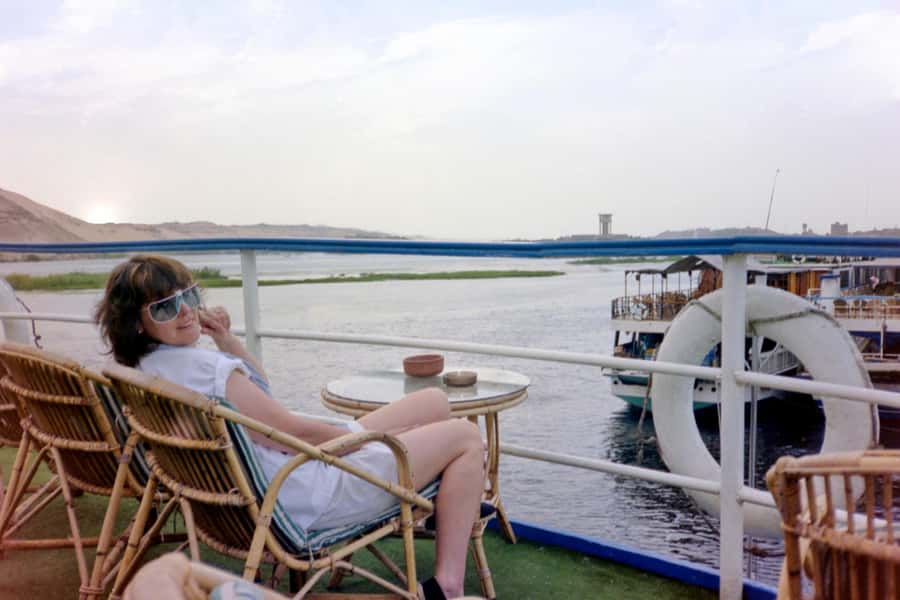
The hot-air balloon ride requires an early start, but this is the right time of day for it. From above, you get a broad view of Luxor’s river, cultivated fields, villages, and temple zones. The city is often called the world’s largest open-air museum because ancient sites sit on both banks of the Nile, and the balloon gives you a useful sense of that layout.
The morning continues at the Valley of the Kings. The valley contains 63 known royal tombs, though the exact number open to the public can vary. Tomb tickets may allow entry to a set number of tombs, while special tombs can require extra payment. Because entry fees are not included, ask your guide which tickets are part of the day and which cost more.
The tombs are not all alike. Some have long corridors covered with painted scenes, while others are smaller or less decorated. The heat, uneven ground, and bright sun can make this visit tiring, so carry water and wear shoes suited to walking. Water is not included in the package, and drinks are specifically excluded.
Next comes the mortuary temple of Queen Hatshepsut, built in terraces against the cliffs. Hatshepsut’s temple was designed in relation to the older temple of Mentuhotep II nearby, but on a much grander scale. Its broad levels and cliff setting make it one of Luxor’s most striking sites, even if you have already seen a dozen ancient monuments.
The Colossi of Memnon provide a brief photo stop before lunch and an East Bank visit. Karnak Temple is the day’s major finale. It is not a single building but a huge complex developed by many generations over roughly 1,500 years, with major temples, smaller sanctuaries, courtyards, and outer areas.
By the end of this day, you will be ready for the cruise. The schedule places you aboard a standard five-star ship for two nights. A deluxe or luxury upgrade is available at an added cost, so compare cabin type, deck position, meals, and onboard services rather than relying only on the star label.
More Week-Long Trips in Cairo:
- Cairo & Nile: 7-Day Hotel Stay & Cruise Package with Flights
★ 5.0 · 2 reviews - From Luxor: 7-Day Nile Cruise to Aswan with Hot Air Balloon
★ 5.0 · 2 reviews
Day 4: Edfu and Kom Ombo by river
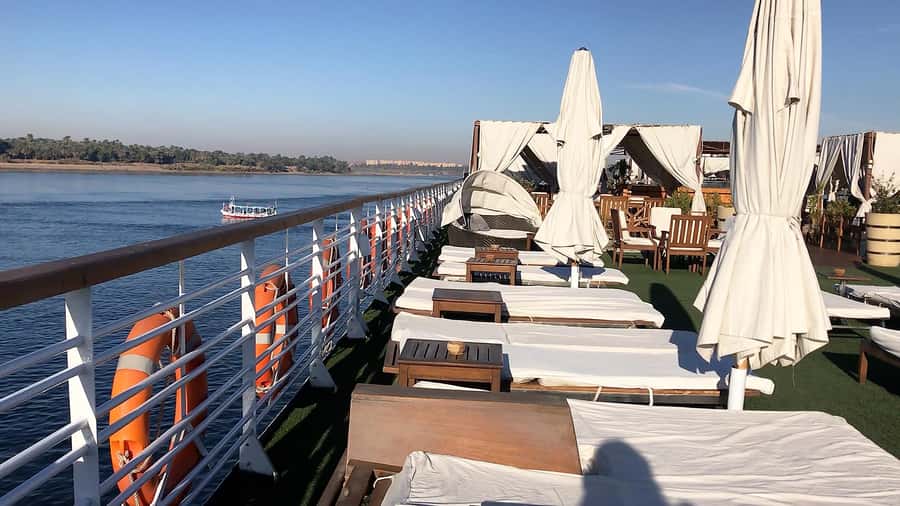
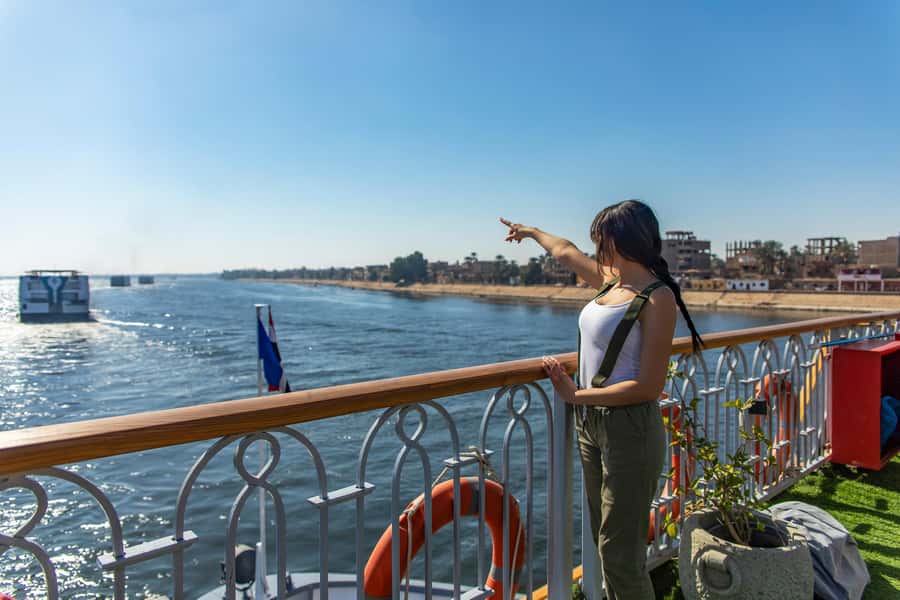
The cruise makes this part of the trip easier. You wake aboard ship, visit a temple, return for lunch and sailing, then repeat the pattern at the next stop. You do not need to pack a new suitcase each morning.
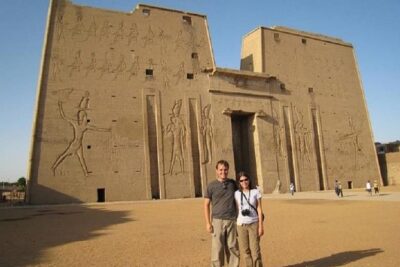
Edfu Temple is dedicated to Horus, the falcon god. Its large pylons, carved walls, and relatively complete design help you see how Ptolemaic builders presented older Egyptian religious ideas in a later period. The temple is especially useful for visitors who want more than the famous Cairo and Luxor stops, because its carvings and structure reward a slower explanation from an Egyptologist.
Back on the ship, you continue toward Kom Ombo. This temple has an unusual double design because it honors two gods, Sobek, the crocodile god, and Haroeris, a form of Horus. The paired layout gives the site a different feel from Karnak or Edfu.
The Kom Ombo visit is usually short, and the light can be harsh. Listen closely to the guide’s explanation of the reliefs, medical instruments, and crocodile connections, then allow time for the river view before returning to the ship. The ship’s schedule controls the day, so late returns are not an option.
Day 5: Abu Simbel, a Nubian village, and back to Cairo

Abu Simbel demands an early departure. You check out, leave your luggage at the ship’s reception, and ride in an air-conditioned vehicle to the temples. The road journey is long, but the destination earns the effort.
Ramses II ordered the great temple cut into the rock and dedicated it to Ptah, Ra, Amun, and the deified king himself. The four colossal figures at the entrance make an immediate impression, but the interior rooms and reliefs explain how Ramses II wanted his power presented. The temples are also tied to the modern relocation of the monuments when the Aswan High Dam threatened to flood the original site, a fact worth asking your guide about.
After Abu Simbel, the schedule returns you to the ship and then to a Nubian village for lunch. This adds a local community stop to a day otherwise focused on royal monuments. Keep your expectations practical. The visit is described as a colorful cultural stop, but the amount of time and exact activities are not specified.
You then collect your luggage, fly from Aswan to Cairo, and transfer to your Cairo hotel. This is one of the longest days in the trip. The combination of an early road journey, a boat return, a village visit, an airport transfer, and an evening flight leaves little room for delay.
Day 6: Alexandria’s Roman, Islamic, and modern sides
Alexandria is a full-day road excursion from Cairo. You check out with your luggage, visit the city, then return to Cairo for a felucca ride and lunch. That makes the day logistically awkward, but it also lets you see a coastal city without adding another hotel night.
The Catacombs of Kom el Shoqafa are the first major stop. They combine Egyptian, Greek, and Roman influences and show how burial customs changed under foreign rule. The passages are underground, so visitors who dislike enclosed spaces should keep that in mind.
The Bibliotheca Alexandrina provides a sharp contrast. The modern library complex occupies a historic harbor area and recalls Alexandria’s famous ancient library without pretending to be the original building. It is a useful reminder that the city is not only an ancient ruin site.
Fort Qaitbey closes the Alexandria portion. Built on the Mediterranean shore, the fort represents a later Islamic period and gives you a different view of the city’s military and maritime past. Together, the catacombs, library, and fort create a broad one-day introduction rather than a detailed study of any one period.
Back in Cairo, a felucca ride on the Nile offers a quiet change of pace before lunch at a local restaurant. The trip then ends at the Cairo hotel. Because this is another long day with luggage, road time, and a late return, it suits people who prefer seeing more places over staying longer in one.
Day 7: A simple final transfer
The last morning is straightforward. After breakfast and checkout, a driver takes you to your accommodation in Cairo or Giza. This is not described as an airport transfer, so if you are flying home that day, confirm the destination and timing carefully.
That small detail matters. A seven-day route with several flights and hotel changes leaves little room for a wrong assumption about the final drop-off. Put your exact address on the booking and confirm it with the local representative.
Hotels, transport, and the main practical warning
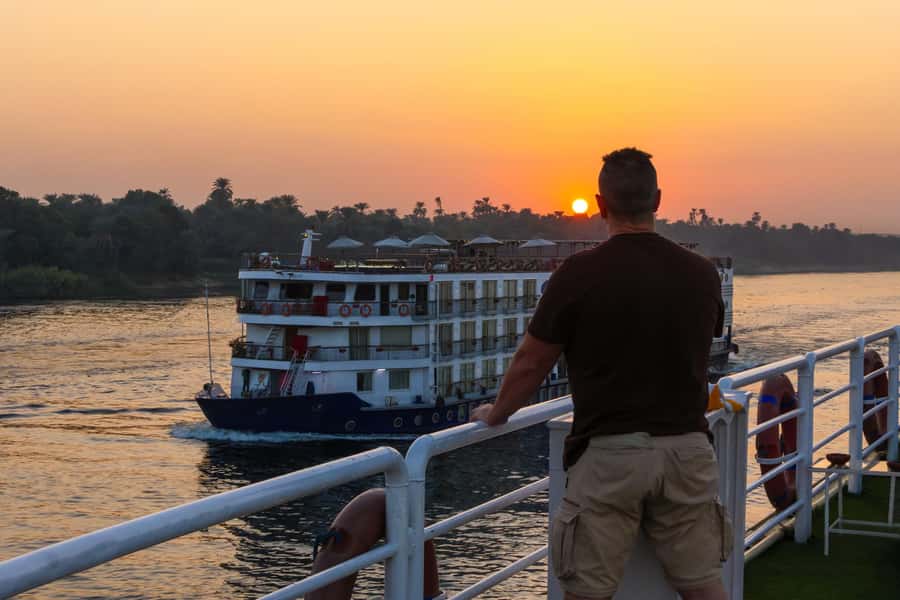
Private air-conditioned transport is one of the strongest parts of this package. You have a driver for the long road sections, airport transfers, and city visits, rather than needing to arrange taxis at every stop. The domestic flights also reduce the time needed to connect Cairo, Luxor, and Aswan.
The weak point is not the transport idea but the hotel information. One booking placed the visitor at Sofia Hotel in a remote part of Giza, with no nearby shops or restaurants and a restaurant several kilometers away. That location caused enough frustration that the visitor later paid to move to a central Cairo hotel and canceled the Alexandria day.
You should ask for the exact names and locations of all Cairo and Luxor hotels before booking. Check a map, ask whether restaurants are within walking distance, and confirm whether the hotel is in central Cairo, Giza, or an isolated area. A low room rate is less useful if every meal requires a paid car ride.
There was also a serious communication problem at the African Safari Park on one booking. The park had not received the ticket payment, even though the visitor had already paid the tour company, causing more than an hour of waiting before other members of the group covered the cost. Carry payment records and ask for confirmation that entrance tickets have been settled before you arrive.
The cruise portion had no reported sightseeing problems, but one cabin in the same group reportedly flooded. That does not mean your cabin will have trouble, but it is another reason to check the ship name, cabin category, and emergency contact before departure.
Who should book this trip?
I would consider it for a first visit when you want the major sights handled in one package and you accept a brisk pace. Families may like the safari stop, and history-focused visitors will appreciate the range from pyramids and pharaohs to Roman Alexandria and Islamic Fort Qaitbey.
It also suits people who value a guide at complicated sites. Cairo, Luxor, Edfu, Kom Ombo, and Abu Simbel are easier to understand with context, and the private transfers reduce the need to negotiate transport repeatedly.
I would not choose it for a restful holiday. You change cities several times, take two domestic flights, make an early Abu Simbel road trip, and spend a full day reaching Alexandria and returning to Cairo. If you want more time in museums, markets, or local neighborhoods, a longer trip would serve you better.
Should you book it?
Book this tour if the main goal is to collect Egypt’s greatest sights in seven days at a bundled price. The balloon ride, two-night Nile cruise, Abu Simbel visit, and private guiding give the package real value, especially when you compare it with arranging flights, hotels, and transfers separately.
Before paying, get three things in writing: the exact Cairo hotel locations, confirmation that park and monument arrangements are paid correctly, and a clear list of what the $900 covers beyond transport, rooms, flights, guiding, and the cruise. If those details are satisfactory, this is an efficient first look at Egypt. If the hotels remain vague, choose a different package or book the Cairo rooms yourself.
FAQ
Is the hot-air balloon ride included?
Yes. The package includes a hot-air balloon ride in Luxor, scheduled before visits to the Valley of the Kings, Hatshepsut’s temple, and the Colossi of Memnon.
How many nights are spent on the Nile cruise?
The package includes two nights on a standard five-star Nile cruise ship. Deluxe and luxury cruise upgrades are available at an additional cost.
Are entrance fees included in the $900 price?
No. Entry fees are listed as excluded. Drinks, including water, are also not included.
Which languages are available for guiding?
Arabic and English are available. German, Spanish, and French guides can be requested for an additional cost.
Does the tour include flights?
Yes. Flight tickets are included for the domestic connections described between Cairo, Luxor, Aswan, and Cairo.
Is hotel pickup and drop-off included?
Yes. Hotel pickup and drop-off are included, along with private transport in an air-conditioned vehicle. On the final day, the stated drop-off is at accommodation in Cairo or Giza, so confirm the destination if you need an airport transfer.
Newly reviewed in Cairo
- From Cairo by Plane: 5 Days & 4 Nights Nile Cruise to Luxor★ 3.7 · 39 reviews
- From Cairo: 5-Day Nile Cruise to Aswan & Balloon by Flights★ 3.8 · 15 reviews
- From Cairo: 5-Day Tour with Nile Cruise, Balloon, & Flights★ 4.2 · 27 reviews
- Cairo: 4-Day Nile Cruise to Luxor with Balloon & Flights★ 4.3 · 7 reviews
- From Cairo: 4-Day Nile Cruise to Luxor with Balloon Flight★ 4.2 · 112 reviews
- From Cairo: 11-Day Tour, Nile Cruise, Flights, Balloon★ 4.3 · 20 reviews
- Egypt: Private 5-Day Tour, Nile Cruise, Flights & Balloon★ 4.1 · 248 reviews
- Cairo : Sakkara, Memphis ,Dahshur and Nile dinner cruise★ 5.0 · 3 reviews
Nile Cruises, compared side by side.
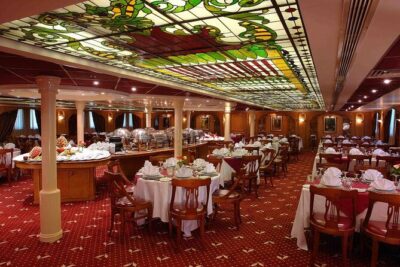
4-Days Nile Cruise From Aswan To Luxor including Abu Simbel and Hot Air Balloon
Read our review →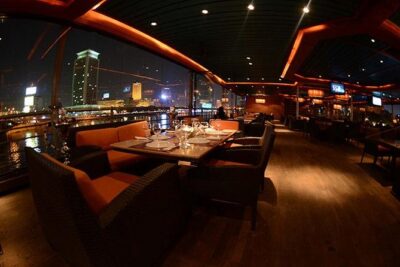
Dinner Cruise on the Nile River with Entertainment
Read our review →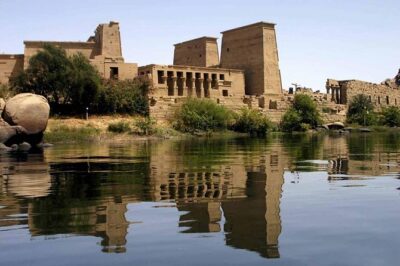
4-Day 3-Night Nile Cruise from Aswan to Luxor&Abu Simbel+Balloon
Read our review →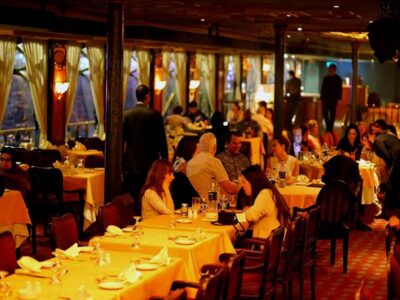
Nile Dinner Cruise with Belly Dancer Show with Pickup
Read our review →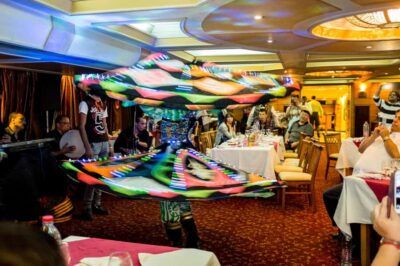
4-Day 3-Night Nile Cruise from Aswan to Luxor including Abu Simbel, Air Balloon
Read our review →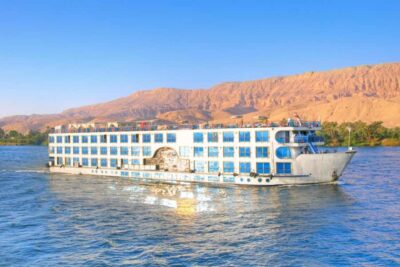
4-Day Nile Cruise from Aswan to Luxor with Guide
Read our review →Lists this trip appears in