
Review · HURGHADA
Nile cruise from aswan to Luxor (4 Day)
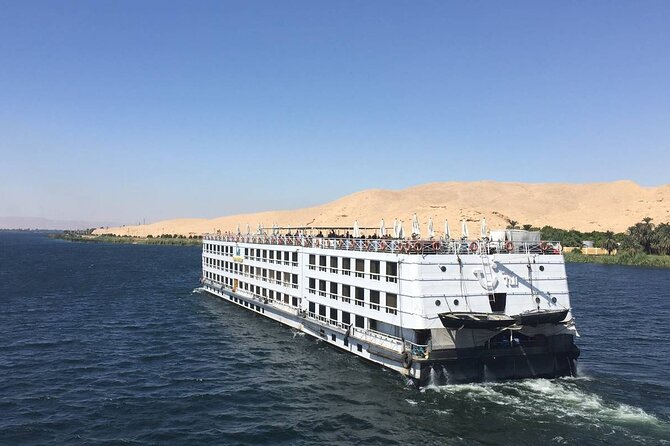
The best part of this four-day Nile cruise is the steady change of scenery from Aswan to Luxor. You move by ship, motorboat, chariot, and private air-conditioned van, with ancient temples built into the journey rather than treated as separate day trips. I especially like the visit to Philae by motorboat and the chance to watch the Nile from the sun deck during lunch.
I also like that the cruise includes three breakfasts, lunches, and dinners, plus an Egyptologist guide and private-group touring. The main concern is that the schedule appears to mention Edfu on both Day 2 and Day 3, while the meeting information gives a midnight start and the ship check-in is before noon. Confirm the exact sailing plan and pickup time before paying.
Key points to know before booking
- Aswan to Luxor in four days: The cruise moves north along the Nile and finishes with Luxor’s major East and West Bank sights.
- Philae requires a motorboat: Reaching the temple by water is part of the appeal, not just a transfer.
- Meals are included: Breakfast, lunch, and dinner are provided for three days, but temple tickets are extra.
- Private touring: Only your group participates, with pickup offered and transport by private air-conditioned van.
- Edfu timing needs confirmation: The schedule lists Edfu on Day 2 and again early on Day 3, so ask how the operator handles this.
- A guide named Hijab is mentioned: Booking feedback praises Hijab’s kind manner, clear explanations, and careful planning, though you should confirm who will lead your cruise.
Why this Nile cruise works
A Nile cruise gives you something a road tour cannot: time between monuments. You see the river from the ship, watch the banks slide past, and reach temples without repacking every morning. On this route, Aswan provides the southern starting point, while Luxor delivers the biggest concentration of ancient sites.
At $500 per person, the value depends on what is covered in your final package. The price includes the cruise experience, meals for three days, guide services, transport described in the program, and private participation. It does not include temple tickets, so budget extra for admission. The optional hot-air balloon ride over Luxor also costs extra.
This is not a luxury rating or a detailed ship review. The information provided does not specify the vessel, cabin category, onboard Wi-Fi, drinks, or entertainment beyond the Egyptian folkloric show. You should ask about those points if the ship itself matters as much as the sightseeing.
The cruise suits you best if you want the main Aswan and Luxor sights arranged into one moving trip. It is also a good fit if you prefer a private group instead of joining a large shared party. If you want long, unhurried visits at every temple, the schedule may feel full.
More Nile Cruises in Hurghada:
- Luxor: Valley of the Kings and Hatshepsut Temple w/Nile Boat
★ 5.0 · 230 reviews - Private Cairo tour from Hurghada: No Shopping| Nile Cruise| Lunch
★ 4.5 · 98 reviews - Private Luxor tour from Hurghada: No Shopping | Nile cruise Lunch
★ 5.0 · 74 reviews
Day 1: High Dam, Philae, and Aswan’s granite obelisk
Your arrival day begins in Aswan, where a representative meets you and transfers you by private air-conditioned van to the ship. Check-in is scheduled before noon, followed by lunch on board. Since the listed meeting time says 12:00 am while the ship check-in says before 12:00 pm, get the exact meeting hour in writing. That small check can prevent a stressful start.
The first outing visits the High Dam, built under Egyptian president Gamal Abdel Nasser in 1960 to help protect Egypt from Nile floods. The dam also changed the river’s flow and made large-scale irrigation and power generation possible. Your guide can give the site more meaning than a quick photo stop, so listen for the connection between modern Egypt and the older Nile economy.
Next comes the motorboat ride to Philae Temple. I consider this one of the strongest parts of the trip. The temple sits on an island, so the approach across the water gives you a clear sense of place before you start walking among the columns and reliefs.
Philae was built during the Greco-Roman period and dedicated to Isis. That later date makes it a useful reminder that Egyptian religious traditions continued long after the age of the great pyramid builders. The water crossing also adds a pleasant break from road transport and temple courtyards.
The final stop is the Unfinished Obelisk, cut from red granite and dedicated to Amun Ra. Its value lies in what it shows about ancient stonework. Instead of seeing only a finished monument, you see a massive project left incomplete, with the working process still central to the site.
You return to the ship after the visits, then have the evening free in Aswan. Dinner is included. The open evening is useful if you arrive tired, but the program does not list an additional organized night activity, so plan on making your own arrangements.
Day 2: Kom Ombo, Edfu, and life aboard ship
Breakfast is served on board before you join the Egyptologist guide for Kom Ombo Temple. This unusual complex honored two gods, Sobek and Haroeris. The shared temple design gives the visit a different feel from Philae, where the focus is more strongly tied to Isis.
Kom Ombo is also a good stop for seeing how ancient worship could include different gods in one complex. Your guide’s explanation matters here because the site can otherwise look like a set of columns and broken walls without a clear story.
After the temple, you return to the ship for lunch on the sun deck. This is one of the simple pleasures of the itinerary. Instead of spending every midday inside a restaurant or van, you can eat while looking out over the Nile and its changing banks.
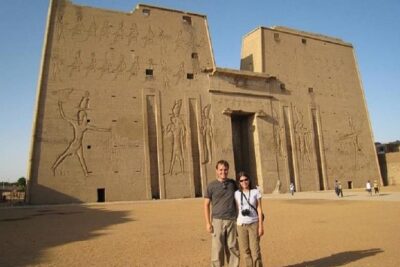
The schedule then describes a chariot ride to Edfu Temple, dedicated to Horus. Edfu is considered one of Egypt’s best-preserved temples, and its large walls and clear layout make it easier to picture how a major temple complex once functioned.
The chariot transfer is a distinctive touch, though the program does not give details about its duration or exact route. If you prefer not to ride in a chariot, ask the operator what alternatives are available. After the temple, you return to the ship and have time to relax.
Dinner is served on board, followed by an Egyptian folkloric show performed by the ship’s staff. This gives the evening a social finish without requiring another transfer. The show is an onboard activity, not a professional theater performance, so keep expectations reasonable.
There is an important scheduling point here. Day 3 also begins with an early arrival in Edfu and another visit to Edfu Temple. That may reflect duplicated text, a change in sailing arrangements, or a plan that includes the temple at a different time. Ask the operator to explain exactly when Edfu is visited and how long the ship stays there.
Day 3: Sailing toward Luxor and the East Bank
The program describes an early-morning arrival in Edfu, followed by Edfu Temple, then continued sailing toward Luxor. It says the ship reaches Luxor around 4 pm. Because this repeats the previous day’s Edfu visit, treat the timing as something to verify rather than a firm promise.
The hours on the river are part of the point of choosing a cruise. You can spend time on board rather than sitting in a vehicle, and lunch is included. The schedule does not give a detailed list of onboard activities for this sailing period, so you should expect the river views and the ship’s facilities to fill much of the afternoon.
Once in Luxor, the program turns to the East Bank. The main visit is Karnak Temple, a huge complex made up of temples, chapels, and other buildings. The Arabic name Karnak refers to a fortified village, which fits the site’s scale better than the word temple alone.
Karnak rewards a slow pace, but a cruise schedule can only offer limited time. Stay close to your guide and ask where to meet if you want a few minutes to look around on your own. The information provided does not state how long the visit lasts, so ask before the tour begins if you want to plan photographs or a quiet walk.
The day also includes Luxor Temple, another major East Bank site. Its position in the modern city gives it a different character from the more isolated temples along the river. Seeing Karnak and Luxor Temple together helps you understand the East Bank as a connected religious center rather than two unrelated stops.
The Day 3 description ends partway through the Luxor Temple details, so it does not list every stop or the precise finish time. You should not assume that a full evening in Luxor is included unless the operator confirms it.
More Four-Day Trips in Hurghada:
- 4 Days 3 Nights Nile Cruise From Hurghada By Bus
★ 5.0 · 6 reviews - 4 days Aswan and luxor Nile cruise with hot air balloon,abu simbel from hurghada
★ 3.5 · 3 reviews - 4-Day 3-Night Nile Cruise from Aswan to Luxor&Abu Simbel+Balloon
★ 5.0 · 2,023 reviews - 4-Day 3-Night Nile Cruise from Aswan to Luxor including Abu Simbel, Air Balloon
★ 4.5 · 612 reviews
Day 4: The Valley of the Kings and Luxor’s West Bank
After breakfast, you check out of the cruise and visit Luxor’s West Bank. An optional early-morning hot-air balloon ride is offered before the main sightseeing. The description does not provide a price, flight length, pickup details, or weather policy, so ask for those facts before adding it.
The first main stop is the Valley of the Kings, also called the Valley of the Gates of the Kings. It contains the tombs of 63 important pharaohs. From the outside, the valley can look like a bare gorge of red rock, but the significance is below the surface, inside the decorated tombs.
Temple tickets are not included in the $500 price. That is particularly important on this day because the West Bank contains several paid sites. Ask whether the quoted ticket arrangement covers a set number of tombs or whether each admission is separate. The supplied information only confirms that temple tickets are extra.
Next comes the Temple of Hatshepsut, built during the New Kingdom for the female pharaoh Hatshepsut. The temple sits at the foot of the cliffs in a natural bay, giving it a strong setting even before you study the terraces and columns.
The final listed stop is the Colossi of Memnon, two large statues that have become one of Luxor’s familiar sights. This is usually a short outdoor visit, though the program does not state the exact duration. Wear suitable sun protection and bring water, since the West Bank stops are exposed and the schedule can be warm.
The cruise ends after these visits. The description does not state the final transfer destination, so confirm whether you are dropped at a Luxor hotel, airport, train station, or another address. Pickup is offered, but the exact start and end points should be arranged directly.
Guide quality and the private-group setup
The tour is described as a private activity, meaning only your group participates. That matters when visiting large sites such as Karnak and the Valley of the Kings. You can ask your own questions and avoid being tied to strangers’ interests, though the exact group size is not stated.
An Egyptologist guide accompanies the sightseeing. One guide named Hijab is praised for a kind, respectful manner, clear explanations, and careful planning in Cairo-related touring. If Hijab is the person assigned to your Nile trip, that would be useful for travelers who value a calm guide and strong communication. Confirm the assigned guide before booking, since the operator does not clearly promise a particular person for this cruise.
The program uses a private air-conditioned van for the initial transfer and includes a motorboat at Philae. Other transport is described as a chariot ride at Edfu and the cruise ship itself. Since the information does not describe vehicle size, cabin details, or luggage handling, ask practical questions if you have bulky bags or specific comfort needs.
Meals, tickets, and what the $500 price really covers
The package includes three breakfasts, three lunches, and three dinners. That covers the core meal schedule during the four-day program, but it does not say whether drinks, snacks, or meals after checkout are included.
The biggest extra cost is temple admission. The price also excludes the optional hot-air balloon ride. These exclusions do not automatically make the tour poor value, but they make the advertised price less than your final trip cost.
I would compare this package with other Aswan to Luxor cruises by asking four direct questions:
- Is the cabin private, and what category is it?
- Are all listed transport segments included?
- Which temple tickets must you buy separately?
- What is the exact final drop-off in Luxor?
The answers will tell you more than the headline price. A lower-priced cruise can become less attractive if it leaves major admissions, transfers, or essential arrangements unclear.
Who should book this cruise
I would consider this trip if you want a compact introduction to Upper Egypt, prefer a private group, and like the idea of moving between sights by river. It brings together Aswan’s High Dam, Philae, and Unfinished Obelisk with Kom Ombo, Edfu, and Luxor’s East and West Bank.
It also suits you if you want meals included and do not want to arrange each day’s transport yourself. The Egyptologist guide is a useful addition, especially at Karnak, the Valley of the Kings, and the temples where a short explanation can give the ruins shape.
I would pause before booking if you need a fully fixed timetable. The repeated Edfu entry, incomplete Day 3 description, unclear meeting time, and unspecified final drop-off all deserve clarification. You should also allow extra money for temple tickets and the balloon ride.
Cancellation terms are relatively flexible only if you act early: cancel at least six full days before the start for a full refund. Cancelling two to six days ahead allows a 50 percent refund, while cancellations less than two days before departure are not refunded. Changes follow the same cutoff limits.
Should you book it?
Book this cruise if you want the classic Aswan to Luxor route in a short, organized package, with meals, private touring, and the special arrival at Philae by motorboat. The combination of river time and major temples gives you a strong first look at Upper Egypt.
Before paying, confirm the ship, cabin, guide, Edfu schedule, meeting time, ticket costs, and Luxor drop-off. If those points are clear and the cruise fare fits your budget, the $500 price can be sensible for a four-day route. If the operator cannot clarify them, choose a package with a cleaner timetable.
FAQ
Where does the cruise start and finish?
The cruise starts in Aswan and finishes in Luxor. The program does not specify the exact final drop-off point in Luxor, so confirm that before booking.
How long is the experience?
The cruise lasts approximately four days. Check-in is scheduled before 12:00 pm on the first day, and the ship is expected to reach Luxor around 4 pm on Day 3.
Are meals included?
Yes. The package includes three breakfasts, three lunches, and three dinners.
Are temple tickets included?
No. Temple tickets are listed as an extra cost and are not included in the $500 price.
Is the tour private?
Yes. Only your group participates in this private tour or activity.
Is the hot-air balloon ride included?
No. The early-morning hot-air balloon ride over Luxor’s West Bank is optional and costs extra.
Newly reviewed in Hurghada
- 5 Day Nile Cruise from Hurghada to Luxor and Aswan★ 5.0 · 28 reviews
- Cairo Over night (Pyramid & Sphinx & Egyptian Museum Nile cruise) – Hurghada★ 3.5 · 3 reviews
- From Hurghada: 5 Days 4 Nights Nile Cruise Luxor-Aswan With Tours★ 5.0 · 30 reviews
- 4-Days Nile Cruise with Hot Air Balloon from Hurghada★ 5.0 · 3 reviews
- 4 days Aswan and luxor Nile cruise with hot air balloon,abu simbel from hurghada★ 3.5 · 3 reviews
- 4 Days 3 Nights Nile Cruise From Hurghada By Bus★ 5.0 · 6 reviews
- 4 Nights Nile Cruise Trip Hurghada to Luxor Aswan and Abu Simple★ 5.0 · 2 reviews
- Enjoy 2 Nights Luxor and Aswan Nile Cruise includes Tours from Hurghada★ 3.5 · 7 reviews
Nile Cruises, compared side by side.
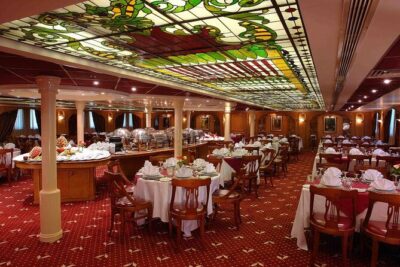
4-Days Nile Cruise From Aswan To Luxor including Abu Simbel and Hot Air Balloon
Read our review →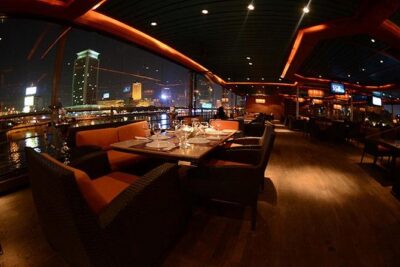
Dinner Cruise on the Nile River with Entertainment
Read our review →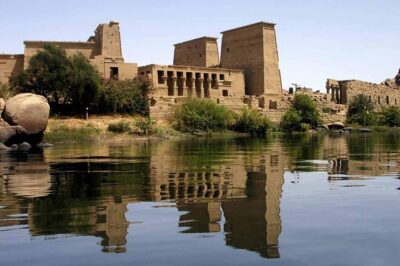
4-Day 3-Night Nile Cruise from Aswan to Luxor&Abu Simbel+Balloon
Read our review →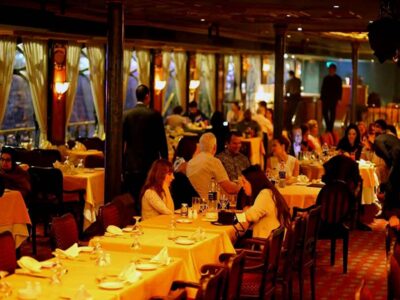
Nile Dinner Cruise with Belly Dancer Show with Pickup
Read our review →
4-Day 3-Night Nile Cruise from Aswan to Luxor including Abu Simbel, Air Balloon
Read our review →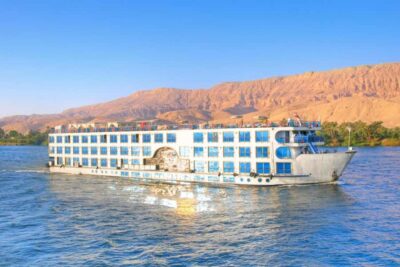
4-Day Nile Cruise from Aswan to Luxor with Guide
Read our review →Lists this trip appears in