
Review · POLAND
Cruises on the Motlawa River
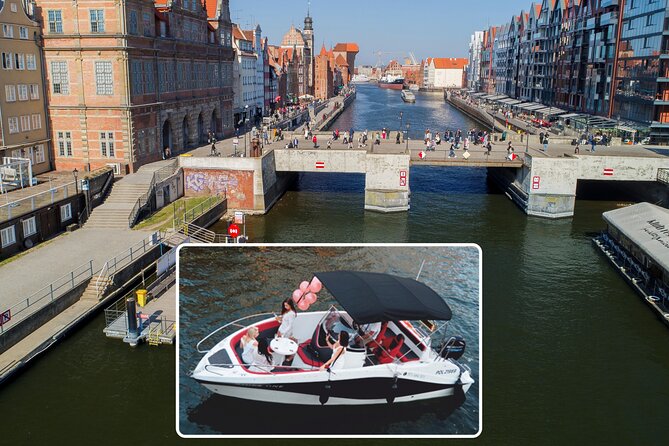
Gdansk’s waterfront makes the most sense from the water. This 45-minute cruise gives you clear views of the medieval Crane, Granary Island, Olowianka Island, the old water gates, and the town hall without asking you to walk another mile on cobblestones. I especially like the short duration and the chance to fit the ride between other sights.
The price, about $19.86 per person, is reasonable for a central-city sightseeing ride, and the retractable canopy is a useful touch on a bright day. The main drawback is the small boat: spoken information may be difficult to hear, and on some departures the guide’s printed English sheet does more work than the audio.
Key points before you board
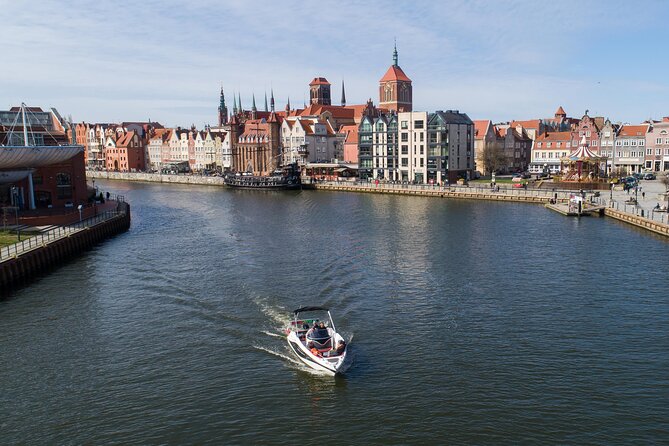
- The route begins and ends at the Green Bridge, a handy spot in the heart of Gdansk’s waterfront.
- The 15th-century Crane is the star sight, and you get an unusually good view of its river-facing side.
- Granary Island and Olowianka Island show how trade, shipbuilding, milling, and city defenses shaped Gdansk.
- The canopy retracts fully in good weather, giving you a better chance at clear photographs.
- The boat holds no more than 10 people, but its small size can make the commentary harder to hear.
- Several departure times make this easy to add to a day of sightseeing.
Why Gdansk looks different from the Motlawa
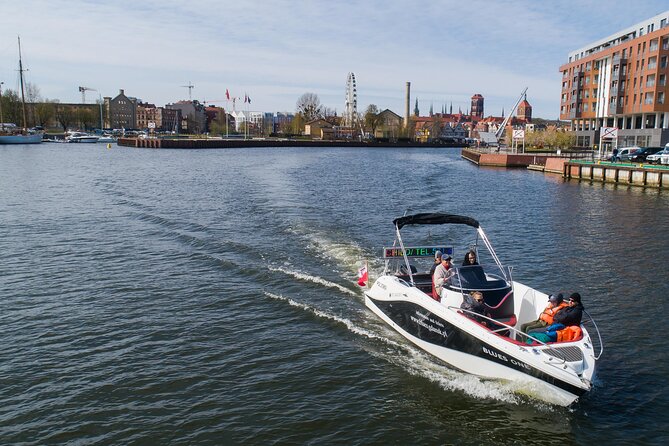
The Motlawa is not just a pleasant stretch of water beside the old town. It was the working edge of Gdansk, where cargo arrived, grain was stored, ships were built, and the city’s gates controlled access from the river.
From the boat, the waterfront buildings line up in a way that is hard to grasp from street level. You see the long quayside, the old gates opening toward the city, and the islands that divided the river into useful working channels.
I like this ride because it gives you a quick visual map of central Gdansk. After the cruise, streets such as Stagiewna and the Long Seacoast make more sense. You understand why the city grew around the river rather than simply beside it.
The boat leaves from the Green Bridge on the Stara Motlawa. This is a central meeting point, close to the main pedestrian sights. The activity returns to the same place, so you do not need to arrange transport from a distant dock.
More River Cruises in Poland:
- Kraków: Evening or Night River Cruise
★ 4.0 · 7,386 reviews - Krakow: Sightseeing Cruise by Vistula River
★ 4.1 · 1,897 reviews - Warsaw: Traditional Galar Cruise on The Vistula River
★ 4.6 · 1,640 reviews
The Green Bridge and the Long Seacoast
The departure point puts you right beside one of Gdansk’s most recognizable waterfront areas. As the boat moves away, look along the Long Seacoast, or Dlugie Pobrzeze, where the historic city meets the river.
The waterfront is marked by old water gates. These gateways once controlled movement between the river and the city streets. From the boat, you see their practical purpose more clearly than you do while standing in front of one gate at a time.
The view is especially useful early in your visit. I would take the cruise soon after arriving in Gdansk if you want an overview before exploring on foot. It will not replace a walk through the old center, but it gives you a helpful sense of direction.
The ride is gentle rather than thrilling. That is a benefit for anyone looking for a quiet break, but it also means you should choose this for views and context, not speed or adventure.
The Crane, Gdansk’s great waterfront symbol
The famous Crane is the highlight of the route. Built in the 15th century, it is described as the largest medieval crane in Europe. Its timber lifting structure was used to handle cargo and ship equipment, making it one of the clearest reminders that Gdansk was a major port.
Seen from the river, the Crane’s scale becomes easier to judge. The structure projects over the water, and the boat gives you a direct angle toward the mechanism and its broad brick towers.
I recommend keeping your camera ready as you approach it. The retractable roof can open fully when conditions are good, which removes some glare and gives you a clearer upward view. On a wet or windy day, the canopy provides shelter, but photography becomes less straightforward.
This is also one of the places where the boat’s small size can help. With a maximum of 10 people, you are not looking over a large crowd. Still, the same compact vessel can make movement awkward if everyone shifts to one side for a photograph.
Olowianka Island and Gdansk’s working past
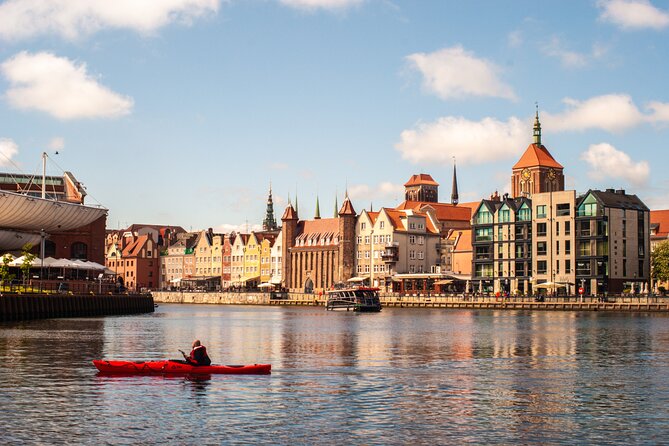
Olowianka Island is one of the more interesting parts of the ride because several stages of Gdansk’s development meet there. The island originally belonged to the Teutonic Order and served as an economic base for the commander’s castle.
That detail gives the island more weight than a simple green patch in the river. Its location made it useful for storage and trade, and its story links the medieval city with the commercial port that followed.
The boat also passes the marina, adding a modern working layer to the older waterfront. You see pleasure boats and harbor activity alongside structures tied to Gdansk’s earlier trade.
The route continues toward Granary Island, where the remains of the old granaries show how much grain once moved through this part of the city. You can see a preserved wall of the long granary, a rare surviving piece of the island’s former purpose.
Granary Island is valuable to see from the water because its relationship to the Motlawa is the point. From land, you might focus on one building or street. From the boat, you see the island as a long storage zone beside the river.
Same water, a different way to see it:
- Krakow: Day or Night Vistula River Cruise with Audio Guide
★ 4.5 · 1,303 reviews - Krakow: 1-Hour Evening Vistula River Cruise
★ 4.1 · 952 reviews - Krakow: Sightseeing Cruise on Vistula River with Audio Guide
★ 4.4 · 480 reviews - Krakow: Vistula River Cruise with Historical Views
★ 3.5 · 357 reviews
Granary Island, Stagiewna Street, and the Fish Market
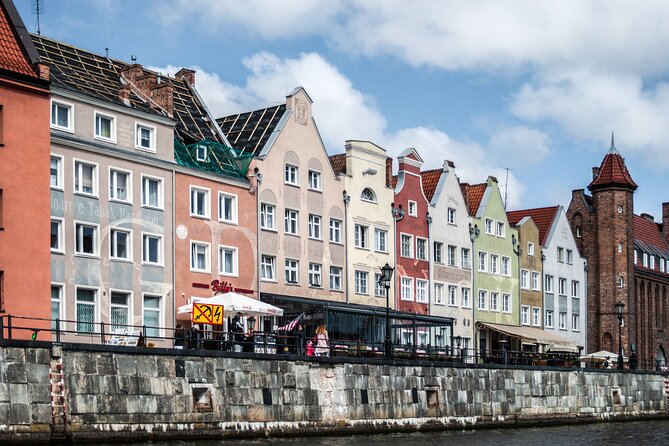
Stagiewna Street crosses Granary Island and begins at the Green Bridge. The boat offers a different angle on this connection between the old city and the island.
As you pass, you can compare the pedestrian streets with the riverfront structures. This is one of the better moments for understanding how bridges, warehouses, and quays worked together.
The Fish Market is another stop in the visual story. Gdansk once had many more fish markets, and the surviving name points to the waterfront trade that once filled this district.
You should not expect a full stop at each landmark. This is a continuous sightseeing cruise, so the guide or printed information needs to explain sights as you pass them. If you want detailed architectural study, note the names during the ride and return on foot afterward.
Church towers and the huge brick church
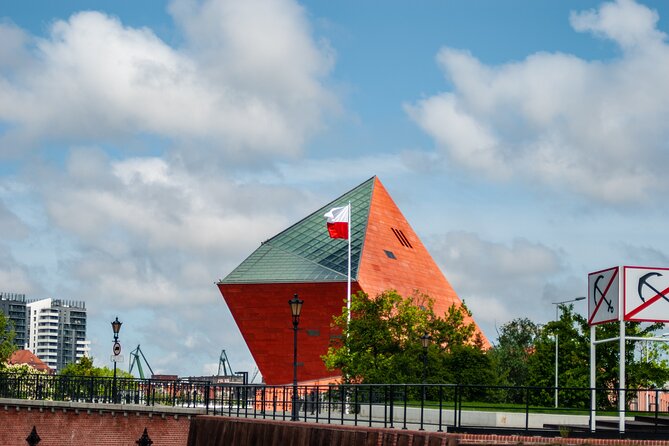
The river provides long views toward the towers of Gdansk’s churches and town hall. These sights are easy to miss when you are walking among tall buildings, where your view is often limited to the next street or square.
Behind St. John’s Church, you can see what is described as the world’s largest brick church. The boat’s lower viewpoint makes the church towers appear especially prominent above the waterfront.
The cruise does not appear to include entry into any church, tower, or museum. Think of these views as an introduction. If a particular tower catches your attention, you can visit it later as part of your walking route.
This is a good reason to avoid filling every minute of the ride with phone photos. Look up and across the river. Some of the best views are not directly beside the boat but farther inland, where the church towers and town hall rise above the waterfront.
The postwar shipbuilding connection
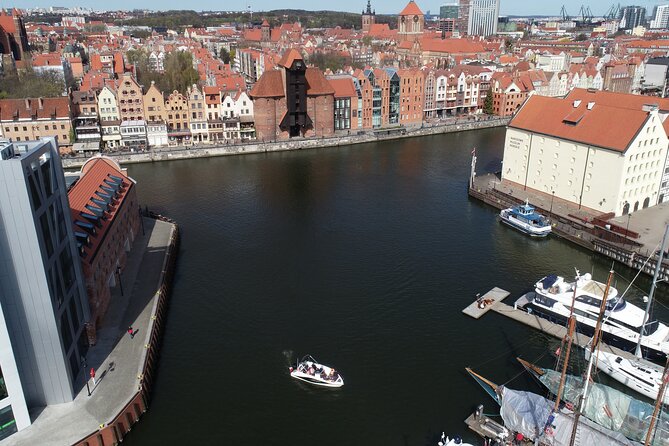
One of the sights along the route is the first ship built in Poland after World War II. That detail adds a modern chapter to a cruise that otherwise leans heavily toward medieval and early commercial Gdansk.
It also reminds you that the Motlawa is not a museum display. The river has continued to serve ships, industry, trade, and local life long after the medieval Crane stopped being a working cargo machine.
The tour gives you a compact timeline: Teutonic economic power, medieval cargo handling, grain storage, fish trade, shipbuilding, and today’s marina. That range is one of the strongest reasons to choose the boat over a simple harbor ride with no historical context.
What the commentary is really like
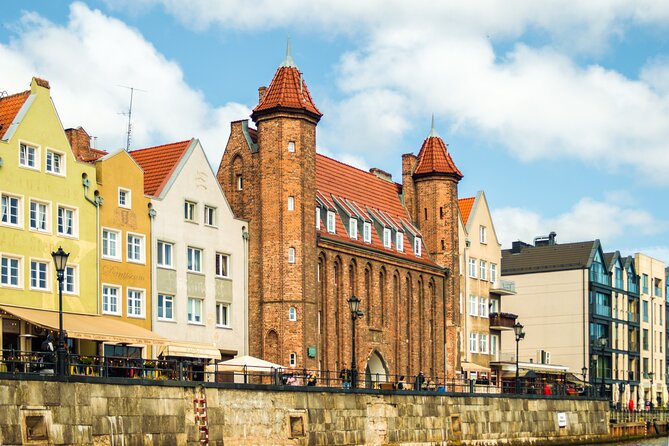
The English presentation is the least consistent part of the experience. Information is available in English, and some departures use an audio guide, but the small engine-powered boat can make the voice difficult to hear.
On at least some rides, the guide provides a printed English sheet describing the landmarks. This can be useful because you can read along as the boat passes the Crane, islands, churches, and granary wall. It is also a practical backup if the audio does not carry well.
I would not book this expecting a polished lecture with every detail delivered clearly through speakers. I would book it for the route, the views, and the added context. The printed information can fill gaps, but you may need to read quickly because the boat keeps moving.
A friendly crew is another plus. One captain even called a delayed party and waited for them, and children aged 3 and 9 were given life jackets and blankets when the wind picked up. Those details suggest a considerate approach, though you should still arrive at the Green Bridge on time.
Boat size, comfort, and weather
The boat is small, with a maximum group size of 10. That keeps the ride personal and avoids the feel of a large sightseeing vessel, but it limits space and can affect sound quality.
The ride itself is described as soft and comfortable. Life jackets are available, and blankets may be provided when it gets windy. Families with young children should appreciate the shorter duration and the fact that the ride does not require much walking once aboard.
The canopy roof retracts fully when weather allows. Open-air seating is best for photographs and broad views, while the covered arrangement is more practical in uncertain weather.
The activity requires good weather. If conditions force a cancellation, you can choose another date or receive a full refund. The ride is therefore best treated as a flexible part of your day rather than the one event around which you build an entire schedule.
Is the $19.86 price good value?
At about $19.86 per person, this is not the cheapest way to look at the Motlawa, but it offers more than simply renting a boat for a short spin. The price includes the route, an English information option, and a planned circuit through the central waterfront.
One useful comparison is that nearby boat rentals can cost roughly three times as much, according to one detailed account of the experience. That makes this cruise a strong value if you want historical orientation without paying for a private boat.
The value is strongest for a first visit, a short stay, or a day when your feet need a break. You get the main river sights in about 45 minutes, then return to the same central point and continue exploring.
The value is weaker if you want a large vessel, a fully audible live guide, or a long harbor excursion. The small boat is part of the appeal, but it also creates the main limitation.
Planning your 45 minutes at the Green Bridge
The tour is offered at a wide choice of departure times, so you can fit it between visits to the old center, museums, meals, or a walk along the river.
Allow enough time to find the Green Bridge. One family ended up waiting at the wrong place, and the captain called to check on them. That was a kind gesture, but it is better not to rely on a last-minute rescue.
Your mobile ticket is accepted at boarding, and confirmation is provided when you book. The activity is near public transportation, and most people can participate.
The ride ends back at the meeting point. That makes it easy to continue toward the Long Seacoast, Stagiewna Street, the old center, or the marina without planning a return journey.
Free cancellation is available up to 24 hours before the start time for a full refund. Changes or cancellations inside that window are not accepted, and weather cancellations offer either another date or a full refund.
Who should book this Motlawa cruise?
I would choose this for first-time visitors who want to understand Gdansk’s waterfront quickly. It also suits families, couples, photographers, and anyone who wants a quiet sightseeing break with limited walking.
It is a good match for you if:
- You want the Crane and the river islands in one short outing.
- You prefer a small boat to a large sightseeing vessel.
- You value a low price and several departure choices.
- You are happy to use a printed English guide if the audio is hard to hear.
- You want to see Gdansk before deciding which waterfront areas deserve a closer walk.
I would think twice if clear spoken commentary is essential to you. The printed sheet helps, but the audio may not be audible for the full route.
Should you book it?
Yes, if you see the cruise as a scenic introduction to Gdansk rather than a formal guided lecture. The route covers the city’s best waterfront sights, the price is fair, and the 45-minute length fits neatly into a busy day.
Book it early if your schedule is tight, since the activity is often reserved about 20 days ahead. Choose a departure with good weather if open-air photographs matter to you, and arrive at the Green Bridge with your mobile ticket ready.
The most realistic expectation is also the best one: you get a calm, compact look at Gdansk from the Motlawa, with useful historical notes and a few sound-quality compromises. For most visitors, that is a worthwhile trade.
FAQ
Where does the Motlawa River cruise begin?
The cruise begins at the Green Bridge on Stara Motlawa in Gdansk, Poland.
Where does the cruise end?
The activity ends back at the Green Bridge meeting point.
How long does the cruise last?
The cruise lasts approximately 45 minutes.
What landmarks can I see from the boat?
The route includes the remains of the Teutonic Castle wall, the Long Seacoast and its water gates, the 15th-century Crane, Olowianka Island, Granary Island, the marina, the Fish Market, Stagiewna Street, church towers, and the town hall.
Is the tour offered in English?
Yes. The activity is offered in English, and English landmark information is available. Some departures may use an audio guide, though it may not be audible throughout the ride.
How many people can join the boat?
The activity has a maximum of 10 travelers.
Is the cruise suitable for children?
Most travelers can participate, and children can be provided with life jackets. Blankets may also be available when the weather becomes windy.
Can I cancel for a full refund?
Yes. You can cancel at least 24 hours before the experience begins for a full refund. Cancellations or changes made less than 24 hours before the start time are not refunded or accepted.
Newly reviewed in Poland
- Toruń: Sightseeing Cruises on the Vistula River★ 5.0 · 58 reviews
- Oder river cruise and walking tour of Wroclaw★ 4.8 · 5 reviews
- Krakow: Vistula River Panoramic Boat Tour ️★ 3.5 · 192 reviews
- Krakow: Vistula River Cruise with Historical Views★ 3.5 · 357 reviews
- Krakow: Sightseeing Cruise on the Vistula River★ 4.5 · 65 reviews
- Krakow: River Cruise & Guided Visit to Former Plaszow Camp★ 3.6 · 3 reviews
- Krakow: Vistula River Cruise and Wieliczka Salt Mine Tour★ 4.6 · 3 reviews
- Krakow: Vistula River Sightseeing Cruise ️★ 3.9 · 20 reviews
Poland River Cruises, compared side by side.
Traditional Galar Cruise on The Vistula River
Read our review →
Day or Night Vistula River Cruise with Audio Guide
Read our review →
Sightseeing Cruise on Vistula River with Audio Guide
Read our review →
Vistula River Sightseeing Cruise with Audio Guide
Read our review →Lists this trip appears in