
Review · CAIRO
8 Day Cairo and Nile Cruise Adventure
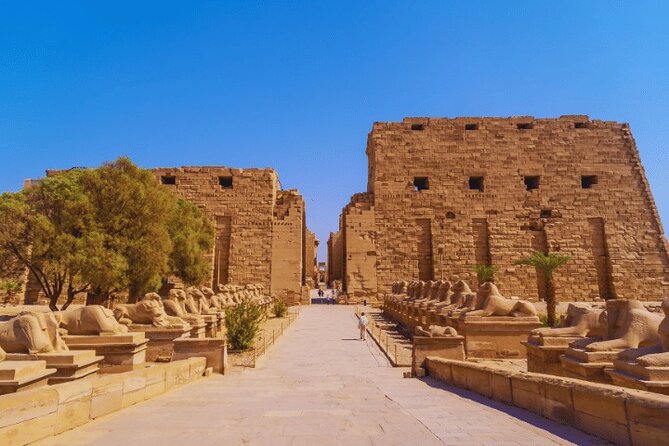
The best part of this Egypt trip is the way it links Cairo’s great monuments with a Nile cruise from Aswan to Luxor. You see the Pyramids of Giza, the Sphinx, Tutankhamun’s treasures, island temples, royal tombs, and major pharaonic sanctuaries without having to arrange each transfer yourself.
I like two things in particular: the careful airport and station assistance, which matters in Egypt, and the mix of busy sightseeing with slower hours on the ship. Guides including Hesham Mansour are praised for clear explanations, patience, humor, and useful advice about meeting local people. The main drawback is the pace. Sleeper-train travel, early sightseeing, cruise schedules, and a domestic flight make this a full eight days rather than a lazy holiday.
Key things to know before booking
- The Nile cruise links Aswan and Luxor: You sail past villages, desert, and river fields while moving between major temples.
- Cairo sightseeing is private: The Cairo portion is arranged for your own group, while some Aswan and Luxor touring may be shared.
- The sleeper train saves a hotel night: You travel from El Giza to Aswan overnight, but train travel can feel less restful than a hotel.
- Most major entrance fees are included: The listed pyramids, museum, temples, tomb sites, and Sound and Light Show are covered.
- You get two very different Egypt experiences: Cairo is crowded and intense, while the Nile days offer a slower rhythm between scheduled visits.
- A guide makes a real difference: Hesham Mansour and other Discovery Tours staff are praised for good planning, humor, patience, and fast communication.
Cairo arrival and the first practical details
Your trip begins at Cairo International Airport, where a representative meets you and helps with immigration procedures before taking you to a five-star Cairo hotel. That assistance is useful after a long international flight, especially when you are unfamiliar with the airport process and local transport.
The first day is intentionally light. You have the rest of the day to rest, adjust, and get ready for the sightseeing ahead. That is a sensible start, since Day 2 is packed with major sites and the overnight train to Aswan follows soon after.
The package includes an air-conditioned vehicle, breakfast for seven mornings, four lunches, and four dinners. It also includes the sleeper train from El Giza to Aswan and a domestic flight from Luxor to Cairo. WiFi on board is not included, and optional activities cost extra if you choose them.
A moderate level of fitness is expected. You will walk around large archaeological sites, climb or navigate uneven surfaces, spend time outdoors, and handle several changes of transport. The company notes that check-in and check-out times can sometimes make immediate freshening up difficult, though it tries to begin touring later when practical.
More Nile Cruises in Cairo:
- Cairo: Dinner Cruise on the Nile River with Entertainment
★ 4.2 · 2,190 reviews - Cairo: Nile Dinner Cruise with Belly Dancer Show with Pickup
★ 4.4 · 835 reviews - Cairo: Dinner Cruise on the Nile River
★ 4.2 · 741 reviews
Day 2: Pyramids, pharaohs, and Cairo’s old market
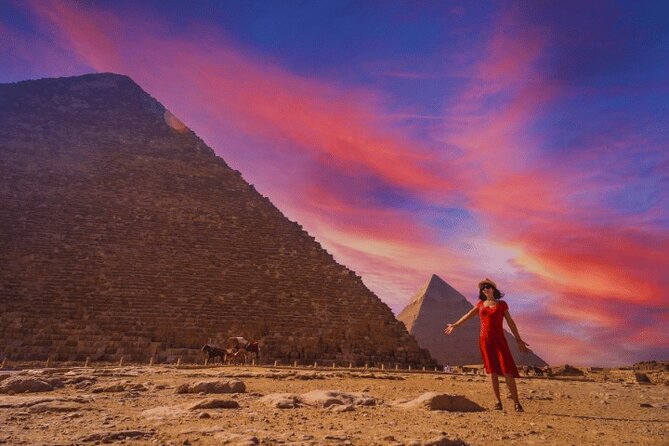
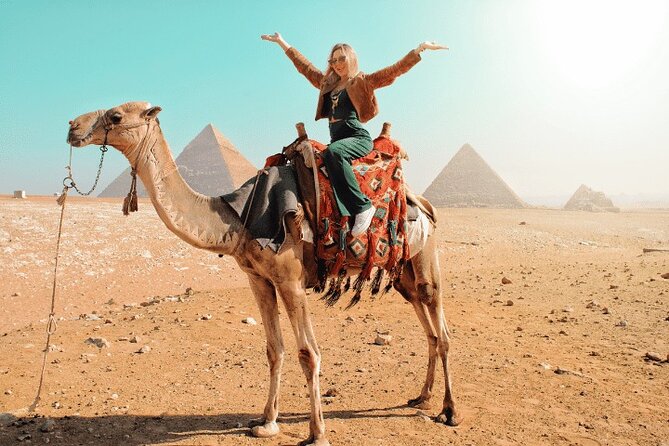
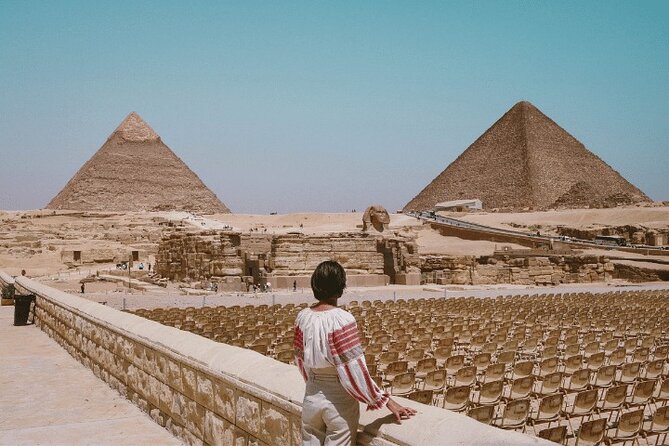
Your first major sightseeing day begins at the Pyramids of Giza. The three great pyramids are not a quick photo stop. You have about three hours at the complex, enough time to view the site from different points and hear how the monuments fit into ancient Egypt’s royal culture.
The Great Pyramid of Cheops, also called Khufu, receives its own half-hour visit. It is the largest of the three main pyramids and the one most visitors have pictured since childhood. The experience here is mainly about scale. Even with crowds and modern Cairo nearby, the size of the stone structure is hard to grasp until you are close to it.
Khafre’s Pyramid and the Pyramid of Menkaure each receive about thirty minutes. Khafre’s pyramid is especially recognizable because part of its original casing remains near the top. Menkaure is smaller, but its place in the group helps you understand how the three pyramids were planned together.
The Great Sphinx follows. You have another half hour to see the lion-bodied, human-headed statue and hear the traditional connection with Pharaoh Khafre. The stop is shorter than the pyramid visit, but it is one of the essential photographs of the day.
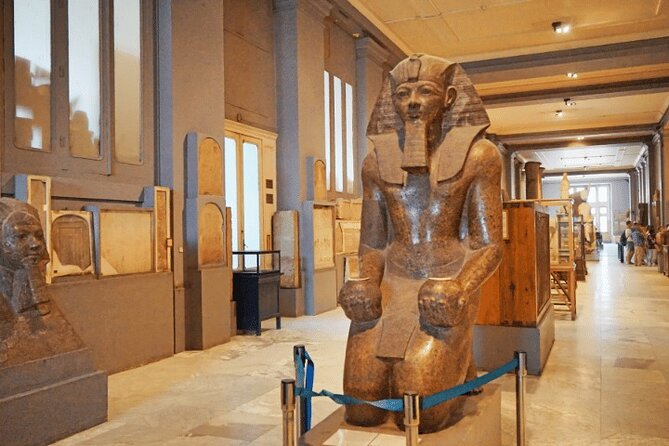
After Giza, you spend about two hours at the Egyptian Museum. The museum’s collection covers pharaonic Egypt, with the golden mask of Tutankhamun among the best-known objects. A guide is particularly useful here because a large collection can blur together without some direction. Ask your guide to help you focus on the pieces that best explain royal life, burial customs, and the changing styles of ancient Egypt.
The day ends at Khan El-Khalili Bazaar for roughly two hours. This is a very different experience from the silent stone monuments. Narrow lanes lead past stalls selling spices, textiles, jewelry, and souvenirs. You can browse, bargain, and watch everyday Cairo life unfold around you.
Give yourself room to say no politely and keep your purchases simple unless you genuinely want them. The market is part shopping stop, part cultural scene. It can feel intense after a long day, but that contrast is useful. Egypt is not only tombs and temples. It is also trade, conversation, noise, and daily movement.
The sleeper train to Aswan
The overnight train from El Giza to Aswan is included, which saves the cost and time of another hotel night. It also gets you from northern Egypt to the start of the cruise without using a second flight.
This is one of the practical tradeoffs in the program. You gain efficiency, but a sleeper train may not provide the same rest as a hotel room. Try to keep your expectations realistic, especially because your Aswan program begins around the train’s arrival. The tour operator schedules the first activities around that arrival time, and cruise check-in is not available until noon.
That gap between arrival and cruise check-in is worth noting. You may be sightseeing with luggage or waiting for access to your cabin, depending on the day’s arrangements. The company acknowledges that early check-in and freshening up are not always possible, so pack a small day bag with water, basic toiletries, and anything you need before your cabin is ready.
Day 3: Philae and the Aswan High Dam
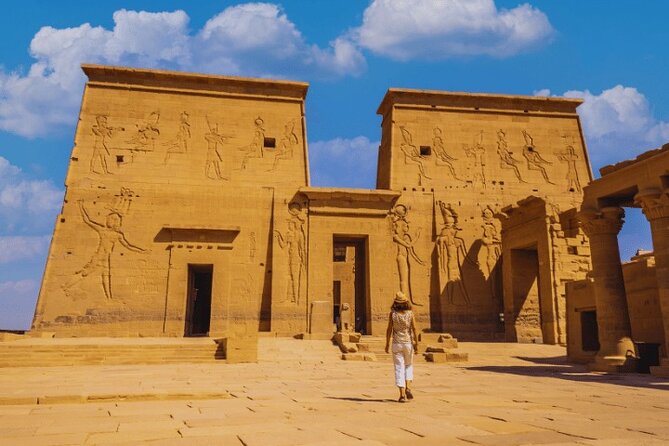
Your Aswan touring begins after the train arrives. The central visit is the Temple of Philae, reached on Agilkia Island in the Nile. Dedicated to Isis, the temple has decorated halls, courtyards, and carved scenes tied to Egyptian mythology.
Philae is a rewarding first temple because its island setting gives the visit a distinct mood. You are not simply walking into another desert ruin. The water around the island helps explain why the site feels separate from modern Aswan, even though the visit remains easy to fit into a half-day program.
The tour allows about three hours for Philae and the wider Aswan visit. You also see the Aswan High Dam, with about an hour devoted to this modern engineering project. The dam controls the Nile’s flow and provides irrigation and electricity. It also created Lake Nasser, which you can view from the dam area.
The contrast between Philae and the High Dam is one of the strongest ideas in the itinerary. One stop shows ancient religion and royal building. The other shows modern Egypt reshaping the river itself. After touring, you check into the Nile cruise, your base for the next several nights.
More River Cruises in Cairo:
- 2-Hour Nile River Dinner Cruise From Cairo
★ 4.5 · 672 reviews - ViP Private Effective Nile River Dinner Cruise in Cairo
★ 4.5 · 370 reviews - Nile River Dinner Cruise on a Yacht with Open Buffet
★ 4.5 · 292 reviews - Cairo Dinner Cruise in Nile River With Belly Dancer & Tanora show
★ 4.5 · 256 reviews
Day 4: Sailing to Kom Ombo
Day 4 slows the pace. The cruise travels from Aswan toward Kom Ombo, giving you about four hours to watch the Nile Valley from the ship. This is the time to appreciate the trip’s changing rhythm. Instead of sitting in a vehicle between monuments, you move by water, with river views and stretches of open desert passing by.
The cruise stop at Kom Ombo lasts about two hours, including a visit to the Temple of Kom Ombo. This temple is unusual because it is dedicated to two gods, Sobek and Horus. Sobek has a crocodile form, while Horus is linked with the falcon.
The dual design gives your guide a clear story to explain. The temple’s reliefs and paired spaces reflect the worship of two deities in one complex. The site also has a strong setting along the Nile, so leave time to look beyond the carved walls and notice the river that made this settlement possible.
The itinerary lists the general Kom Ombo stop as free of admission, while the temple entry is included. That distinction is useful when you compare this package with other Egypt programs. Most of the important paid sites are already built into the price.
Day 5: Edfu, the Esna Lock, and Luxor Temple
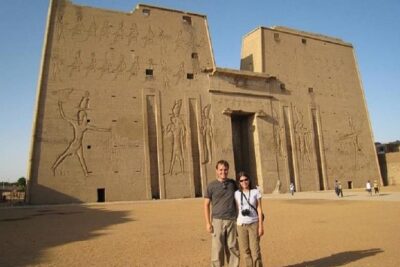
The Temple of Horus at Edfu is one of the most complete ancient Egyptian temples on this route. You have about four hours for the visit, including time to see the towering columns, courtyard, and carved reliefs.
Horus, shown with a falcon’s head, was a major figure in Egyptian belief. The temple’s preserved structure helps you picture how a large religious complex was organized, from formal entrance areas to inner sacred spaces. Compared with the more weathered monuments elsewhere, Edfu can feel unusually clear and readable.
The cruise then passes through the Esna Lock, an important part of Nile navigation. The ship’s movement through the gates can take about two hours. You get to watch the water level change as the vessel is raised or lowered, a simple but memorable break from temple visits.
Later, you visit Luxor Temple for about two hours. The complex includes grand columns, obelisks, and carved walls tied to Amun-Ra and Egypt’s royal ceremonies. A visit after the smaller Nile stops gives the temple extra impact. By now, you have seen how religious buildings changed from one place to another, and the scale of Luxor Temple feels like a fitting build-up to the next day’s west-bank sites.
Day 6: The Valley of the Kings and the flight back to Cairo
The final Luxor day begins with the Colossi of Memnon. These two large statues depict Pharaoh Amenhotep III and once guarded the entrance to a much larger mortuary temple. The stop lasts about an hour and works well as a quick introduction to the Theban necropolis.
At the Temple of Hatshepsut, you spend about two hours among terraces, columns, and rock-cut architecture. Hatshepsut’s story is one of the most interesting royal histories in Egypt. The temple also gives you a chance to see how ancient builders used the cliffs behind the site as part of the design.
The Valley of the Kings receives about three hours. Here, the focus shifts from open-air temples to underground burial chambers. The program specifically refers to tombs connected with rulers such as Merneptah, Ramesses III, and Ramesses VI. Tomb access can vary, so follow your guide’s instructions about which chambers are open on the day.
Bring water and pace yourself. The valley is an outdoor archaeological area, and the combination of walking, heat, and enclosed tomb passages can be tiring. This is one of the days when moderate fitness matters most.
After Luxor sightseeing, you transfer to the airport for the flight to Cairo. On arrival, a vehicle takes you to your Cairo hotel. The plan packs a great deal into one day, but the domestic flight avoids another long overland journey and returns you to Cairo in time for the final evening program.
Day 7: Free time and the Giza Sound and Light Show
Your last full day in Cairo is largely open. You can rest, visit a market, try local food, or spend time at your own pace. That free space matters because the earlier days are tightly planned around transport and archaeological sites.
In the evening, you are collected for the Sound and Light Show at Giza. The performance uses lighting, narration, and the pyramids as its backdrop to tell stories about pharaohs, gods, and ancient Egypt.
This is a staged attraction, not an archaeological visit, so it appeals to a different part of your trip. If you enjoy historical presentation and dramatic evening settings, it gives the pyramids a new look. If you prefer quiet ruins and independent exploration, you may find it less essential than the daytime visit. Its inclusion is convenient, though optional evening choices are not part of the package unless specifically listed.
What the $1,150 price delivers
At $1,150 per person, the price covers eight days of touring, a five-star hotel stay in Cairo, a five-star Nile cruise, the sleeper train, the Luxor to Cairo flight, air-conditioned transport, guides, listed admission fees, and most meals.
That is a strong value if you want a structured first visit to Egypt. The major expense and planning headaches are bundled together, and airport, train, hotel, and cruise transfers are handled for you. You are paying not only for rooms and transport, but also for coordination across several cities.
The price is less compelling if you want to travel slowly, choose your own restaurants, or spend long unscheduled hours at each monument. Four lunches and four dinners are included, but not every meal. WiFi on the cruise is also excluded, and optional activities cost extra.
Gratuities should be included in your budget. The suggested amount while cruising is US$5 per person per night, with about US$3 per person per day suggested for guides. These are not part of the advertised price, so plan for them in cash or in the form requested by the operator.
Who will enjoy this Egypt trip most
I would choose this program if you want to see the major Cairo and Nile sites without arranging domestic transport, guides, hotels, and entry tickets yourself. It suits first-time visitors who value clear scheduling and direct help at airports and stations.
It is also a good match if you like having a guide explain what you are seeing. Hesham Mansour is repeatedly singled out for humor, patience, detailed explanations, and practical advice about interacting with local people. Coordination staff, including Hassany and Paul, are also praised for communication, airport assistance, and handling luggage and transfers.
I would think twice if you need a quiet, leisurely holiday. The overnight train, early starts, temple walking, cruise check-in limits, and flight on Day 6 create a demanding schedule. Cairo touring is private, but Aswan and Luxor experiences may be shared, so ask for the exact arrangement if group size is important to you.
You can cancel for a full refund up to six full days before the start time. Cancellation two to six full days ahead allows a 50 percent refund, while cancellation less than two full days before departure is nonrefundable.
Should you book the 8 Day Cairo and Nile Cruise Adventure?
Book it if you want a well-organized first look at Egypt with the pyramids, museum, Nile temples, Valley of the Kings, and a cruise all in one trip. The included transport and admissions make the $1,150 price easy to understand, and the guide support can remove much of the stress from a complicated destination.
Do not book it if you want to set your own pace or avoid overnight train travel. For the right person, though, this is a practical route through Egypt’s biggest sights, with enough free time in Cairo and enough quiet river hours to keep the schedule from becoming one long march through ruins.
FAQ
What is included in the tour price?
The price includes an air-conditioned vehicle, the overnight sleeper train from El Giza to Aswan, a domestic flight from Luxor to Cairo, admission fees for the listed attractions, seven breakfasts, four lunches, and four dinners.
Where does the tour begin?
The tour begins with pickup at Cairo International Airport in Cairo, Egypt.
Is the Nile cruise included?
Yes. The itinerary includes a Nile cruise traveling from Aswan toward Luxor, with stops at Philae, Kom Ombo, Edfu, the Esna Lock, and Luxor.
Is the sightseeing private?
Cairo sightseeing is private. The tour information notes that experiences in Aswan and Luxor may be shared, although the activity is described as a private tour for your group.
Are gratuities included?
No. A gratuity of US$5 per person per night is appreciated while cruising, and guides typically receive US$3 per person per day.
What is the cancellation policy?
You can receive a full refund if you cancel at least six full days before the start time. A cancellation two to six full days ahead receives a 50 percent refund, while cancellations less than two full days before the start time are not refunded.
Newly reviewed in Cairo
- Cairo Private layover tour Giza pyramids,sphinx&Nile Felucca Boat★ 4.5 · 13 reviews
- 8 Day Stunning Cairo Pyramids and Nile cruise and Hurghada All inclusive★ 5.0 · 43 reviews
- Cairo dinner Nile cruise with belly dancer show on Nile river★ 5.0 · 2 reviews
- night-tour Nile dinner cruise with open buffet and belly dancer★ 5.0 · 9 reviews
- Private Full Day Tour Giza Pyramids ,Museum & Nile Felucca Boat★ 4.0 · 3 reviews
- VIP Private Tour Giza Pyramids ,Nile Dinner Cruise&Pyramid Inside★ 5.0 · 3 reviews
- Private Tour Giza Pyramids , Sphinx & Dinner Nile cruise Show★ 4.5 · 3 reviews
- Dinner Nile Cruise belly dancer open buffer tanora show sailing on Nile★ 5.0 · 9 reviews
Nile Cruises, compared side by side.
4-Days Nile Cruise From Aswan To Luxor including Abu Simbel and Hot Air Balloon
Read our review →
Dinner Cruise on the Nile River with Entertainment
Read our review →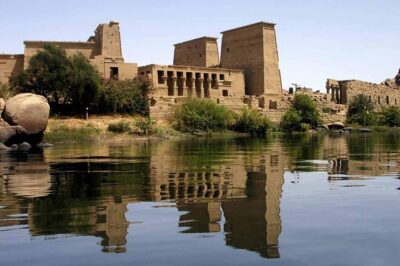
4-Day 3-Night Nile Cruise from Aswan to Luxor&Abu Simbel+Balloon
Read our review →
Nile Dinner Cruise with Belly Dancer Show with Pickup
Read our review →
4-Day 3-Night Nile Cruise from Aswan to Luxor including Abu Simbel, Air Balloon
Read our review →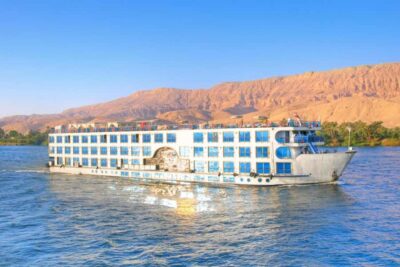
4-Day Nile Cruise from Aswan to Luxor with Guide
Read our review →Lists this trip appears in