
Review · CHINA
14-Day Small-Group China Tour: Beijing, Xi’an, Guilin, Yangtze Cruise, Shanghai
China’s grandest sights arrive in a brisk but logical fourteen-day sweep. You’ll move from imperial Beijing to the Terracotta Warriors in Xi’an, then on to Guilin’s limestone scenery, a three-night Yangtze cruise, and Shanghai’s bright city center. The trip packs a lot into two weeks, but it also handles the hard parts: domestic flights, high-speed trains, hotels, entrance tickets, and local transport.
I especially like the no-shopping-stop policy, which protects your limited time from factory outlets and sales pitches. I also like the mix of famous sights and everyday encounters, from a Beijing hutong family visit to food in Xi’an’s Muslim Quarter and a villager’s home near Yangshuo. The main drawback is the pace. You change cities often, and several days combine long transfers with sightseeing.
Key points before you book
- A full first look at China: Beijing, Xi’an, Guilin, Yangshuo, the Yangtze, and Shanghai all appear in one carefully connected route.
- Small, but not private: The group can include up to 18 people, with a minimum of two required to book.
- Useful transport included: Beijing to Xi’an and Xi’an to Guilin flights, Guilin to Chongqing and Yichang to Shanghai trains, plus local vehicles.
- Three nights on the Yangtze: You’ll see the Three Gorges, Shennv Stream, Fengdu Ghost City, and the Three Gorges Dam.
- Food is part of the plan: Seven lunches, four dinners, and thirteen breakfasts are included, with Peking duck, dumplings, and Xi’an street food built into the route.
- Guide quality matters: Guides named in past feedback include Candy, Tracy, Sara, and Selena, with particular praise for their English, organization, historical explanations, and practical help.
What $3,139 buys you across China
At $3,139 per person, this is not a budget independent trip, but the price covers a great deal. You receive twin-share hotel and cruise accommodation, domestic flights, high-speed rail tickets, guides, drivers, air-conditioned vehicles, entrance fees, most breakfasts, seven lunches, four dinners, bottled water, and the cruise company’s service charge.
The value is strongest if you want a structured first visit and do not want to arrange China’s internal transport yourself. Booking flights, rail tickets, airport transfers, local guides, site admissions, and hotels across six major stops would take time and careful coordination. Here, you have someone meeting you at airports and stations, helping with hotel check-ins, and moving you through places where signs and transport systems can feel unfamiliar.
Still, read the inclusions closely. International airfare, the Chinese visa, personal spending, excess luggage fees, and your final airport transfer in Shanghai are not included. Bike rental on the Xi’an City Wall is extra. The Tang Dynasty music and dance show with dumpling dinner is not included for departures in January, February, March, or December because the theater is closed then.
The group size is capped at 18. That is small enough for a more personal feel than a large coach tour, though it is not the same as having a private guide. The minimum booking is two people, so solo visitors cannot book this exact arrangement alone.
More Li River and Yangtze Cruises in China:
- Huangpu Night Cruise: Cozy Vibe & Modern Shanghai Glow
★ 4.3 · 520 reviews - Private Evening Tour: VIP Huangpu River Cruise and Shanghai Lights
★ 5.0 · 150 reviews - 1 Day Li River Cruise from Guilin to Yangshuo with Private Guide & Driver
★ 5.0 · 148 reviews
Beijing begins with emperors and enormous public spaces
Your guide meets you at Beijing Capital Airport after customs and baggage claim. A driver takes you to the hotel, and the first day is otherwise free. That quiet arrival day is useful after a long international flight, though the listed airport meeting time is 9 a.m., so confirm how it applies to your arrival schedule.
Day two starts at Tiananmen Square. The square is vast and formal, and the short visit gives you a sense of its scale before you enter the Forbidden City through the southern approach. Inside, allow your attention to shift from one courtyard to the next. The imperial complex is less about one single room than about the sequence of gates, halls, pavilions, and open spaces.
Your guide’s explanations are important here. Without context, the Forbidden City can become a parade of red walls and tiled roofs. With help, you can understand where political decisions were made, how court life worked, and why the layout expressed imperial power.
Lunch includes an à la carte meal and Peking roast duck at a local restaurant. This is one of the stronger food inclusions because it gives you a named Beijing specialty instead of another generic group meal.
In the afternoon, the Temple of Heaven changes the mood. Its architecture was designed for imperial ceremonies connected with the heavens and the harvest. The visit lasts about an hour and a half, enough to see the main structures without turning the day into an exhausting museum crawl.
That evening brings the Red Theater acrobatic show. It is a polished performance rather than a local neighborhood activity, but it adds a lively cultural event after a day of palaces and ritual buildings.
Mutianyu, hutongs, and one itinerary detail to check
Mutianyu is the Great Wall section used on day three, and the round-trip cable car is included. That matters because the wall involves steep walking, and the cable car reduces the effort needed to reach the main viewpoints. You still need to be comfortable walking on uneven stone and slopes.
The two-hour visit is enough for a meaningful look, though not for a long, unhurried hike along the wall. The planned group toast with red wine is an unusual touch. It may feel a little staged, but it can also make a memorable travel photograph.
On the return to Beijing, you stop for photographs at the Olympic National Stadium, known as the Bird’s Nest. Then comes a rickshaw ride through traditional hutong alleys and a visit with a local family. This is one of the route’s better contrasts: first the huge national monument, then a closer look at older residential Beijing.
Day four includes the Summer Palace, an imperial garden built around water, hills, and grand structures. The three-hour visit gives you time to appreciate it as a place designed for leisure as well as ceremony.
The itinerary also says you will see giant pandas that morning, but it provides no separate stop, timing, or admission detail for that visit. Ask for clarification before departure so you know exactly where it fits.
Later, you fly to Xi’an. The flight itself is included, and a local guide meets you on arrival. Expect a transfer-heavy day, with the Summer Palace, airport movement, flight, and hotel check-in all in one stretch.
Xi’an puts the Terracotta Army in context
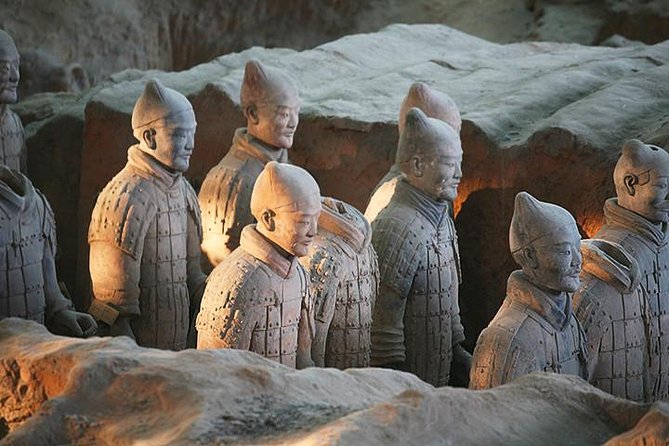
The Terracotta Warriors deserve the full three-hour visit scheduled for day five. The three excavated pits display ranks of life-size figures, horses, and ancient weapons. The scale becomes clear only when you see the long rows of restored warriors gathered under the huge museum roof.
This stop is best approached slowly. Look at faces, hairstyles, armor, and individual poses rather than treating the pit as one giant photograph. The archaeological story also matters: the figures were made to accompany China’s first emperor into the afterlife and were discovered by local villagers in the 1970s.
The tour adds a family visit to the home of the first discoverer and a chance to make a small clay warrior with a local artisan. These activities connect the famous excavation with the people who live near it, although some visitors may prefer more time inside the museum itself.
The Big Wild Goose Pagoda follows in the afternoon. Built during the Tang period to hold Buddhist scriptures brought from India, it gives you a different window into Xi’an’s role as a center of religion and international exchange.
The evening Tang Dynasty music and dance show comes with a dumpling dinner when operating. It is available from April through November. If your trip falls in the other listed months, the show and dinner are not included, so check the seasonal schedule before you count on this evening.
More River Cruises in China:
- Shanghai Night River Cruise Tour with Xinjiang Style Dining Experience
★ 5.0 · 324 reviews - Shanghai: Night River Cruise Tour with Xinjiang Style Dining
★ 5.0 · 210 reviews - From Guilin: 4 Star Luxury Li River Cruise with Buffet Lunch
★ 4.3 · 80 reviews - Chongqing: Two Rivers Night Cruise- Yangtze & Jialing Rivers
★ 4.5 · 64 reviews
Xi’an’s city wall and Muslim Quarter slow the pace
Day six begins at the City Wall Park, where you can watch ordinary local routines and possibly practice Tai Chi with a master. This is a welcome change after several major monuments. It gives the day some breathing room before the formal wall visit.
Xi’an’s wall is among China’s most complete urban fortifications. You can walk along it or rent a bicycle, but the bike rental is not included. Cycling is optional, so you can choose based on energy, weather, and comfort.
The Great Mosque is a short but worthwhile stop. Its design reflects Chinese architectural traditions while serving Xi’an’s Muslim community, a reminder that the city’s identity was shaped by trade and contact with many cultures.
Lunch in the Muslim Quarter is another high point for people who enjoy trying local food. The area is known for snacks and regional dishes, and the tour lets you sample some of them without having to plan the meal yourself.
The Small Wild Goose Pagoda and Xi’an Museum finish the day. The schedule allows two hours, though the itinerary lists no admission fee for this stop. One past account of the route expressed disappointment with the Small Wild Goose Pagoda and a provincial history museum, so keep your expectations measured. The pagoda is quieter and less overwhelming than the Terracotta Army, not necessarily a highlight for every visitor.
Several past accounts specifically praise Xi’an guide Tracy for keeping water available in hot, humid weather and explaining the sites clearly. That is practical help you will appreciate during long outdoor visits.
Guilin trades monuments for karst scenery
A flight takes you to Guilin on day seven. The city introduces a different side of China, with limestone formations and river scenery replacing imperial buildings and archaeological displays.
Reed Flute Cave is a 240-meter karst cave filled with stalactites and stalagmites. Colored lighting is part of the usual presentation at caves of this kind, though the supplied details do not specify the exact setup here. The visit lasts about an hour and a half.
Elephant Trunk Hill follows. Its shape resembles an elephant lowering its trunk to drink from the river, which explains the name. This is a short sightseeing stop, useful as an introduction to Guilin before the main river journey.
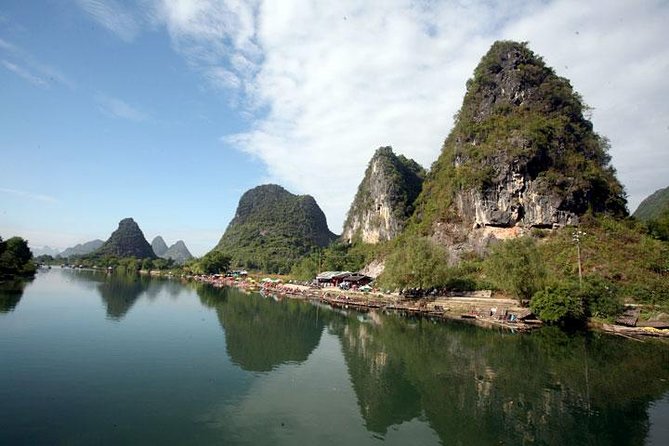
Day eight is the scenic centerpiece of the Guilin section. The Li River cruise to Yangshuo lasts about four and a half hours. You will have time to sit, watch the limestone peaks pass, and take photographs without the constant business of changing vehicles.
The cruise is not a luxury escape. It is a scheduled group excursion, and conditions on board can vary. Still, the slow pace is valuable after the city sightseeing earlier in the trip.
After docking, you walk through Yangshuo’s West Street and drive through nearby rural areas. The route includes a visit to a villager’s home before returning to Guilin. West Street is more commercial than the countryside, so the two stops offer useful contrast.
Three nights on the Yangtze River
On day nine, you take a high-speed train from Guilin to Chongqing, a journey of about five hours. After arrival, you board the Century Oasis for three nights. This is one of the longest transfer days of the entire trip, so pack a small carry-on with anything you need before your checked luggage is settled in the cabin.
The ship sails at 10 p.m. After boarding, you have a private cabin, buffet dinner, and a captain’s wine reception. The cruise gives you a chance to stop repacking every morning. That break in the schedule is welcome.
The first shore visit is Fengdu Ghost City, a palace complex built around Chinese folk ideas of the underworld. It is an unusual stop, more theatrical and symbolic than the major museums. In the afternoon, you can stay on deck, watch the river scenery, or join onboard cultural programs.
Day eleven brings the Three Gorges: Qutang, Wu, and Xiling. The ship’s movement through the gorge system is the reason to choose this cruise rather than simply taking a train between Guilin and Shanghai. The excursion to Shennv Stream adds a smaller-scale waterway and a closer look at the surrounding scenery.
You should treat the cruise as both sightseeing and rest. Some people love the slower rhythm and open views. Others may find the ship schedule and organized excursions less flexible than independent travel.
On day twelve, you pack and check out before visiting the Three Gorges Dam Project. The three-hour excursion explains the scale of one of China’s largest engineering projects, though it is more about modern infrastructure than old China.
The cruise company transfers you to the Three Gorges Tourist Center in Yichang. Your guide then helps you reach Yichang East Railway Station for a first-class bullet train to Shanghai.
Shanghai closes the trip with art, gardens, and city lights
Arriving in Shanghai after the train ride means the final city begins with a transfer to your hotel, not a full sightseeing afternoon. That is sensible, since the preceding day already includes the dam, disembarkation, and rail journey.
Day thirteen starts at Shanghai Museum, one of China’s major museums for ancient art. The two-hour visit is long enough for a focused introduction, but not enough to see every collection in detail. I would ask your guide which galleries matter most so you do not rush through everything.
Yu Garden and the nearby traditional bazaar follow. The garden’s Nine Zigzag Bridge and mid-lake pavilion are the visual centerpieces. The bazaar can be crowded and commercial, but it is part of the classic old Shanghai experience. Lunch at a local restaurant is included afterward.
The final major activity is a one-hour cruise on the Huangpu River. From the water, you can see the Bund and Shanghai’s modern skyline in one sweep. It is a strong closing scene because it brings together the city’s historic waterfront and newer towers.
The guide returns you to the hotel and says goodbye that evening. On day fourteen, breakfast is included, but you make your own way to the airport. The operator can assist if needed, but the transfer is not part of the price. Plan this last step early, especially if your flight leaves in the morning.
Guides, organization, and the human side of the trip
The route uses different local guides in different cities rather than one guide for all fourteen days. That means you gain local expertise, but you also repeat introductions and adjust to different guiding styles.
Names praised in past accounts include Candy in Beijing, Tracy in Xi’an, Selena in Beijing, and Sara in Beijing. Candy is described as warm, organized, and strong on leadership. Tracy is praised for historical explanations and keeping the group supplied with water. Selena is credited with making a first visit to China feel less intimidating, while Sara is noted for excellent English.
The strongest pattern is not one single guide. It is the company’s attention to timing and handoffs. Several accounts describe flights, trains, guides, and sightseeing as punctual and well organized. That matters in a route with this many moving parts.
The no-shopping rule is worth repeating. There are no factory stores, tea ceremonies, forced shopping stops, or shopping-site restaurants. You still visit commercial areas such as Yangshuo’s West Street and the Yu Garden bazaar, but they are part of the destination rather than mandatory sales stops.
Who should book this China route?
I would choose this tour if you want China’s headline sights without arranging a complicated internal itinerary yourself. It suits first-time visitors who value local guides, included transport, fixed schedules, and a small group rather than total independence.
It also works well for people who want a broad first impression. You see imperial Beijing, archaeological Xi’an, karst Guilin, the Yangtze, and modern Shanghai instead of spending two weeks in only one region.
I would hesitate if you dislike early starts, frequent hotel changes, long transfer days, or group meals. The route is active, and the included schedule leaves limited time for wandering on your own. The price also requires careful comparison if you already have strong Chinese rail skills and prefer to book hotels and visits independently.
At $3,139, the tour earns its value through coordination. You are paying for a managed route, not just admission tickets. If that support lets you enjoy the sights instead of worrying about the next train, it is a sensible choice. If you want flexibility above all else, build your own trip instead.
FAQ
How long is the tour?
The tour lasts approximately 14 days, beginning with airport pickup in Beijing and ending after breakfast in Shanghai on day 14.
Which cities and regions does the tour visit?
The route includes Beijing, Xi’an, Guilin, Yangshuo, Chongqing, Yichang, and Shanghai, along with a three-night cruise on the Yangtze River.
Is airport pickup included?
Pickup from Beijing Capital Airport is included at the start. The airport transfer in Shanghai on the final day is not included.
What transportation is included?
The package includes an economy flight from Beijing to Xi’an, an economy flight from Xi’an to Guilin, a high-speed train from Guilin to Chongqing, a first-class bullet train from Yichang to Shanghai, local vehicles, and the Yangtze cruise.
How large is the group?
The tour has a maximum of 18 travelers. At least two people are required per booking.
Are meals included?
Thirteen breakfasts, seven lunches, and four dinners are included. Meals include Peking roast duck, a local lunch in Xi’an’s Muslim Quarter, and selected meals connected with the tour activities.
Is the Tang Dynasty show always included?
No. The Tang Dynasty music and dance show with dumpling dinner is available from April through November. It is not included for tours starting in January, February, March, or December.
Are shopping stops part of the itinerary?
No. The tour specifically excludes shopping detours, factory stores, tea ceremonies, and shopping-site restaurants.
Newly reviewed in China
- 8 Hour Private Excursion Cruise Ship Pick up Tour Driver & Guide★ 5.0 · 11 reviews
- 3-Day Private Guilin Tour with Li River Cruise and Yangshuo★ 5.0 · 35 reviews
- Short Li-River cruise and Longji Rice Terraces Private Day Tour★ 5.0 · 4 reviews
- Li River Cruise Reed Flute Cave Elephant Hill Daxu Town Day Tour★ 5.0 · 5 reviews
- Li River cruise & Yangshuo countryside private day tour★ 4.5 · 34 reviews
- Li River Cruise from Guilin to Yangshuo plus Jiuxian Village and Yulong River★ 5.0 · 2 reviews
- 1 Day Private Tour: Li River Cruise from Guilin & Yangshuo Biking★ 5.0 · 35 reviews
- Li River Cruise ticket from Guilin to Yangshuo with pickup★ 4.0 · 8 reviews
Li River and Yangtze Cruises, compared side by side.
Huangpu Night Cruise: Cozy Vibe & Modern Shanghai Glow
Read our review →
Private Evening Tour: VIP Huangpu River Cruise and Shanghai Lights
Read our review →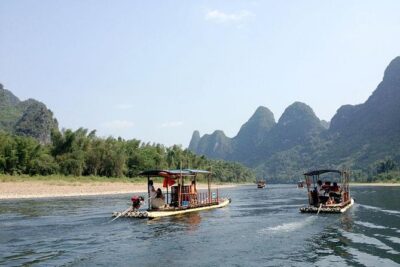
1 Day Li River Cruise from Guilin to Yangshuo with Private Guide & Driver
Read our review →
Ayutthaya Temples Tour from Bangkok with Grand Pearl River Cruise
Read our review →
Chongqing: Two Rivers Night Cruise- Yangtze & Jialing Rivers
Read our review →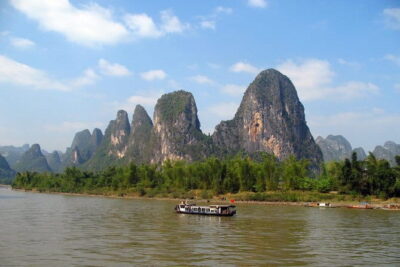
Li River Cruise and Yangshuo Private Day Tour from Guilin
Read our review →
Guangzhou: Pearl River 1-hour Night Cruise (Optional Piers)
Read our review →Lists this trip appears in