
Review · ASWAN
Aswan: 4-Day Egypt Private Tour with Nile Cruise, Balloon
Abu Simbel is the headline here, but the best part is the steady rhythm of this four-day Nile journey. You move from Aswan to Luxor by ship, stepping ashore for major temples instead of packing and unpacking each night. I especially like the private Egyptologist, with guides such as Mary and Rasha praised for clear, patient explanations, and the sunrise balloon flight over Luxor. The catch is the schedule: Abu Simbel and the balloon require pickups around 4 a.m., and entry fees are extra.
Key points at a glance
- A full Aswan-to-Luxor route: Begin at the High Dam, Unfinished Obelisk, and Philae, then sail north to Luxor.
- Abu Simbel by early road transfer: Expect about three hours each way in an air-conditioned vehicle, with the temple visit followed by lunch aboard ship.
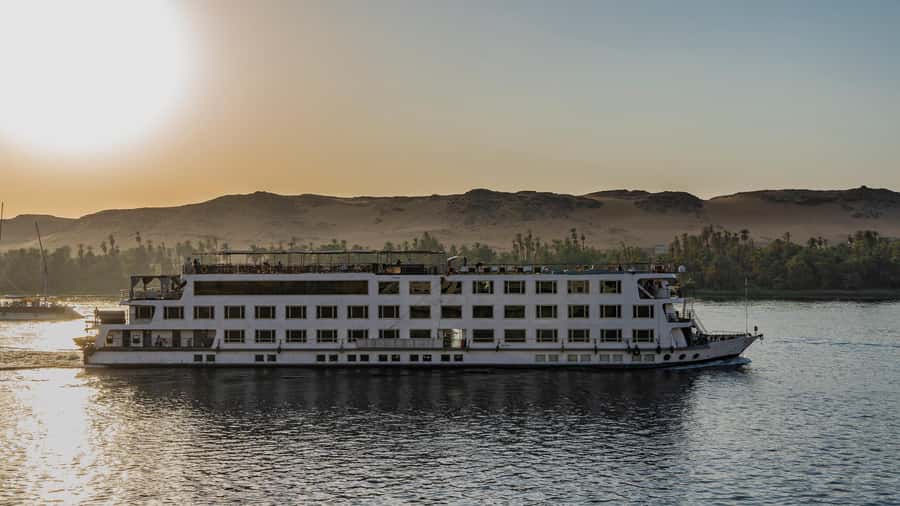
- Three nights on a 5-star cruise: Your cabin, meals, and onboard time are included, giving the trip a comfortable base between sightseeing stops.
- A sunrise balloon ride over Luxor: The flight takes place early on the final morning, before breakfast and checkout.
- Private guiding with named Egyptologists: Mary and Rasha received special praise for friendly, easy-to-follow explanations.
- Entry fees are not included: Budget separately for the sites, drinks, and any airport or train-station transfers.
Why this Nile cruise works well
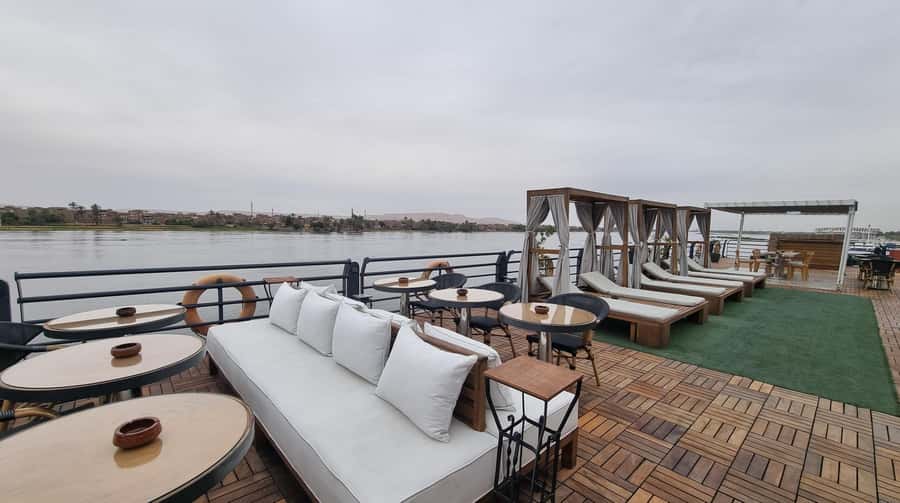
This trip links Egypt’s major southern sights in a sensible direction. You start in Aswan, where the Nile feels broad and calm, and finish in Luxor among the royal tombs and enormous temple complexes.
I like that the ship handles the long move between destinations. Instead of spending four days in separate cars, you return to the same cabin after each shore visit. That matters in Egypt, where the heat, early starts, and busy temple days can wear you down.
The private guide is another strong point. Your Egyptologist explains what you are seeing rather than leaving you to stare at columns and hieroglyphs without context. Mary is noted for speaking slowly and clearly, while Rasha is praised for detailed explanations and a friendly manner. Guide quality can shape an ancient-site visit, and this itinerary gives it proper weight.
There is a tradeoff. This is not a lazy cruise with occasional sightseeing. Day two begins around 4 a.m. for Abu Simbel, and day four begins at a similar hour for the balloon flight. You also have a full Luxor touring day after the balloon ride. If you want a slow holiday, this pace may feel demanding. If you want to see the main sights in a short stay, the packed schedule makes good use of your time.
More Nile Cruises in Aswan:
- 4-Days Nile Cruise From Aswan To Luxor including Abu Simbel and Hot Air Balloon
★ 5.0 · 3,142 reviews - 4-Day 3-Night Nile Cruise from Aswan to Luxor&Abu Simbel+Balloon
★ 5.0 · 2,023 reviews - 4-Day 3-Night Nile Cruise from Aswan to Luxor including Abu Simbel, Air Balloon
★ 4.5 · 612 reviews
Day one: Aswan’s dam, obelisk, and island temple
Your first day begins with pickup from your accommodation in Aswan. A private guide and driver take you to the High Dam, the Unfinished Obelisk, and Philae Temple before transferring you to the cruise ship.
The Aswan High Dam gives you a useful introduction to modern Egypt. The structure created Lake Nasser, one of the largest artificial lakes in the world, and changed the flow and management of the Nile. From above, the view is striking. It also opens the door to an important point about modern development: the dam brought major benefits but caused serious environmental changes.
Next comes the Unfinished Obelisk. This is not a polished monument, and that is exactly why it is useful. The huge stone still lies partly attached to its quarry bed, showing how ancient stoneworkers shaped monumental objects before transport and finishing.
Your guide can explain the marks and working methods around the granite. The supplied description also highlights the use of wet wood in separating a finished sculpture from the stone bed, a simple technique that gives the site a practical, hands-on quality. You are not just looking at an ancient object. You are seeing evidence of how it was made.
Philae is the day’s most graceful stop. The temple complex sits on an island surrounded by water and dark granite rocks, giving the visit a calmer mood than the great temple sites farther north. Its walls carry hieroglyphs and large carvings of Egyptian gods, with inscriptions that preserve stories from the civilization.
After the sightseeing, your driver takes you to the ship. Lunch and the rest of the day are spent aboard the 5-star cruise. This pause is well placed. You have time to settle into your cabin, use the ship’s facilities, and enjoy the Nile before the most demanding day of the program.
Day two: Abu Simbel before breakfast and Kom Ombo after sailing
The Abu Simbel morning is the toughest part of the tour, but also one of its biggest rewards. Pickup usually comes around 4 a.m., followed by an approximately three-hour drive in an air-conditioned vehicle.
That early departure is not a small detail. You need to be comfortable losing sleep and spending several hours on the road. The air conditioning helps, and the vehicle keeps the transfer private, but the round trip still takes a large part of the day.
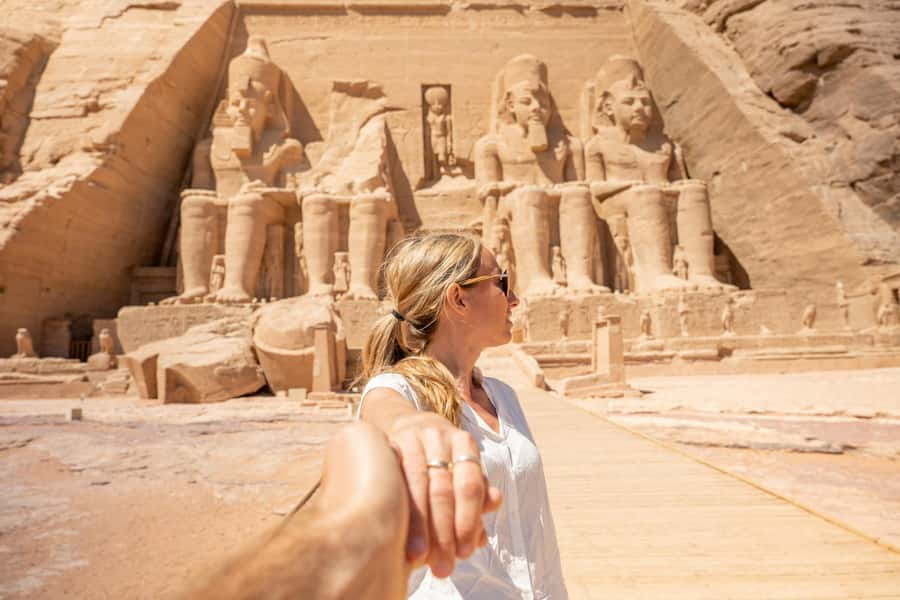
Abu Simbel was built for Ramesses II and dedicated to Amun, Ra-Horakhty, Ptah, and the pharaoh himself. The temple’s scale and carved façades make it one of Egypt’s great encounters. Your guide or driver will help you understand the setting and the rulers behind the monument, while the private transport keeps the visit tied to your cruise schedule.
After Abu Simbel, you return to the ship for lunch. The timing is practical: you can recover from the road trip while the vessel begins sailing north. This is one of the itinerary’s smartest features. The long transfer is followed by a meal and time on the water rather than another full land excursion.
Later, you arrive at Kom Ombo, where a guide meets you at the reception. The temple has a distinctive double design. One side was dedicated to Sobek, the crocodile god, and the other to Horus, the falcon-headed god. The two-part plan gives you something easy to see and remember, even if you are visiting ancient temples for the first time.
After the visit, you return to the ship and continue sailing toward Edfu. The order of the day alternates intense sightseeing with rest, which keeps the itinerary manageable despite the early start.
Day three: Edfu’s powerful Horus temple
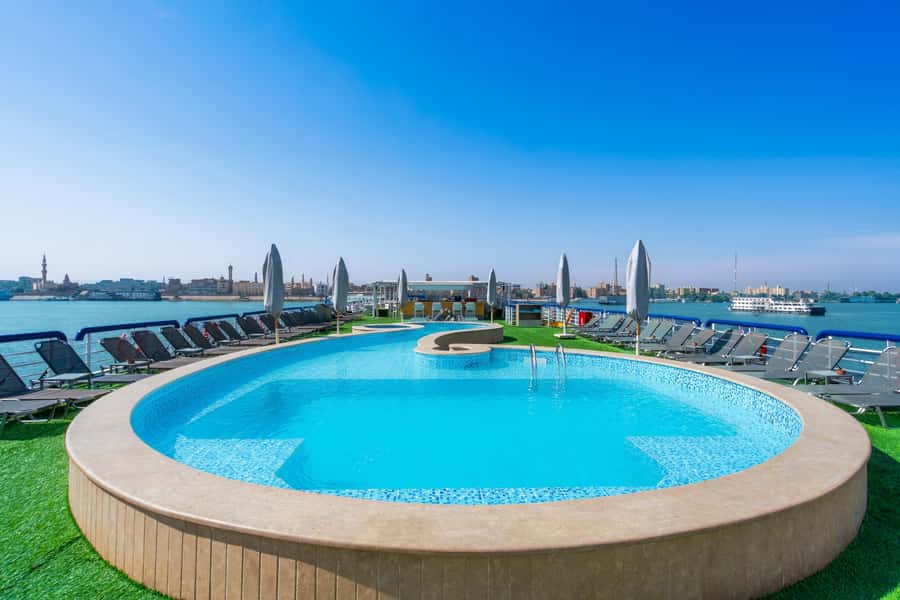
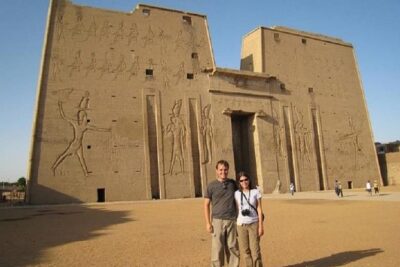
After breakfast aboard ship, your guide meets you for Edfu Temple. The site is dedicated to Horus and is described as the largest temple devoted to the falcon-headed deity.
Edfu is especially valuable for its carved walls. The reliefs offer information about religion, mythology, and daily life during the Hellenistic period of Egyptian history. A guide makes a real difference here because the carvings can otherwise become a blur of figures, crowns, symbols, and formal scenes.
The morning visit is followed by a return to the ship. Day three is less crowded with separate stops than day two, giving you time to enjoy the cruise and spend a quieter stretch with family or friends.
That balance is important. The ship is not only transportation. It is your accommodation for three nights, with full-board service and a cabin with its listed facilities. You still need to check the exact ship and cabin details when booking, but the format gives you an easier base than changing hotels along the route.
More Four-Day Trips in Aswan:
- From Aswan: 4-Day Nile Cruise from Aswan to Luxor with Guide
★ 4.1 · 593 reviews - From Aswan:4 Days Nile Cruise Luxor Abu Simbel & Air Balloon
★ 4.4 · 310 reviews - From Aswan: 4 Days Nile River Cruise with Guided Tours
★ 4.2 · 42 reviews - Luxury 4-Day 3-Night Nile Cruise from Aswan to Luxor
★ 5.0 · 29 reviews
Day four: Luxor from a hot-air balloon
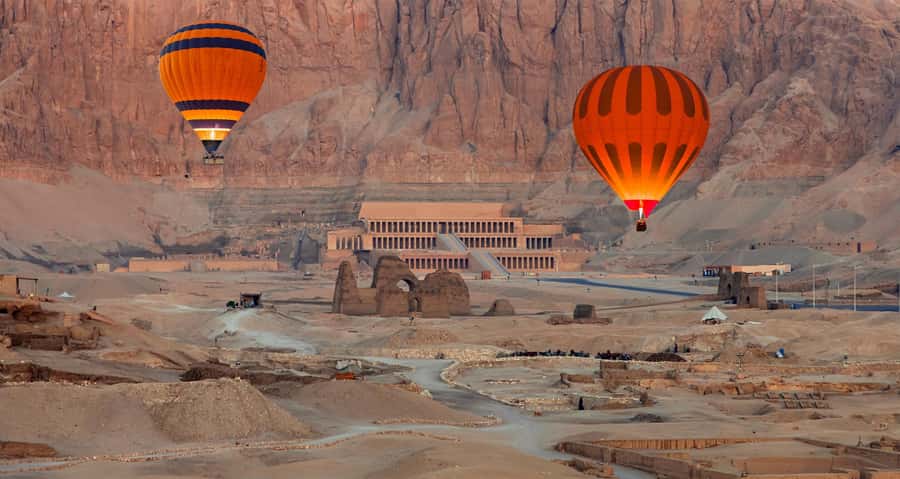
The final day begins in darkness. Pickup for the hot-air balloon usually comes around 4 a.m., and you join a small group for the ride from the ship to the balloon airport.
The flight gives you a different view of Luxor. Temples, fields, the Nile, and the surrounding desert appear from above as daylight arrives. The appeal is not simply the ride itself. It is the timing. Watching the sunrise over Luxor gives the final morning a memorable sense of occasion before the regular sightseeing begins.
After the flight, you return to the ship for breakfast and checkout. You should leave your luggage ready and bring it with you when your private guide collects you at 9 a.m. This transition is convenient, but it also means you have little time for a second rest after the balloon flight.
Luxor’s west bank: tombs, terraces, and giant statues
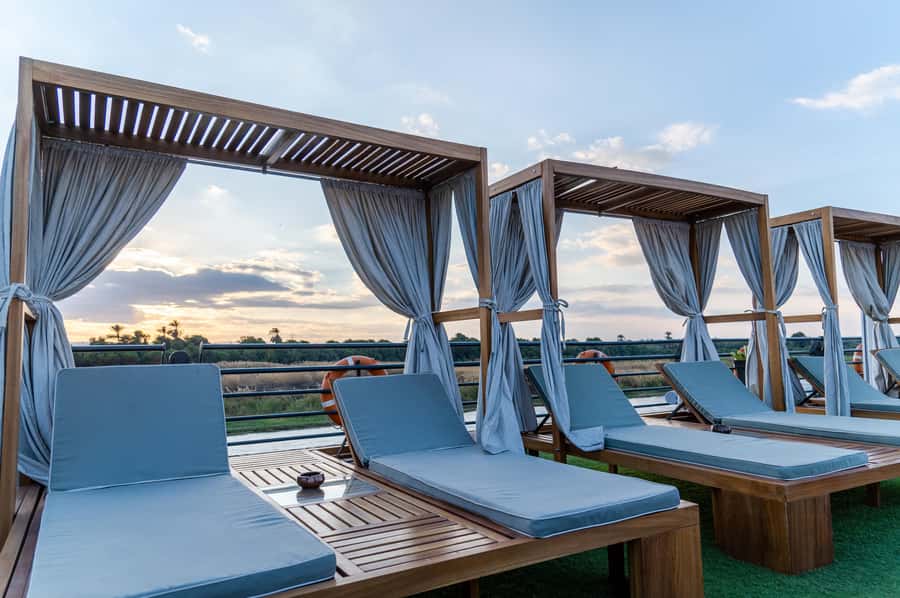
The west-bank tour begins with the Valley of the Kings. The valley was used to protect royal tombs during the New Kingdom, and its importance comes from what lies underground rather than from a grand temple façade.
Your guide helps explain the tombs, their purpose, and the wall scenes that accompany the burial spaces. Entry fees are separate from the tour, so check the current site arrangements before you go. The included itinerary does not specify which individual tombs are entered.
Next is the Mortuary Temple of Queen Hatshepsut. Its broad terraces and strong lines were designed on a grand scale, drawing inspiration from the earlier temple of Mentuhotep II nearby. The site is a useful reminder that ancient rulers used architecture to connect themselves with earlier traditions while also making their own mark.
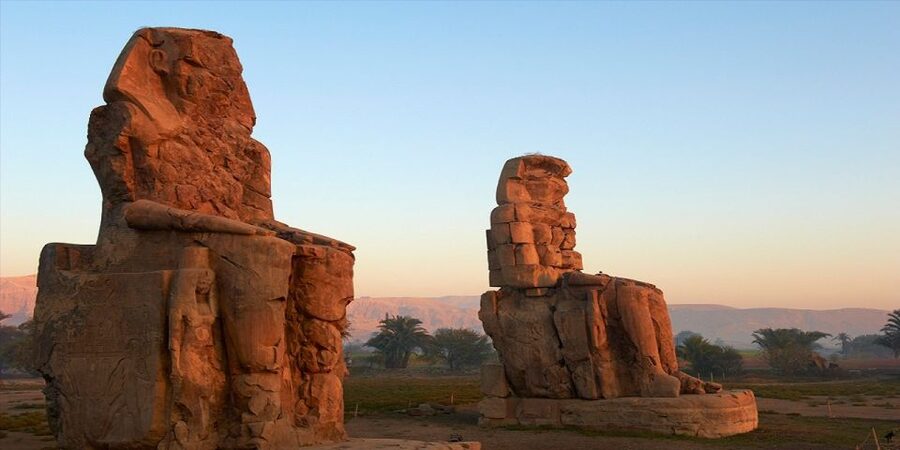
The stop at the Colossi of Memnon is shorter, mainly for photographs. These massive statues make a quick but worthwhile roadside pause, especially after the more detailed visits in the Valley of the Kings and at Hatshepsut’s temple.
Lunch comes at a local restaurant in Luxor. It is included, and it breaks up the morning before the east-bank temples. The meal also gives you a chance to experience something beyond ship dining, though the supplied details do not specify the restaurant or menu.
Luxor’s east bank: Karnak and Luxor temples
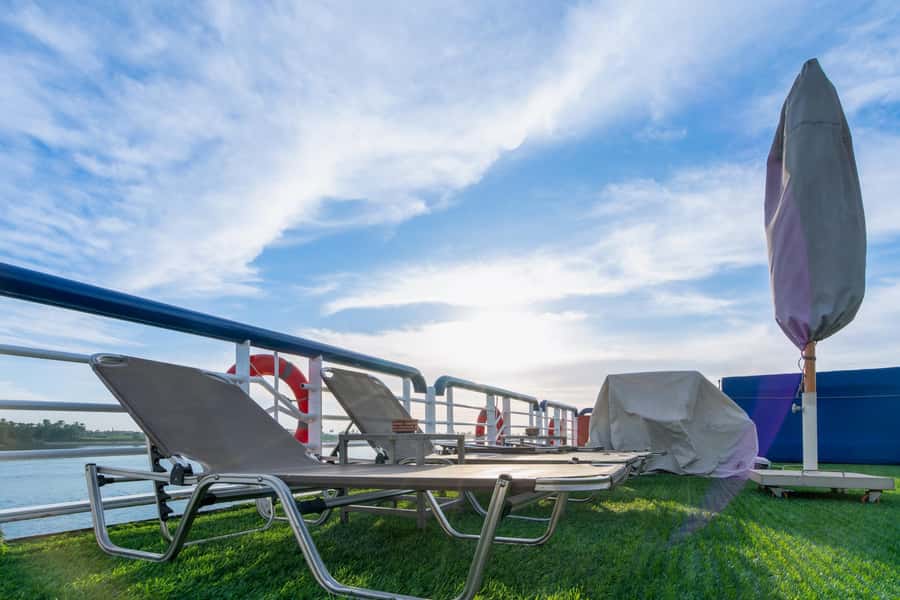
Karnak is the largest temple complex on this route and one of the places where a private guide earns their keep. It includes three main temples, smaller enclosed sanctuaries, and outer temples built and expanded across roughly 1,500 years.
That long building period can be difficult to grasp when you are standing among columns and courtyards. Your guide can separate the work of different generations and explain how the complex grew. Give yourself time to look up, across, and along the carved surfaces. Karnak is too large to absorb in a quick glance.
Luxor Temple provides a fitting final stop. Its main role was tied to the annual Opet celebrations, when religious ceremonies connected Luxor with the wider sacred center. After a day of tombs, royal monuments, and temple courts, this last visit completes the story of ancient Luxor.
Your driver then takes you to your accommodation in Luxor. The tour ends there, rather than returning you to Aswan.
Guides, transport, and the value of a private format
The guiding receives some of the strongest praise in the available feedback. Mary is described as kind, patient, and easy to understand, especially when explaining Egyptian culture to people unfamiliar with the subject. Rasha is noted for detailed explanations of the sites and their stories. Ahmed Achraf and Hazem are specifically associated with the Abu Simbel transfer and received strong praise for that visit.
You may not have the same guide for every section, so consider the trip as a coordinated series of guided visits rather than one continuous private lecture. The listed service includes an English-speaking guide, with Spanish, German, and French options available as add-ons.
Transport is by air-conditioned vehicle, including the Aswan sightseeing, Abu Simbel drive, balloon transfers, and Luxor tour. Hotel pickup in Aswan and accommodation drop-off in Luxor are included. Airport and train-station transfers are not included, so you need to arrange those separately if they apply to your trip.
The value comes from the combination of transport, guiding, three nights of full-board cruising, the balloon ride, lunch in Luxor, and the long list of included visits. You are paying for an organized route through several major sites, not just a boat cabin. Since entrance tickets and drinks are excluded, add those costs before deciding what the total represents for your budget.
Who should book this four-day itinerary?
I would choose this tour if you want the major Aswan-to-Luxor sights in a compact format and prefer having transport and guiding arranged. It suits first-time visitors who want historical context at each temple, families who value a private guide, and couples who like the idea of a cruise with two memorable early-morning experiences.
It is also a good match if you want to finish in Luxor instead of returning to Aswan. The final hotel drop-off makes the route practical for a longer Egypt trip.
I would think twice if you dislike pre-dawn starts, long road transfers, or tightly planned sightseeing. Abu Simbel is a three-hour drive from the ship each way, and the balloon ride comes before a full day on Luxor’s west and east banks. You should also be comfortable paying site entry fees separately.
Should you book it?
Book this experience if your priority is coverage, comfort, and clear explanations. The cruise gives you a stable base, while the private Egyptologists add meaning to places that can otherwise feel overwhelming. Mary and Rasha are especially good names to note when you discuss guide preferences, and Ahmed Achraf and Hazem are linked with a well-regarded Abu Simbel visit.
Skip it if you want long, unplanned mornings or a slower cruise. For most people with only four days, though, the route is well judged: Aswan’s modern and ancient sights, Abu Simbel, two river temples, a sunrise balloon, and the great monuments of Luxor all fit into one organized journey.
FAQ
How long is the tour?
The experience lasts four days and includes three nights aboard a 5-star Nile cruise.
Where does the tour begin and end?
It begins with pickup from your accommodation in Aswan and ends with drop-off at your accommodation in Luxor.
Is Abu Simbel included?
Yes. The itinerary includes transportation to the Great Temple of Abu Simbel in an air-conditioned vehicle, with the drive taking about three hours.
What time does the Abu Simbel visit begin?
Pickup usually takes place around 4 a.m. on the second day.
Is the hot-air balloon ride included?
Yes. A sunrise VIP hot-air balloon ride is included on the fourth day, with pickup usually around 4 a.m.
Are entrance fees included?
No. Entry fees are not included in the tour price.
Are airport and train-station transfers included?
No. Pickup from Aswan Airport or the train station, along with drop-off at Luxor Airport or the train station, is not included.
Newly reviewed in Aswan
- From Aswan: Overnight Nile Cruise to Luxor with Meals★ 4.1 · 172 reviews
- From Aswan: 8-Day Nile River Cruise to Luxor with Guide★ 4.5 · 2 reviews
- From Aswan: 4 Days Nile River Cruise with Guided Tours★ 4.2 · 42 reviews
- From Aswan: 5-Day Nile Cruise to Luxor with Hot Air Balloon★ 3.5 · 19 reviews
- From Aswan: 4-Days 3-Night Nile Cruise with Hot Air Balloon★ 4.4 · 53 reviews
- From Aswan:4 Days Nile Cruise Luxor Abu Simbel & Air Balloon★ 4.4 · 310 reviews
- 4-Day Luxury Nile Cruise from Aswan to Luxor with Private Guide★ 5.0 · 9 reviews
- 4-Day 3-Night Nile Cruise from Aswan to Luxor – Luxury Tour★ 4.5 · 27 reviews
Nile Cruises, compared side by side.
4-Days Nile Cruise From Aswan To Luxor including Abu Simbel and Hot Air Balloon
Read our review →
Dinner Cruise on the Nile River with Entertainment
Read our review →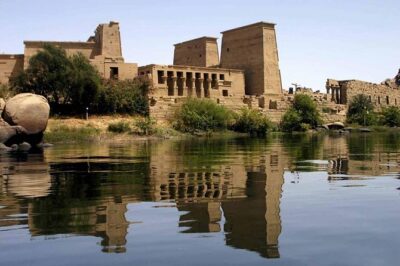
4-Day 3-Night Nile Cruise from Aswan to Luxor&Abu Simbel+Balloon
Read our review →
Nile Dinner Cruise with Belly Dancer Show with Pickup
Read our review →
4-Day 3-Night Nile Cruise from Aswan to Luxor including Abu Simbel, Air Balloon
Read our review →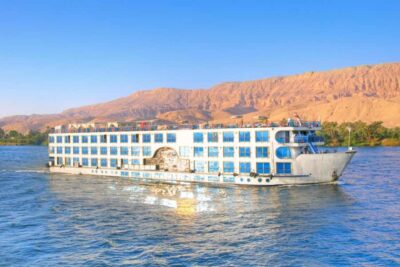
4-Day Nile Cruise from Aswan to Luxor with Guide
Read our review →Lists this trip appears in