Review · PARIS
Paris: Seine River and Canal Saint-Martin Cruise
The most unusual part of this Paris cruise comes underground. After gliding past Notre-Dame, the Louvre, and the Tuileries Garden, your boat enters a 1.24-mile tunnel beneath Bastille, lit by small openings that let daylight filter down. Then it rises into Canal Saint-Martin, where locks, leafy banks, footbridges, and fishermen replace the grand monuments.
I like the mix of famous Paris and lesser-seen waterways, and I like the locks, which turn a quiet boat ride into a working lesson in how the city’s canals function. The main catch is important: this is a one-way trip, ending near Parc de la Villette rather than back at the Musée d’Orsay, so you need a plan for the return.
I also like the relaxed pace. You have 150 minutes to rest your feet while a French and English guide points out places such as the Hotel du Nord, the Recollets Lock, the rue de Crimée footbridge, and the former Montfaucon gibbet. The drawbacks are less polished sound outdoors, occasional difficulty understanding accented English, and limited onboard food and drink.
Key points to know before you book
- The tunnel is the star surprise: Your boat travels beneath Paris for about 1.24 miles, with daylight entering through openings above.
- Nine locks make the canal section special: Steel gates close around the boat as water levels change, giving you a close look at old canal engineering.
- The route is one-way: You start at Port de Solférino by the Musée d’Orsay and finish near Parc de la Villette.
- The Seine section covers classic sights: Look for Notre-Dame Cathedral, the Louvre, the Tuileries Garden, Pont des Arts, and Bastille Square.
- Arrive early for the top deck: Outdoor seats offer the best views, but commentary can be harder to hear outside.
- This suits curious families and repeat Paris visitors: The locks and tunnel offer something different from a standard Seine sightseeing boat.
Why this cruise is different from a standard Seine ride
A typical Seine cruise gives you Paris in postcard form. This one begins that way, then takes a sharp turn into the city’s working waterways.
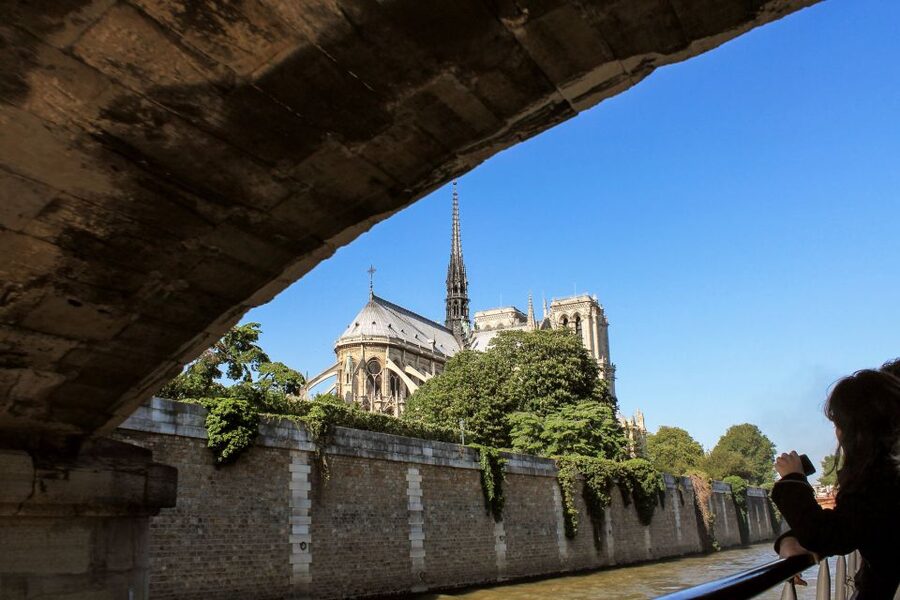
From the Port de Solférino, just below the Musée d’Orsay, you first see the Paris most people expect: grand buildings, elegant bridges, and monuments arranged along the river. The early section gives you familiar sights from a low, open-water angle, including the Tuileries Garden, the Louvre, Notre-Dame Cathedral, and Pont des Arts.
Then the mood changes. The boat heads toward the Canal Saint-Martin, and Bastille Square rises above the route. This is where the trip becomes more than a floating sightseeing circuit. You are following a waterway that cuts through the city in a way most people never notice from the pavement.
I would choose this cruise if you have already seen Paris from the river, or if you want a slower half-day activity that combines landmarks with local city scenery. It is also a useful break after several days of museums, queues, and long walks.
More Canal Cruises in France
- Paris: Cruise on the Saint-Martin Canal and Seine River
★ 4.3 · 2,202 reviews - Seine River Cruise and Paris Canals Tour
★ 3.5 · 1,169 reviews - Bruges Guided or Audio Trip with Canal Cruise Option from Paris
★ 4.0 · 795 reviews
Starting below the Musée d’Orsay
The boat is moored at the Port de Solférino, reached by the wooden main staircase below the Musée d’Orsay. This meeting point has caused some confusion, so allow extra time.
The boat does not leave from the Batobus terminal directly opposite the museum. Once you reach the wooden steps, turn left toward the mooring area. Look for the boat and crew rather than relying only on a broad description of the meeting point.
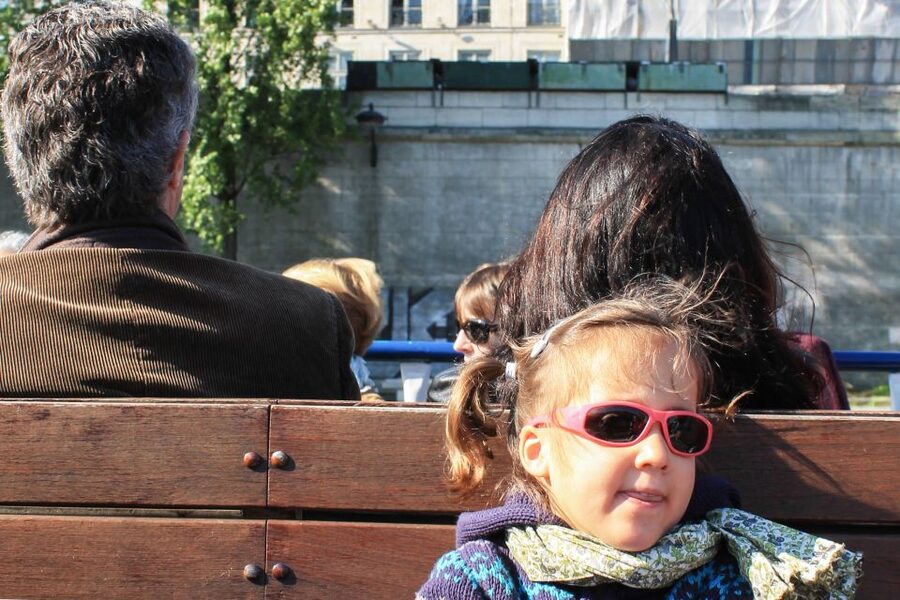
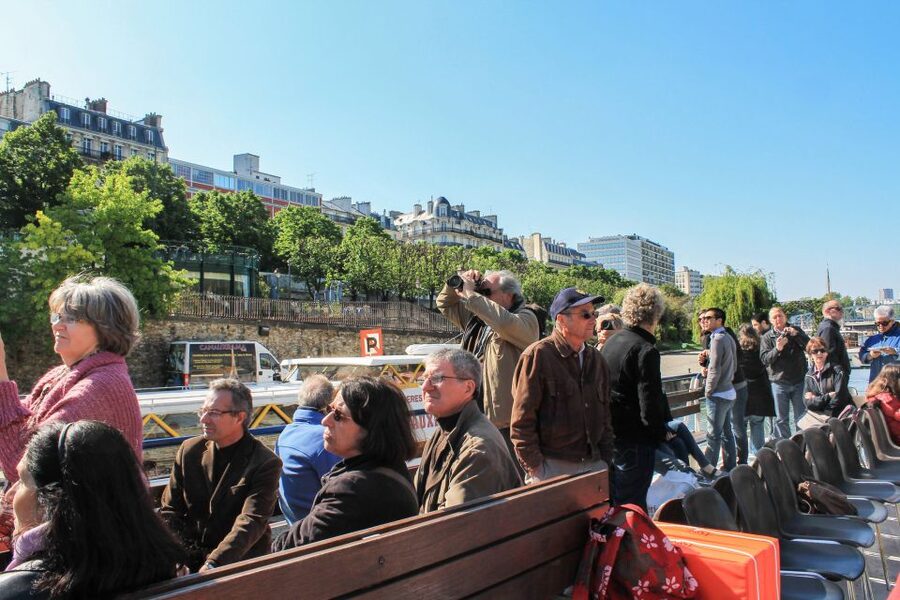
Arriving early matters for another reason. If you want a place on the top deck, especially on a busy day, you should not cut it close. The outdoor deck gives you the best chance for clear photographs and a full view of the banks. The tradeoff is sound. Several people found that commentary was difficult to hear outside, while the indoor area offers better audio.
The cruise runs in rain or shine. Daily departures are offered from May through August, with service outside those months subject to availability. The listed departure times are 10 a.m. and 3 p.m., though you should check the current schedule when booking.
The Seine: Paris in its familiar, grandest form
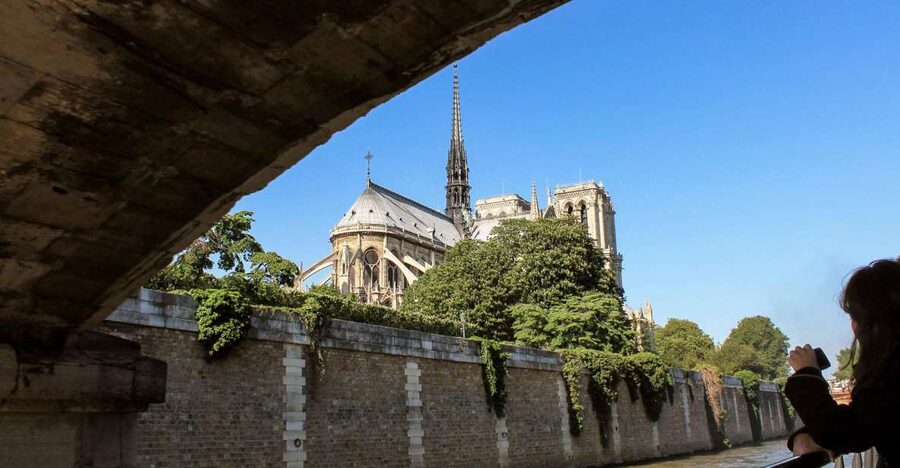
The Seine portion is the easiest section for first-time visitors to appreciate. From the water, the city’s stone façades and bridges line up in a graceful sequence. The guide points out major buildings and explains what you are seeing in French and English.
The Tuileries Garden and Louvre offer a broad sweep of central Paris. Notre-Dame brings the most recognizable medieval sight on the route, while Pont des Arts gives you one of the classic bridge views toward the riverbanks.
This is not a hop-on, hop-off boat. You remain onboard as the route continues, so the value comes from the changing view rather than from stopping at each attraction. If you want time inside the Louvre or Notre-Dame, plan those visits separately.
The commentary is a real part of the experience. Guides such as François and Carl have been praised for keeping the explanation lively and clear in both languages. English delivery can vary, and some passengers found a strong French accent or weak speakers made parts hard to follow. Sitting indoors gives you the best chance of catching the full narration.
Entering the Bastille tunnel
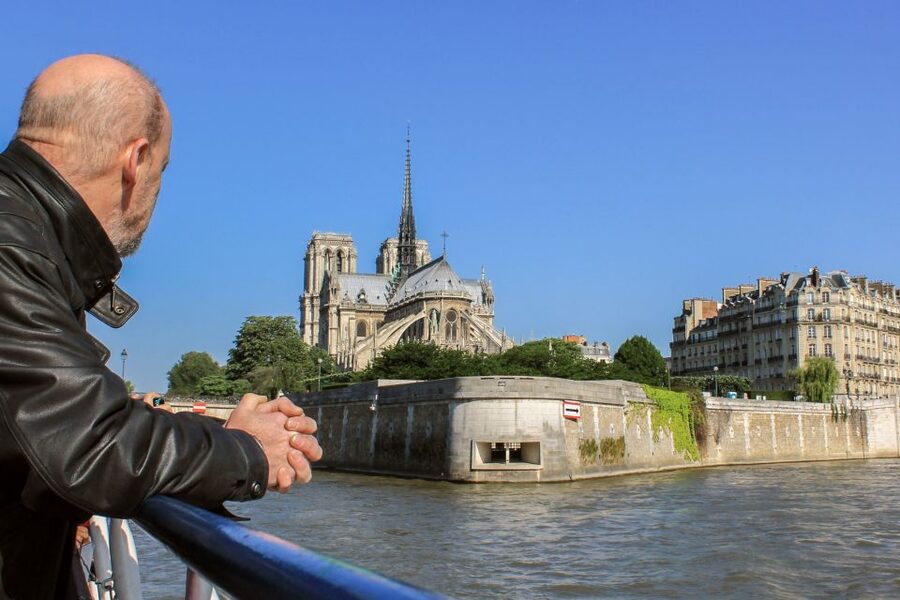
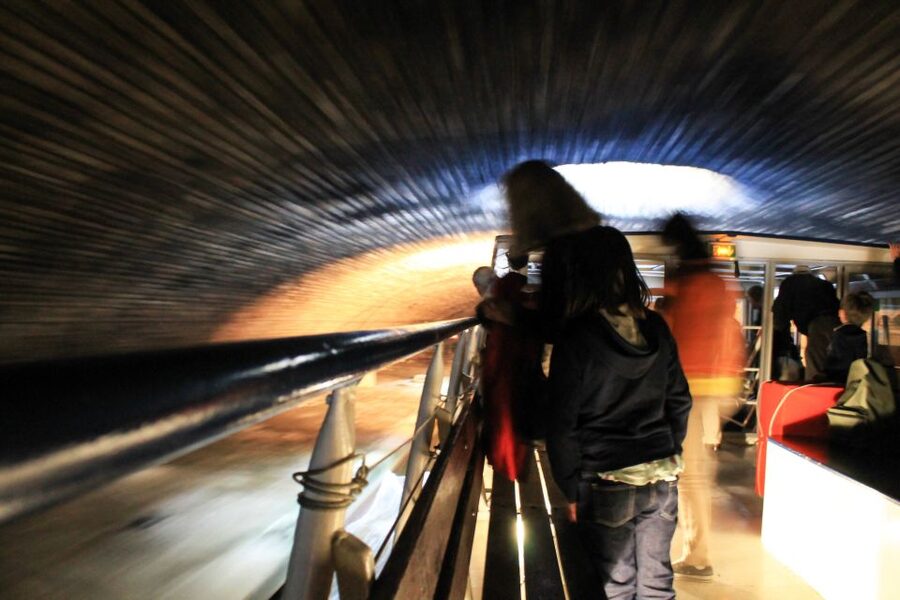
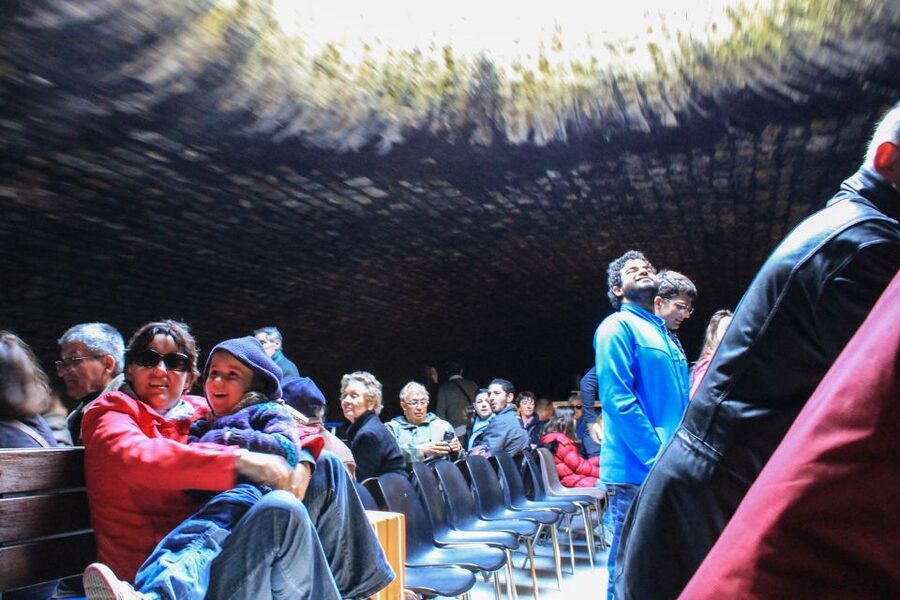
The boat’s passage beneath Paris is the moment that sets this route apart. Near Bastille, the canal enters a tunnel about 1.24 miles long. Small perforations in the roof admit strips of daylight, creating a strange half-lit passage below the streets.
This is not a quick bridge tunnel. You remain underground long enough for the city above to fade from view. The effect is quiet and slightly eerie, especially after the open views of the Seine.
You do not get a conventional museum explanation of underground Paris. Instead, the experience comes from watching the boat move through a space that is normally invisible from street level. It is a good example of why this route works better than a basic river loop: the waterway itself becomes the attraction.
Photography may be difficult in the tunnel, so I would treat it as a moment to watch rather than an attempt to capture every second. You will get better pictures once the boat comes back into daylight.
More Canal Cruises in Paris
- Paris: Cruise from The Canal Saint Martin to The Seine River
★ 4.6 · 224 reviews
Canal Saint-Martin and its nine working locks
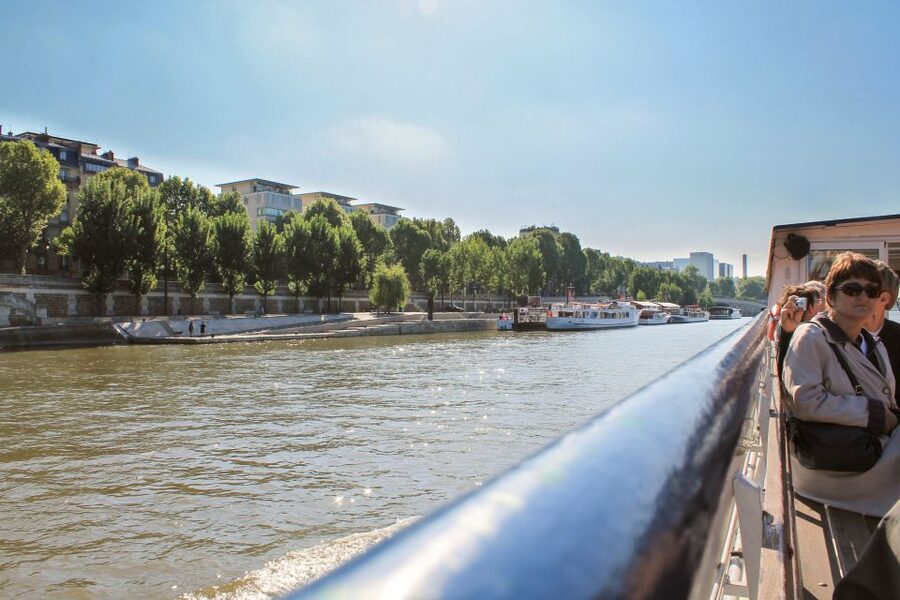
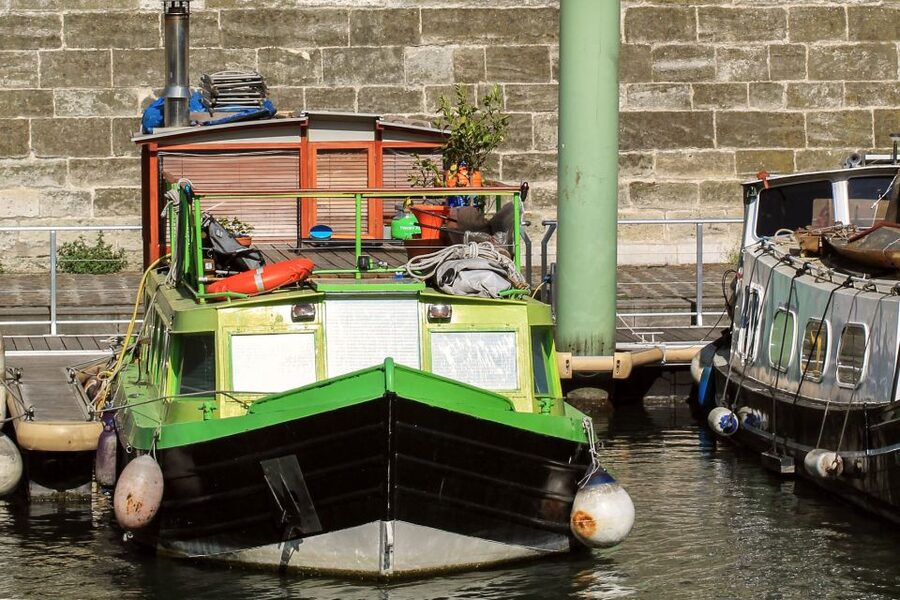
After the tunnel, the Canal Saint-Martin feels almost like another city. Chestnut trees line parts of the water, footbridges cross overhead, and fishermen add a calm, everyday touch. The canal is narrower and more intimate than the Seine, with less monumental architecture and more neighborhood character.
The locks are the main reason the trip takes as long as it does. The boat passes through a series of nine locks, and each one changes the water level so the boat can continue along the canal. Steel gates close at both ends, water moves in or out, and the boat rises or lowers before the next section opens.
You can watch the process from the deck, though the boat may pause several times. That makes this a poor choice if you want a fast sightseeing ride, but a good choice if you enjoy how places work. The locks give children a clear mechanical story to follow, and adults get a look at a part of Paris that is easy to miss.
The repeated lock process can feel long, particularly for small children. Bring something simple to occupy them, and explain that the waiting is the point of the ride. On pleasant days, sitting outside makes the pauses more enjoyable, but move indoors when you want to hear the guide.
Recollets Lock, Hotel du Nord, and old Paris stories
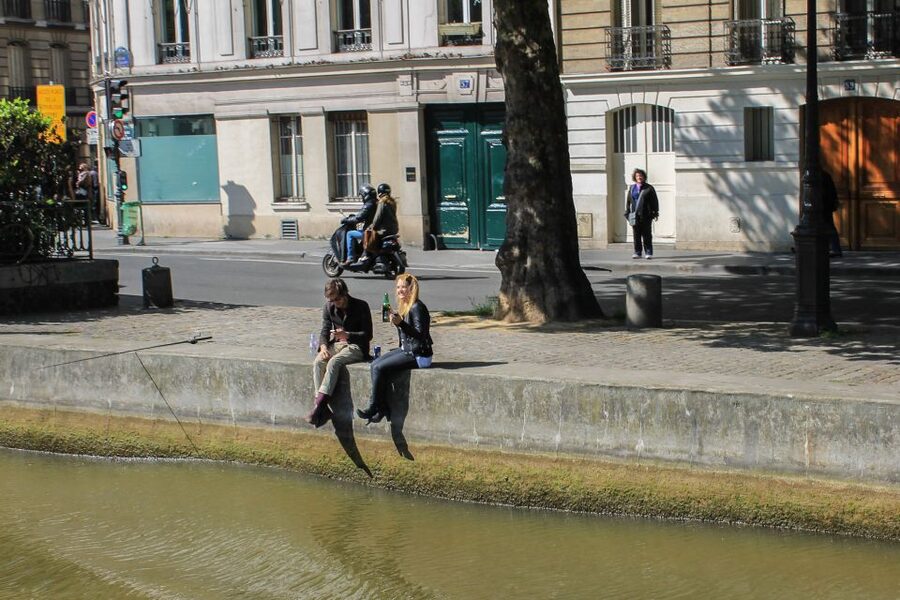
Near the Temple area, the guide points out Frédéric Lemaître’s bust, the Recollets Lock, and the Hotel du Nord. These sights reward close attention because they are not the headline monuments you came to Paris expecting.
The Hotel du Nord carries a strong connection to old Paris cinema and canal life. The route also passes places tied to darker stories, including the former site of the Montfaucon gibbet and the Dead Lock. The commentary brings in the ghostly figure of François Villon as the boat approaches, adding a touch of folklore to the canal’s more somber past.
This part of the tour depends heavily on the guide. A good explanation turns an ordinary stretch of water into a series of stories about work, crime, art, and city growth. If you sit outside, keep an eye on the guide’s position and move indoors when the history becomes difficult to hear.
The tone may not suit everyone. One account found parts of the commentary crass, so families who prefer a carefully formal presentation should be prepared for occasional humor that may be a little rough around the edges.
Bassin de la Villette and the final approach
The canal eventually reaches Bassin de la Villette, a larger body of water that opens up the view again. The change from narrow, tree-lined canal to broad basin gives the final stretch a sense of release.
The boat then passes the arcing footbridge on rue de Crimée. This is one of the route’s memorable pieces of canal engineering and a good place to look up from the water. The cruise continues toward Parc de la Villette, where you can see the Cité des Sciences, the Music Museum, and themed gardens.
The cruise ends in this northeastern part of Paris. That location is useful if you want to spend time at Parc de la Villette afterward, especially with children, but it is inconvenient if your next stop is central Paris. You may need the Metro, a taxi, or a long walk to return. The exact return route is not included with the cruise, so check your map before boarding.
This end point is one of the most important booking details. Some people assume a Seine cruise returns to its starting pier. This one does not. Think of it as a transport-and-sightseeing route across Paris, not a circular boat ride.
Is $28 good value for 150 minutes?
At $28 per person, the cruise offers solid value if you want more than a standard one-hour Seine circuit. You get 150 minutes on the water, two distinct waterways, a long underground passage, nine locks, and commentary in French and English.
The value is strongest for repeat visitors and anyone curious about Paris beyond the postcard center. A basic Seine trip may show more famous monuments in less time, but it will not give you the tunnel, locks, or Canal Saint-Martin.
Food and drink are not a strong reason to book. Onboard catering is limited, and one account found the choice disappointing. Other passengers specifically wished for more drinking water and snacks. Bring your own water and a small snack, particularly for the 10 a.m. departure or a warm afternoon.
The flexible booking terms help if your schedule is uncertain. You can reserve and pay later, and cancellation is allowed up to 24 hours before departure for a full refund. Still, check the selected time carefully. A booking error once placed a group on the 10 a.m. cruise instead of the intended 3 p.m. departure, though the issue was fixed by contacting the operator.
Who will enjoy this cruise most?
I would recommend it to:
- Repeat visitors to Paris who have already seen the main Seine sights.
- Families with older children who can follow the lock operation and enjoy Parc de la Villette afterward.
- Couples looking for a quiet, romantic ride through leafy canal scenery and beneath the city.
- History-minded visitors who enjoy stories about bridges, locks, old neighborhoods, and forgotten city sites.
- Anyone needing a slower afternoon after several days of walking and museum visits.
I would think twice if you have limited time in Paris and want only the major monuments. I would also reconsider it if you need a round trip, dislike long pauses, or require wheelchair access. The activity is not suitable for wheelchair users, and the one-way finish adds another transport task.
Practical tips for a better ride
- Use the wooden stairs below the Musée d’Orsay, then turn left. Do not confuse the departure point with the Batobus terminal opposite the museum.
- Arrive early for the top deck. You will have better views and more room to move around for photographs.
- Sit indoors for commentary. Outdoor seating is pleasant, but engine noise, distance from the guide, and speaker quality can make English hard to hear.
- Pack water and a snack. The trip lasts two and a half hours, and onboard choices are limited.
- Tell children what to expect. The tunnel is exciting, but the locks require patience as the boat waits for water levels to change.
- Plan the finish before departure. The boat ends near Parc de la Villette, about 7 kilometers from the starting area according to one account, not at Port de Solférino.
- Check the weather, but remember the boat runs in rain or shine. A light jacket can make the open deck more comfortable.
- Keep the afternoon open. The route can take the full 150 minutes, and canal traffic or locks may affect the pace.
Should you book the Seine and Canal Saint-Martin cruise?
Book it if you want Paris with a little machinery, mystery, and neighborhood atmosphere. The Seine gives you the great sights, the tunnel offers the unexpected, and the locks show how the city’s waterways still function.
Skip it if you need a quick round trip or have only a few hours for central Paris. The route is long, the commentary may be uneven from outside, and getting back from Parc de la Villette takes planning.
For $28, this is a worthwhile choice for a relaxed half-day, especially on a weekend when central Paris feels crowded. Arrive early, bring water, listen for the canal stories, and remember that the boat carries you across Paris rather than back to where you started.
FAQ
Where does the cruise depart?
The boat departs from Port de Solférino, just below the Musée d’Orsay. You reach the port using the wooden main staircase.
Where does the cruise end?
The cruise ends near Parc de la Villette in northeastern Paris. It does not return to the Musée d’Orsay departure point.
How long does the cruise last?
The cruise lasts 150 minutes, or two and a half hours.
What waterways does the boat use?
The route includes the Seine River and Canal Saint-Martin.
Does the boat pass through a tunnel?
Yes. The boat travels through a tunnel beneath Paris for about 1.24 miles. Openings in the tunnel allow some daylight to enter.
How many locks does the cruise pass through?
The cruise passes through nine locks along Canal Saint-Martin.
What languages are available?
The live commentary is provided in French and English.
Is the cruise suitable for wheelchair users?
No. The activity is listed as unsuitable for wheelchair users.
More Seine River Cruises in Paris
- Paris: 1-Hour Seine Cruise departing from the Eiffel Tower
★ 4.4 · 77,472 reviews - Paris: Seine Cruise & Crepe Tasting near the Eiffel Tower
★ 4.4 · 11,231 reviews - Paris: Seine River Panoramic Views Dinner Cruise
★ 4.3 · 10,611 reviews - Paris: Eiffel Tower Access by Elevator & Seine River Cruise
★ 4.6 · 7,329 reviews
Newly reviewed in Paris
- Paris: Dinner Cruise on the Seine and Eiffel Tower 2nd floor★ 3.3 · 42 reviews
- Fashion Design Workshop & Brunch on a Seine River Boat Paris★ 5.0 · 2 reviews
- Eiffel Tower Guided Tour & Seine River Cruise★ 5.0 · 4 reviews
- Paris: Eiffel Tower Summit Access Tour and River Cruise★ 3.2 · 19 reviews
- Private 5-Hour Paris Tour with Local Guide + Seine Cruise★ 3.9 · 3 reviews
- Paris: Cruise from The Canal Saint Martin to The Seine River★ 4.6 · 224 reviews
- Paris: Seine River Private Cruise★ 5.0 · 237 reviews
- Private Tour, Luxury Eiffel Tower Lunch, Seine Cruise & Louvre★ 4.5 · 39 reviews
Canal Cruises, compared side by side.
Amsterdam Luxury Canal Cruise + Unlimited Drinks & Bites option
Read our review →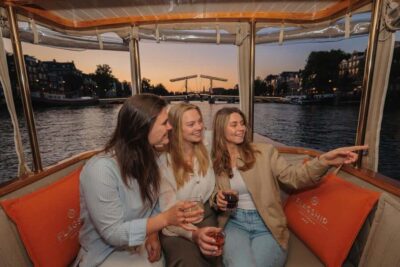
Heated Canal Cruise with Unlimited Drinks & Bite
Read our review →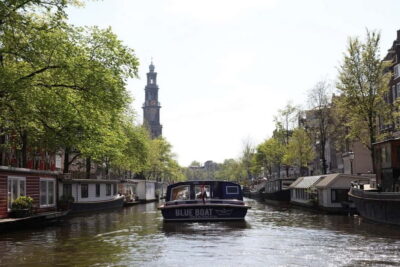
75 Minute City Canal Cruise with Audio Guide
Read our review →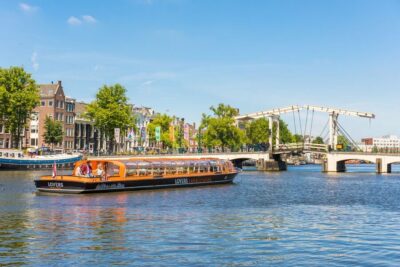
City Centre Canal Cruise including Audioguide
Read our review →
Bangkok Canal Tour: 2-Hour Longtail Boat Ride
Read our review →
Covered Canal Booze Cruise with Unlimited Drinks
Read our review →